

Les CSS sont aujourd'hui un incontournable pour tous les web designers ; des sélecteurs avancés à la génération de contenu, en passant par les web fonts, les dégradés, les ombres et les arrondis, jusqu'aux animations les plus complètes, CSS3 offre tout un univers de possibilités créatrices. Nul ne pouvait mieux vous guider à travers ces galaxies que le web designer de renom, auteur et superstar des CSS, Dan Cederholm, qui dans cette nouvelle édition mise à jour, vous présente de nouvelles propriétés et techniques, avec notamment un tout nouveau chapitre sur les mises en page à petite échelle (agencement en multicolonnes, Flexbox). Découvrez avec lui ce qui marche, comment ça marche et que faire quand ça ne marche pas ! Source : 4e de couv.]
Dan Cederholm Book order (chronological)
This creative author is recognized for his approach to web design, embodying a passion for simplification and flexibility. His work is characterized by an emphasis on minimizing markup and embracing the power of CSS, reflecting a drive for elegant and functional solutions. As a co-founder and designer of Dribbble, he has contributed to a vibrant community for sharing visual work, establishing himself as a significant voice in digital design. His influence extends beyond mere aesthetics, positioning him as a respected expert and an inspiration for those seeking clarity and purpose in the digital realm.


Bulletproof Web Design
Improving flexibility and protecting against worst-case scenarios with HTML5 and CSS3
- 299 pages
- 11 hours of reading
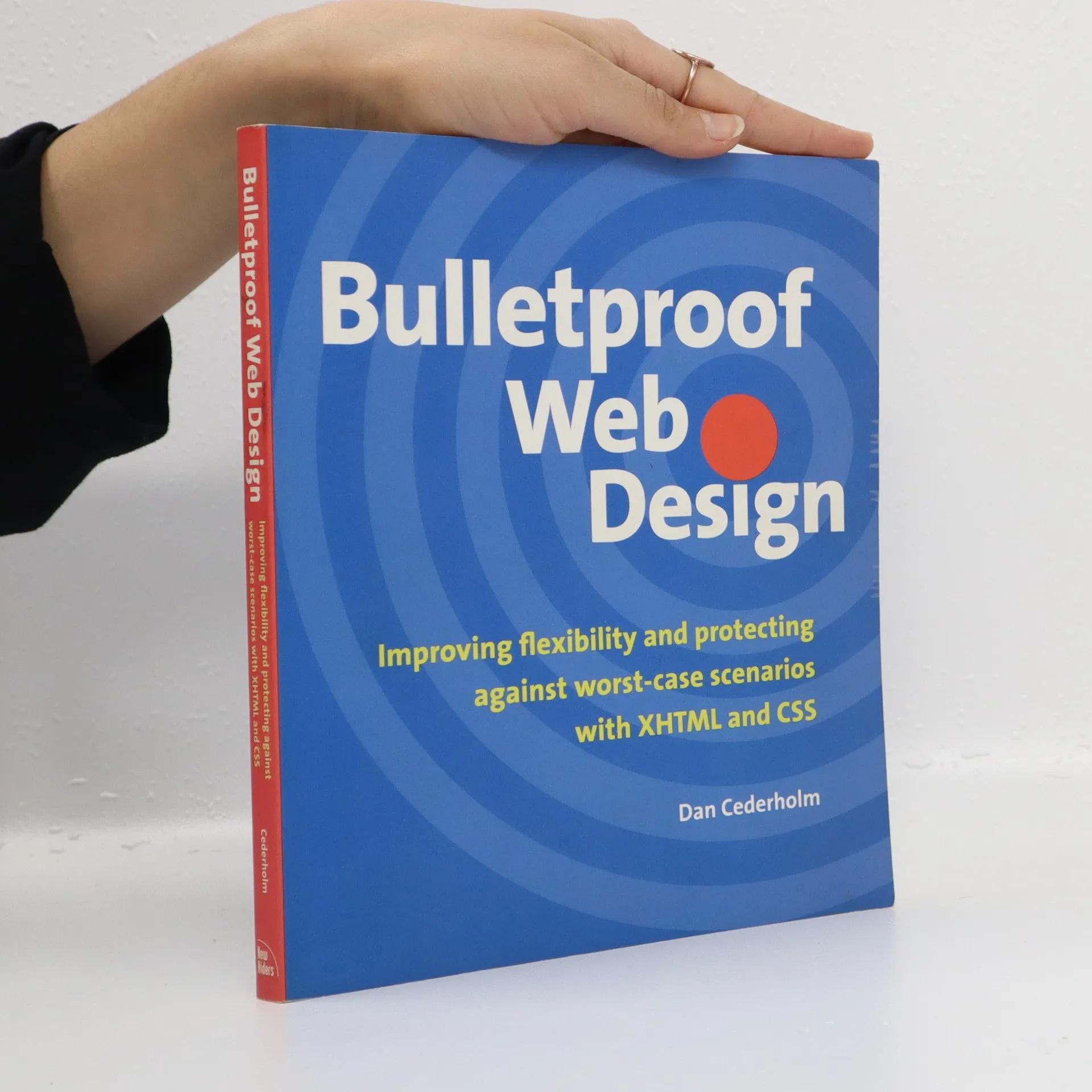
No matter how visually appealing or content-packed a website may be, if it's not adaptable to a variety of situations and reaching the widest possible audience, it isn't really succeeding. In Bulletproof Web Design, Third Edition, bestselling author and web designer Dan Cederholm outlines standards-based strategies for building designs that provide flexibility, readability, and user control--key components of every successful site. Each chapter starts out with an example of an unbulletproof site--one that employs a traditional HTML-based approach--which Dan then deconstructs, pointing out its limitations. He then gives the site a makeover using HTML and CSS, so you can see how to replace bloated code with lean markup and CSS for fast-loading sites that are accessible to all users. Finally, he covers several popular fluid and elastic-width layout techniques and pieces together all of the page components discussed in prior chapters into a single-page template. This fully updated third edition brings examples up to date by offering additional CSS3 and HTML5 methods that weren't an option before. Redesigned case studies with new Responsive Design examples add visual appeal and value to the book. This edition also removes outdated workarounds for IE5 and Netscape and de-emphasizes IE6.
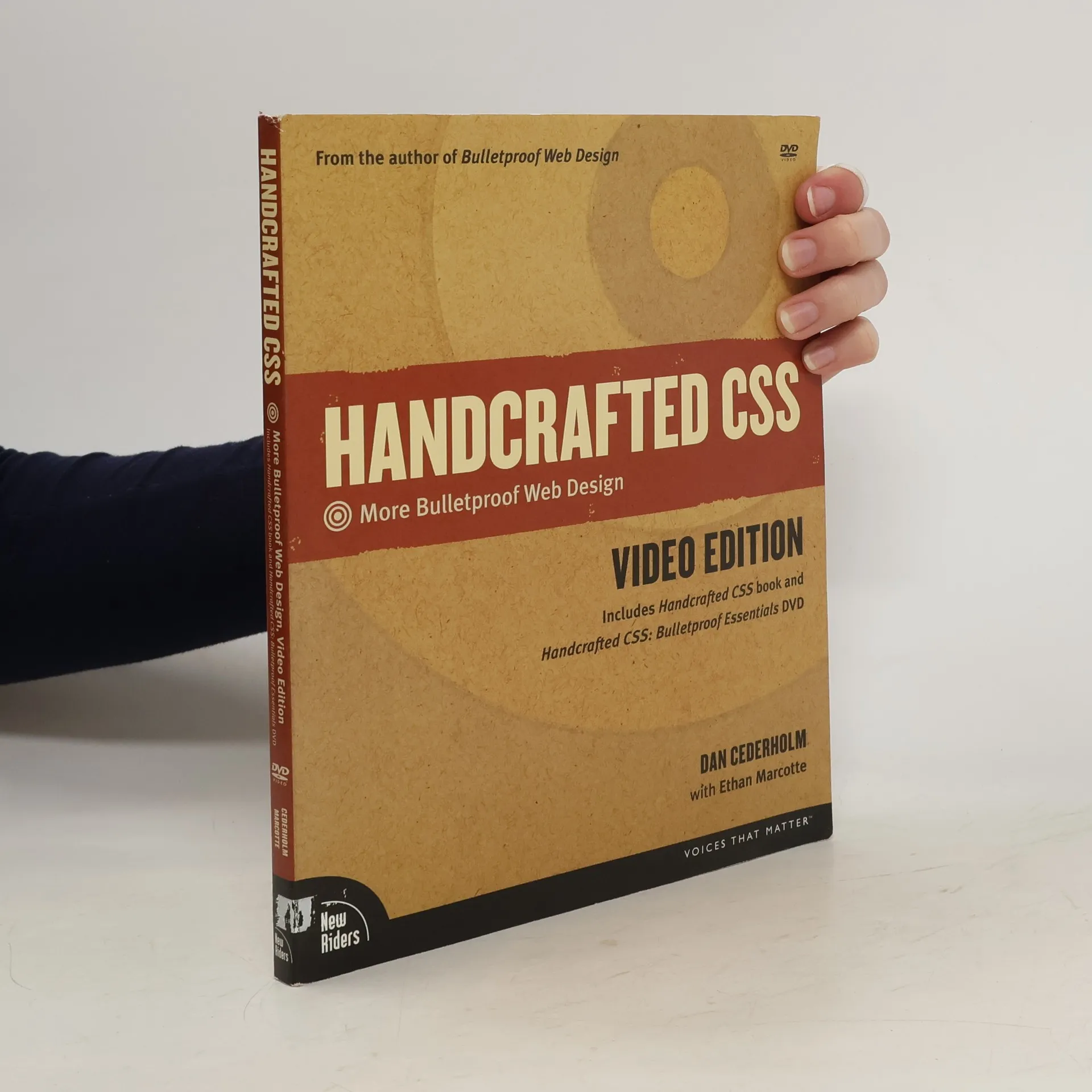
Handcrafted CSS : more bulletproof web design
- 217 pages
- 8 hours of reading
Es gibt eine echte Verbindung zwischen Handwerk und Webdesign. Dieses Buch untersucht CSS3, das in den heutigen Browsern funktioniert, und überzeugt Sie davon, dass jetzt die Zeit ist, damit zu experimentieren. Egal, ob Sie Webdesigner, Projektmanager oder Grafikdesigner sind, der mehr über die Flexibilität lernen möchte, die beim Webdesign erforderlich ist, Sie werden die Werkzeuge entdecken, um die flexibelsten, zuverlässigsten und robustesten Webdesigns zu erstellen. Sie werden in der Lage sein, Ihre Kunden davon zu überzeugen, innovative und effektive Techniken zu übernehmen, die das Leben aller erleichtern und die Benutzererfahrung verbessern. Die sieben Kapitel dieses Buches dekonstruieren verschiedene Aspekte einer Fallstudien-Website für die Tugboat Coffee Company und konzentrieren sich auf Aspekte, die sie robust machen und progressive Anreicherungstechniken im Vergleich zu traditionell arbeitsintensiven Methoden demonstrieren.
CSS3 for web designers
- 125 pages
- 5 hours of reading
From advanced selectors to generated content, and from gradients, shadows, and rounded corners to full-blown animations, CSS3 is a universe of creative possibilities. No one can better guide you through these galaxies than world-renowned designer, author, and CSS superstar Dan Cederholm. Learn what works, how it works, and how to work around browsers where it doesn't work
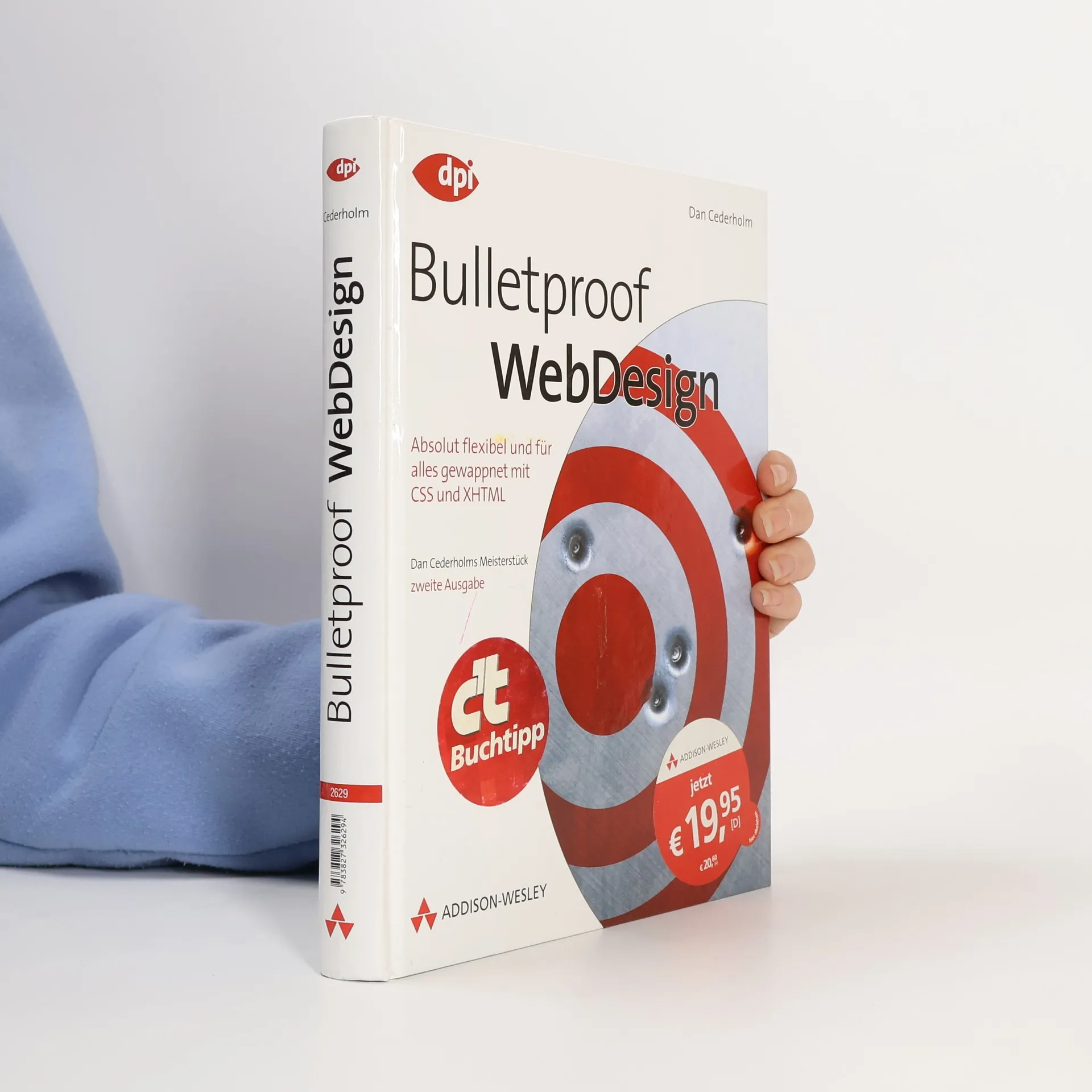
Die aktualisierte zweite Ausgabe des Bestsellers von Dan Cederholm bietet brillante und zukunftsweisende Webdesign-Konzepte. Anhand von Quellcodes und CSS-Beispielen zeigt er, wie man ein anpassungsfähiges und sicheres Design erstellt, das stabil bleibt und allen Herausforderungen standhält. Ein Muss für Webdesigner!
This indispensable guide to CSS development equips you with the skills needed to become a CSS professional. You will learn to effectively plan, organize, and maintain stylesheets, apply various layout techniques, create advanced features like flickr-style image maps, and lay out forms using pure CSS. While CSS is relatively simple to learn, mastering it can be challenging due to browser bugs and inconsistencies. This book consolidates the latest tips and techniques, making the journey to CSS mastery straightforward. Unlike others that focus on basic skills, this guide assumes familiarity with CSS fundamentals and emphasizes advanced techniques. It begins with a recap of essential concepts, such as meaningful markup and code structure, before diving into specific aspects of CSS-based design. Through easy-to-follow tutorials, you will acquire practical skills for immediate application. Two chapters are dedicated to addressing browser inconsistencies, covering CSS hacks, filters, and bug fixes, as well as professional styling for links, forms, and lists. The techniques are illustrated through two case studies by renowned CSS designers, showcasing real-world applications.
Bulletproof Web design
- 280 pages
- 10 hours of reading
No matter how visually appealing or content-packed a Web site may be, if it's not adaptable to a variety of situations and reaching the widest possible audience, it isn't really succeeding. In Bulletproof Web Design, author and Web designer Dan Cederholm outlines standards-based strategies for building designs that provide flexibility, readability, and user control-key components of every successful site. Each chapter starts out with an example of an unbulletproof site-one that employs a traditional HTML-based approach-which Dan then deconstructs, pointing out its limitations. He then gives the site a make-over using XHTML and Cascading Style Sheets (CSS), so you can see how to replace bloated code with lean markup and CSS for fast-loading sites that are accessible to all users. Finally, he pieces together all of the page components discussed in prior chapters into a single-page template. You'll learn to: Size text using keywords and percentages to allow more user control, Provide site navigation that scales to any text size or amount of content, Plan for vertical expansion of horizontal page components, Use floats to achieve grid-like results, Plan for the unknown when constructing styled boxes, Ensure that content is still readable in the absence of images or CSS, Strip the presentation from data tables, and rebuild with CSS, Experiment with page layouts that expand and contract. Book jacket.
This updated and expanded Special Edition of Dan Cederholm's best-selling work focuses on web standards, which are the technology specifications set by the World Wide Web Consortium (W3C). These standards ensure that web designers and browser manufacturers use consistent technology syntax, enabling content delivery to a broad audience and ensuring future compatibility. They enhance compatibility across various devices, including screen readers and mobile phones. HTML, XHTML, and CSS exemplify these technologies. This essential guide helps you understand the advantages of implementing web standards and how to apply them effectively. While XHTML and CSS are well-known, many web developers still overlook their benefits and the importance of adherence. The challenge lies in truly grasping these advantages and implementing the standards efficiently. The book is organized into 16 concise chapters, each addressing different web standards concepts and offering multiple solutions to common problems. You'll explore creating multicolumn layouts, optimizing image replacement techniques, and effectively using tables and lists. This modular approach allows for quick comprehension and practical application of web standards essentials.
