
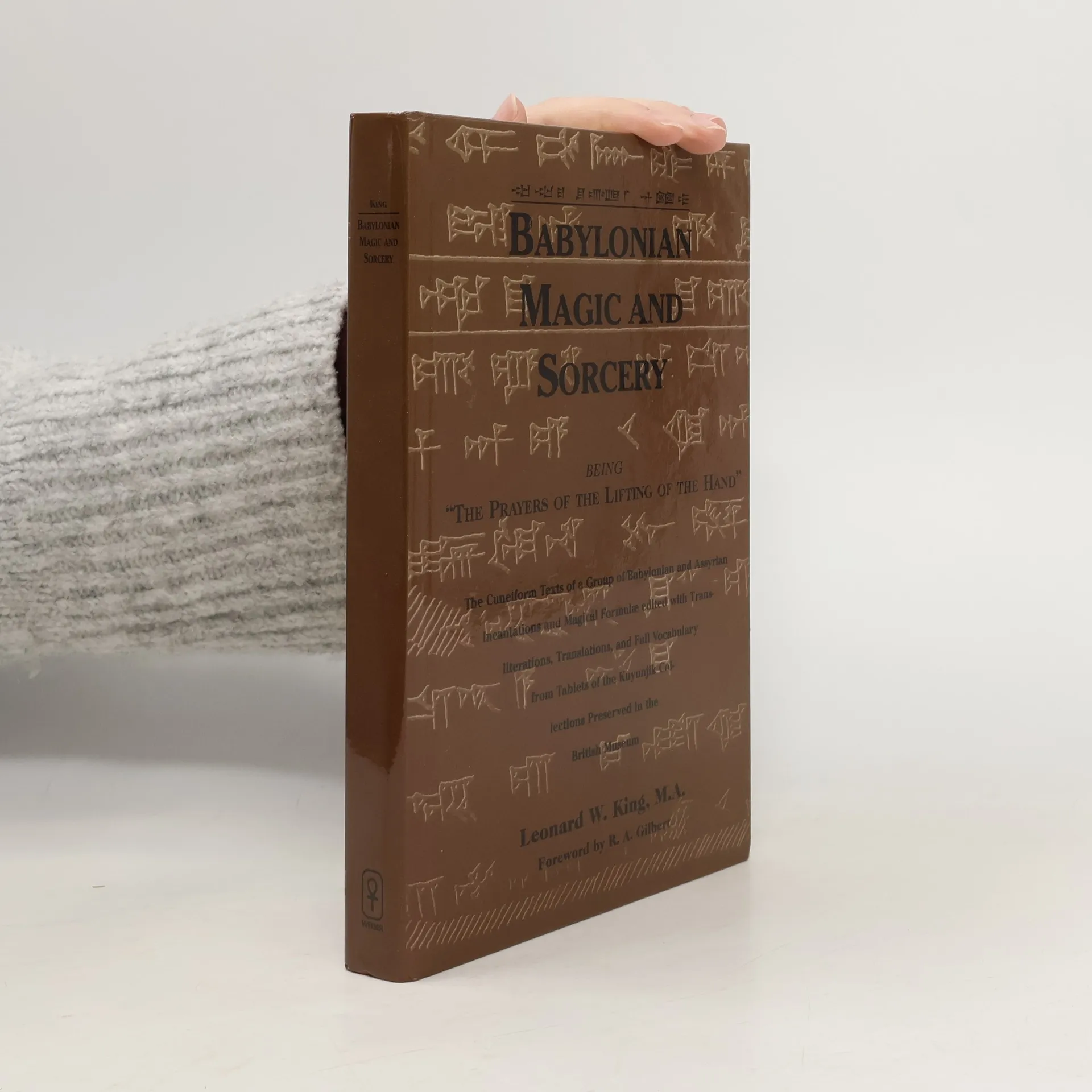
First published in 1896, King presents the cuneiform text of a group of 60 clay tablets inscribed with prayers and religious compositions of a devotional and magical character. These tablets were created by the scribes of Ashurbanipal, King of Assyria, between 669625 b.c., and are currently part of the Kuyunjik collection in the British Museum. King's illustrations feature a transliteration of each tablet with an English translation of wellpreserved passages. King includes a BabylonianEnglish glossary, a list of proper names and numerals with their corresponding cuneiform inscriptions, and a list of words and word portions of uncertain translation.
Leonard William King Books
Leonard William King was an English archaeologist and Assyriologist whose work centered on the Near East. He was known for collecting and studying ancient inscriptions and for translating pivotal texts, including the Code of Hammurabi. King also lectured on Assyrian and Babylonian archaeology, and his extensive publications significantly advanced the understanding of ancient civilizations. His career also involved a significant role at the British Museum, focusing on Egyptian and Assyrian antiquities.


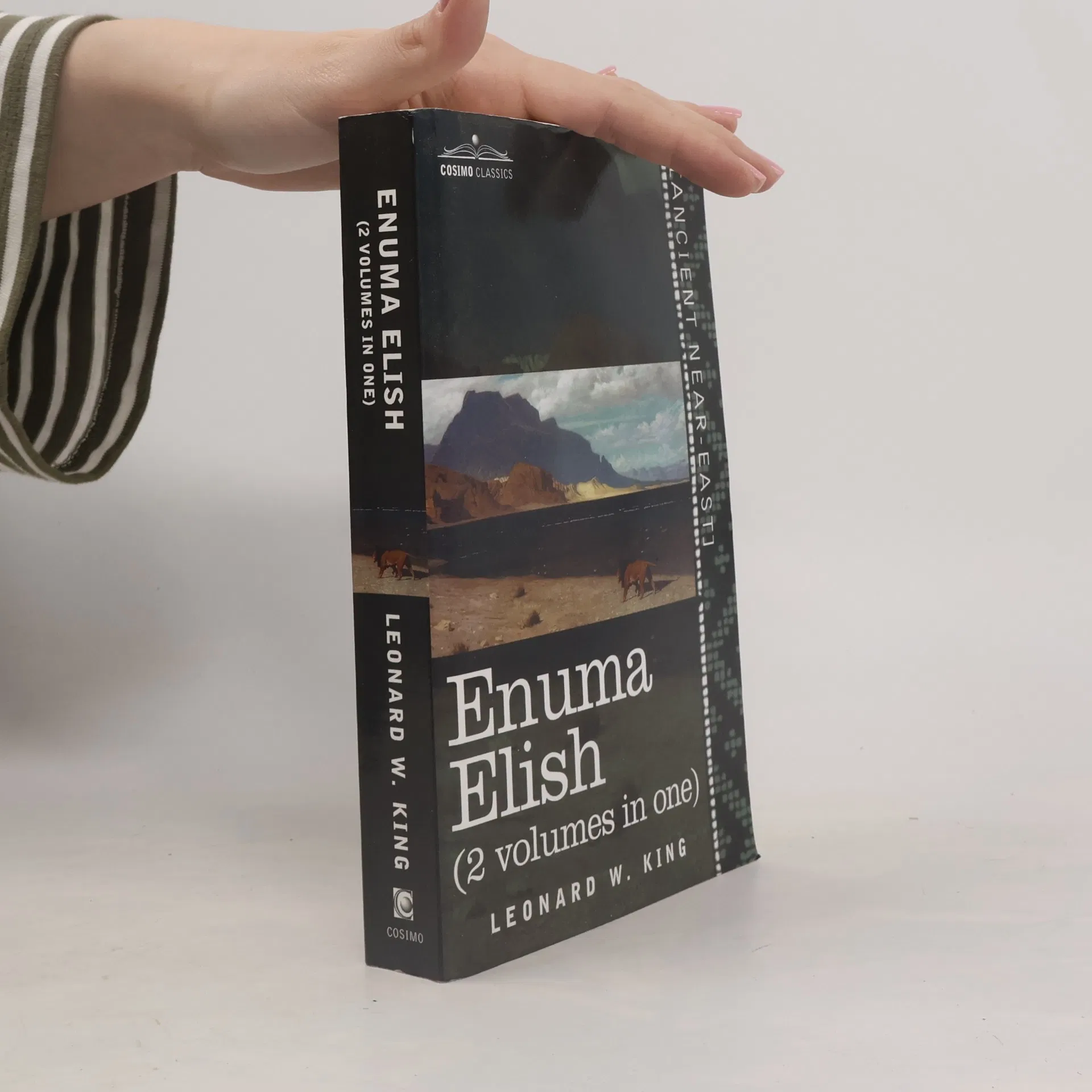
Enuma Elish (2 Volumes in One)
- 494 pages
- 18 hours of reading
Enuma Elish, the Babylonian version of the story of creation, predates much of the Book of Genesis. Passed down orally for generations until finally being recorded on seven clay tablets, this epic was discovered by 19th-century archeologists among the ruins of the Library of King Ashurbanipal in modern-day Iraq. Translator and editor L.W. King has divided the Seven Tablets of Creation into two volumes, which are combined in this book. In Volume 1, readers will find the English translation of each of the seven tablets, plus sections on the composition of the poem, parallels in Hebrew literature, and the reconstruction and arrangement of the text. In Volume 2, readers will find other accounts of the history of creation, an index, a glossary, and numerous indices and appendices. Religious scholars and anyone interested in human origins will enjoy King's translation of and commentary on this classic, first published in 1902. British classical scholar LEONARD W. KING (1869-1919) was Assistant Keeper of Egyptian and Assyrian Antiquities at the British Museum and professor of Assyrian and Babylonian archaeology at the University of London, King's College. He also wrote Babylonian Magic and Sorcery (1896) and A History of Sumer and Akkad (1910).