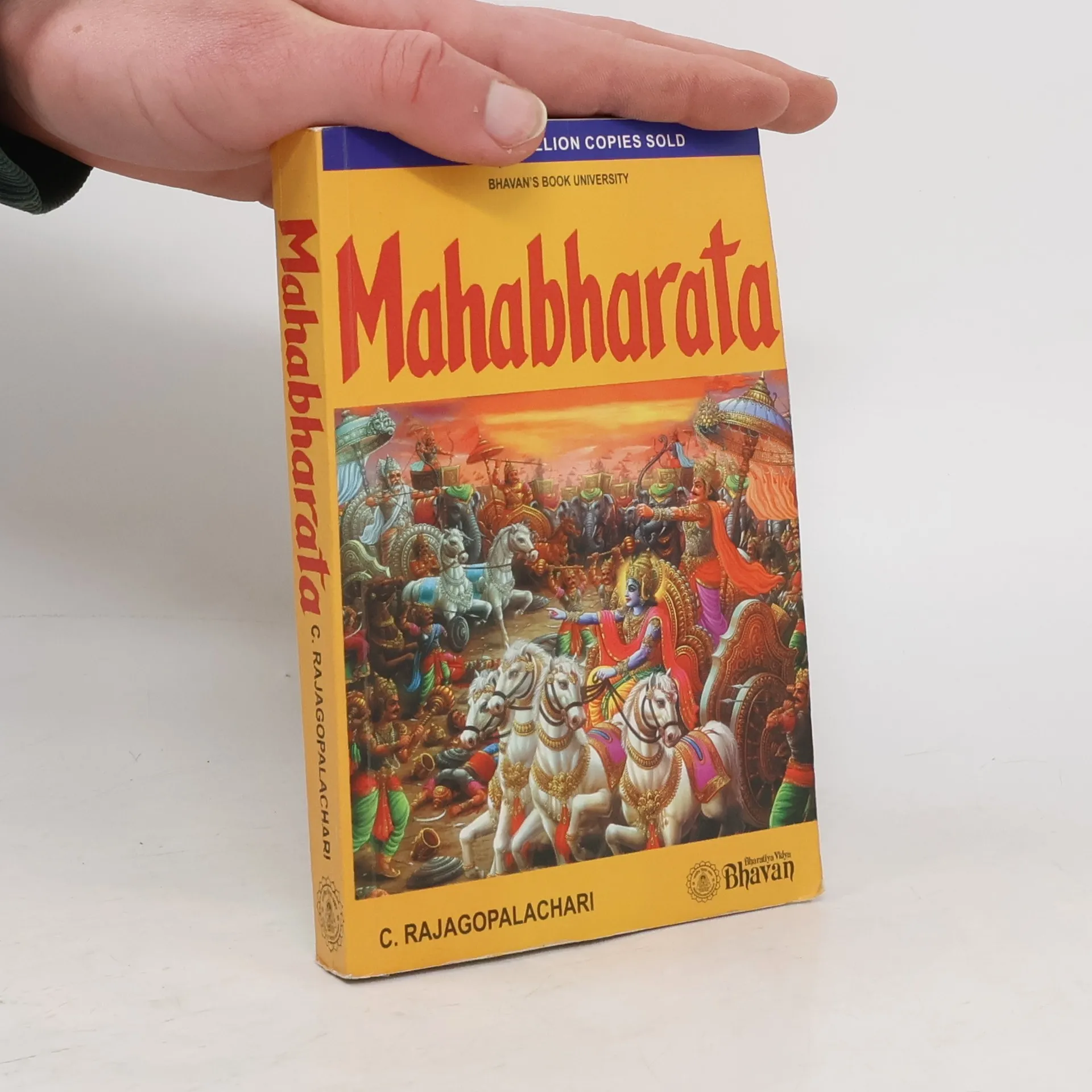
The Bhagavad-gita is the main source-book on yoga and a concise summary of India's Vedic wisdom. Yet remarkably, the setting for this classic of spiritual literature is an ancient Indian battlefield. At the last moment, the great warrior Arjuna begins to wonder about the real meaning of his life.
Originally published in the year 1951, the huge popularity of the book has resulted in the book being re-printed several times. Centuries ago, it was proclaimed of the Mahabharata: "What is not in it, is nowhere." But even now, we can use the same words about it. He who knows it not, knows not the heights and depths of the soul; he misses the trials and tragedy and the beauty and grandeur of life. The Mahabharata is not a mere epic; it is a romance telling the tale of heroic men and women, and of some who were divine. It is a whole literature in itself, containing a code of life, a philosophy of social and ethical relations, and speculative thought on human problems that is hard to rival.