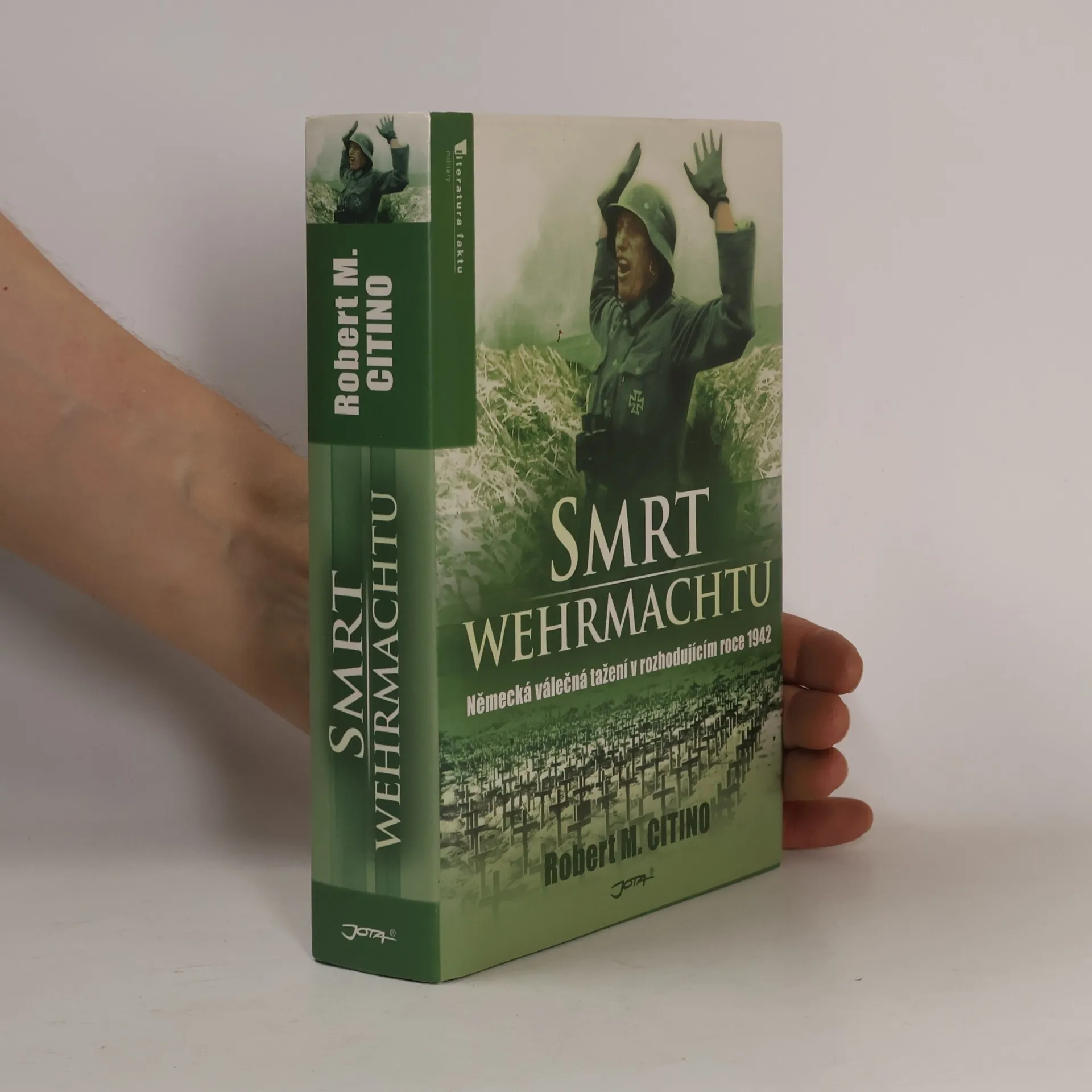
Robert M. Citino is an American history professor specializing in German military history. His work focuses on in-depth analysis of military strategies and tactics that shaped key events of the 20th century. Citino is distinguished by his analytical approach to military history and his ability to render a complex picture of battles and campaigns. His writing offers readers fresh insights into the evolution of modern warfare.
For Hitler and German military, 1942 was a turning point of World War II, as an overstretched but still lethal Wehrmacht replaced victories and territorial gains with stalemates and strategic retreats. This book shows how campaigns of 1942 fit within the patterns of Prussian/German warmaking and ultimately doomed Hitler's expansionist ambitions.
Podtitul: Německá válečná tažení v rozhodujícím roce 1942
Americký profesor historie zkoumá německou armádu v roce 1942, kdy došlo k obratu ve druhé světové válce, když wehrmacht přešel z ofenzivy do defenzivy. Tento rok byl pro Hitlera a německé ozbrojené síly klíčový, když se z vynikajících vítězství staly patové situace a strategické ústupy. Autor ukazuje, že potíže německé armády pramenily z posedlosti „válkou v pohybu“, což bylo součástí Hitlerova chybného způsobu vedení války. Od taktických vítězství u Kerče a Charkova po porážky u El Alameinu nabízí nový pohled na tento rok. Citino analyzuje, jak tažení zapadala do prusko-německých válečných tradic a jak ovlivnila Hitlerovy expanzionistické ambice. Zkoumá klíčové bitvy na východní a severoafrické frontě a hodnotí, jak se armáda vyrovnala se změnou situace. Dále rekonstruuje názory německých generálů a zdůrazňuje, jak extrémní agresivita velitelů, jako byl Erwin Rommel, ovlivnila výsledky. Rok 1942 tak znamenal zánik tradičních metod „německého způsobu válčení“, které selhaly před složitými problémy dvacátého století. Robert M. Citino, profesor evropské historie, mistrovsky kombinuje vědecký výzkum s poutavým vyprávěním a poskytuje nový pohled na pád jedné z nejsilnějších armád v historii.