

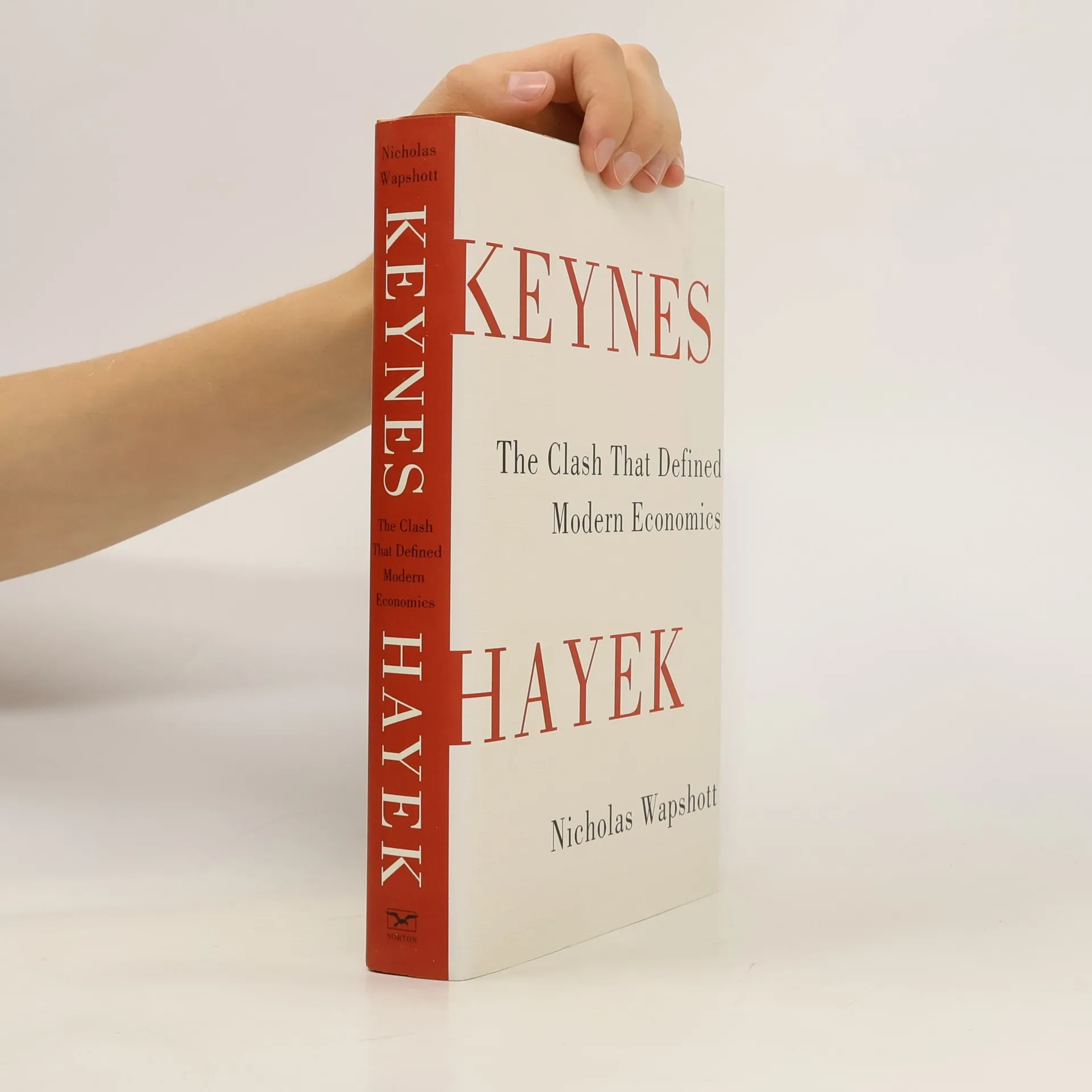
Provides a history of the diverging economic viewpoints that emerged after the 1929 stock market crash, one from Cambridge economist John Maynard Keynes, the other from Austrian economics professor Freidrich Hayek.
Nicolas Wapshott Books
Nicholas Wapshott is a journalist whose writing delves into the intricate dynamics of political and social landscapes. His work scrutinizes the complex relationships between influential figures, exploring the profound consequences of their decisions. With a background in journalism, he approaches his subjects with rigorous research and sharp insight into human nature. His narratives offer readers a compelling look at pivotal historical moments and the forces that shape them.


Samuelson Friedman
- 352 pages
- 13 hours of reading
"From the author of Keynes Hayek, the next great duel in the history of economics. In 1966 two columnists joined Newsweek magazine. Their assignment: debate the world of business and economics. Paul Samuelson was a towering figure in Keynesian economics, which supported the management of the economy along lines prescribed by John Maynard Keynes's General Theory. Milton Friedman, little known at that time outside of conservative academic circles, championed "monetarism" and insisted the Federal Reserve maintain tight control over the amount of money circulating in the economy. In the nimble hands of author and journalist Nicholas Wapshott, Samuelson and Friedman's decades-long argument becomes a window through which to view one of the longest periods of economic turmoil in the United States. As the soaring economy of the 1950s gave way to decades stalked by declining prosperity and "stagflation," it was a time when the theory and practice of economics became the preoccupation of politicians and the focus of national debate. It is an argument that continues today"-- Provided by publisher
麥田書系 - 85: 凱因斯對戰海耶克
決定現代經濟學樣貌的世紀衝突