Explore the latest books of this year!
Bookbot

Publius Cornelius Tacitus

    Tacitus stands as a Roman historian and senator, celebrated for his penetrating and sharp prose that often employs unconventional Latin syntax. His surviving works delve into the reigns of emperors and the political machinations of the early Roman Empire, offering a critical perspective despite significant gaps in the texts. He is a distinguished author of Latin literature's Silver Age, known for his bold wit and compact style. His writings provide crucial insights into Roman imperial history and society.

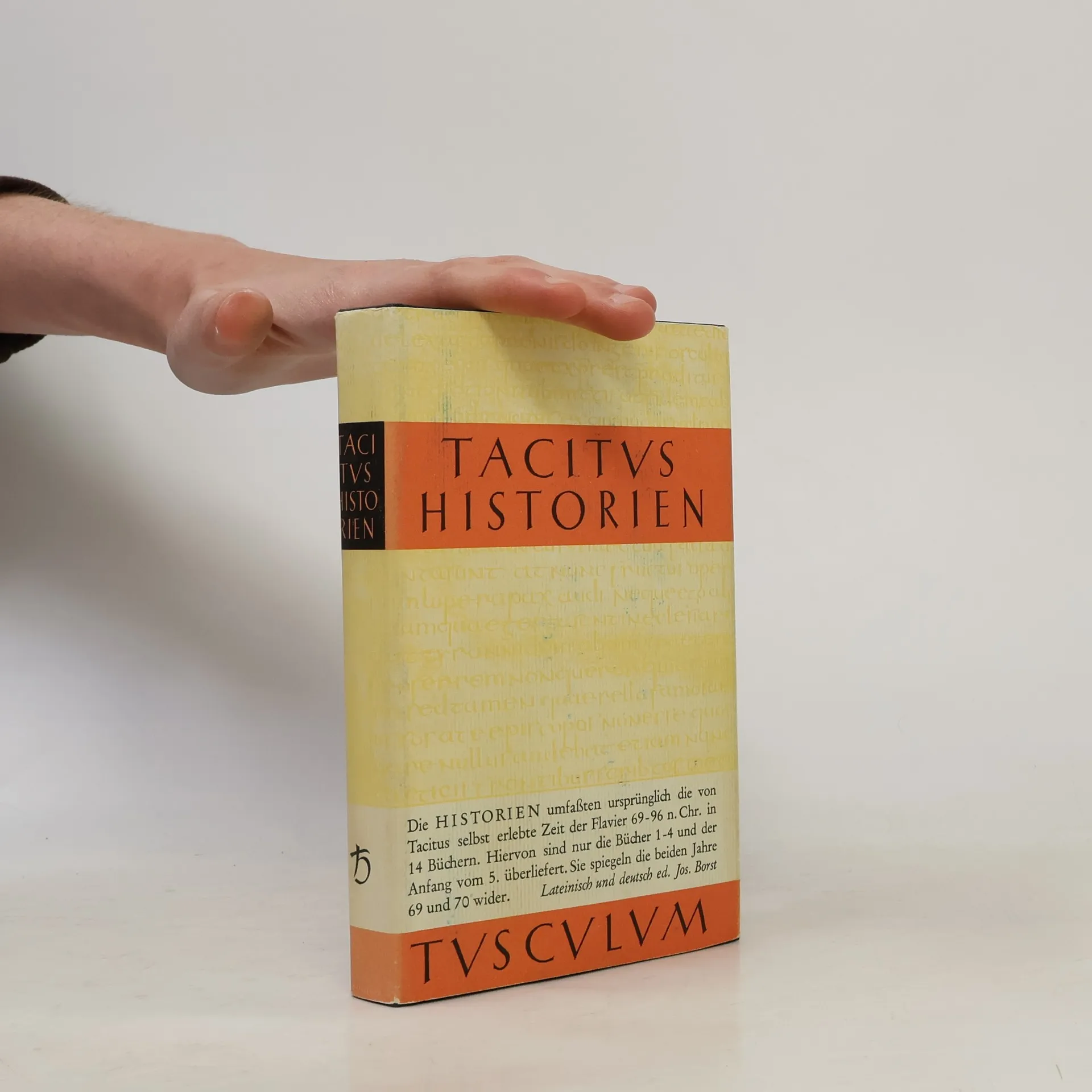
    Tacitus Historien
    Die historischen Versuche
    BUR Classici Greci e Latini - 781: La vita di Agricola - La Germania
    Libri ab excessu divi Augusti
    The Annals of Imperial Rome
    The Histories
    • BUR Classici Greci e Latini - 781: La vita di Agricola - La Germania

      Introduzione e commento di Luciano Lenaz - Testo latino a fronte

      • 300 pages
      • 11 hours of reading

      Testo latino a fronte Tacito, il più grande storico della latinità, esordì con due brevi monografie, due gioielli che già fanno presagire i capolavori della maturità. La vita di Agricola, elogio funebre del suocero Giulio Agricola, artefice dei successi militari romani in Britannia fra il 78 e l'84 d.C., è il ritratto di un uomo esemplare che, lontano sia da un vile servilismo sia da una sterile opposizione, riuscì a essere utile allo Stato anche sotto il governo di un pessimo principe. Nella Germania, l'unica opera di carattere etnografico dedicata a un popolo straniero che ci sia giunta dall'antichità, l'intento descrittivo si colora di motivazioni etiche, contrapponendo polemicamente l'integrità morale dei barbari germani alla corruzione e all'avidità della Roma imperiale. Luciano Lenaz approfondisce nell'introduzione la genesi delle due operette e i numerosi problemi interpretativi che esse pongono.

      BUR Classici Greci e Latini - 781: La vita di Agricola - La Germania1990
    • The Histories

      • 368 pages
      • 13 hours of reading

      In AD 68, Nero's suicide marked the end of the first dynasty of imperial Rome. The following year was one of drama and danger, with four emperors—Galba, Otho, Vitellius, and Vespasian—emerging in succession. Based on authoritative sources, The Histories vividly recounts the details of the "long but single year" of revolution that brought the Roman empire to the brink of collapse.

      The Histories1982
      4.2
    • Tacitus' Annals of Imperial Rome recount the major historical events from the years shortly before the death of Augustus up to the death of Nero in AD 68. With clarity and vivid intensity he describes the reign of terror under the corrupt Tiberius, the great fire of Rome during the time of Nero, and the wars, poisonings, scandals, conspiracies and murders that were part of imperial life. Despite his claim that the Annals were written objectively, Tacitus' account is sharply critical of the emperors' excesses and fearful for the future of Imperial Rome, while also filled with a longing for its past glories.

      The Annals of Imperial Rome1981
      4.0