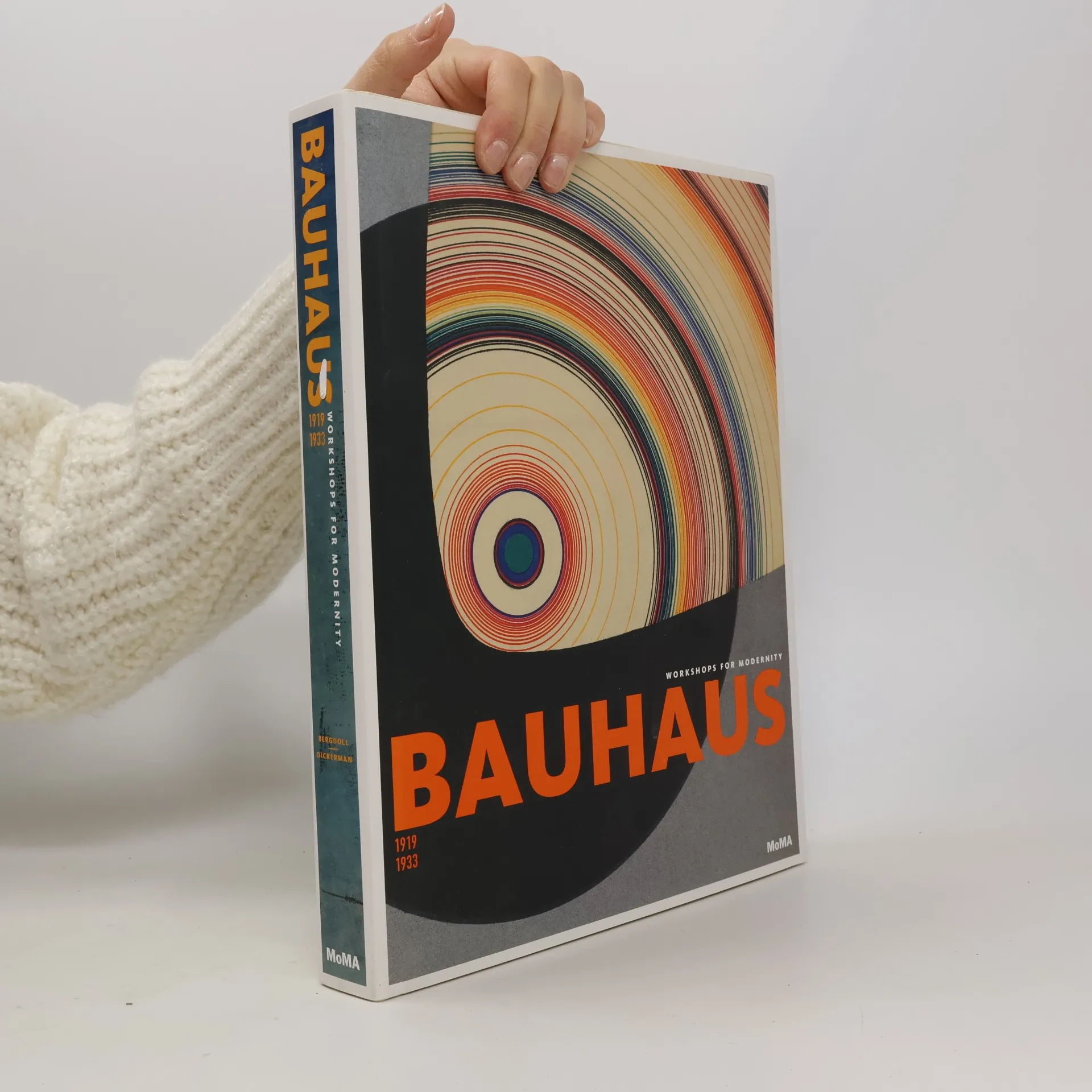
The Bauhaus, founded in Germany in 1919 and closed by the Nazis in 1933, united artists, architects, and designers such as Anni and Josef Albers, Herbert Bayer, and Vasily Kandinsky in a groundbreaking dialogue about art in the industrial age. The school aimed to redefine modern life through a remarkable range of visual arts experiments that have significantly influenced today's world. The accompanying publication, released for a major multimedia exhibition, marks The Museum of Modern Art's first comprehensive exploration of the subject since its notable 1938 exhibition. Organized in collaboration with Germany's key Bauhaus collections, it delves into the diverse outputs of the school, including industrial design, architecture, graphics, textiles, and more. Many featured objects have rarely been seen or published outside Germany. The book includes around 400 color plates and documentary images, along with two essays by curators Barry Bergdoll and Leah Dickerman that offer fresh insights into the Bauhaus. Additionally, over 20 leading scholars contribute shorter essays on 30 significant Bauhaus objects, while an illustrated chronology provides a vibrant overview of the school's history.