

Jordan has played a bigger role in Middle Eastern affairs than its size and economy might warrant, due to its huge Palestinian population, its strategic location between Israel, the West Bank, Syria and Iraq, and its uniquely close relationship with successive British and US administrations. Drawing on numerous visits to the country and interviews with a diversity of people from King Abdullah down, Alan George describes how its reasonably stable monarchical system, unlike that in most Arab countries, has allowed the halting development of civil society and maintained control through the skilful co-option of opponents rather than heavy-handed reliance on its secret police. What is daily life like? How do its parliamentary system and political parties work? How free are the media? What are the future prospects of this buffer 'state without a nation'?
George Alan Appleby Books

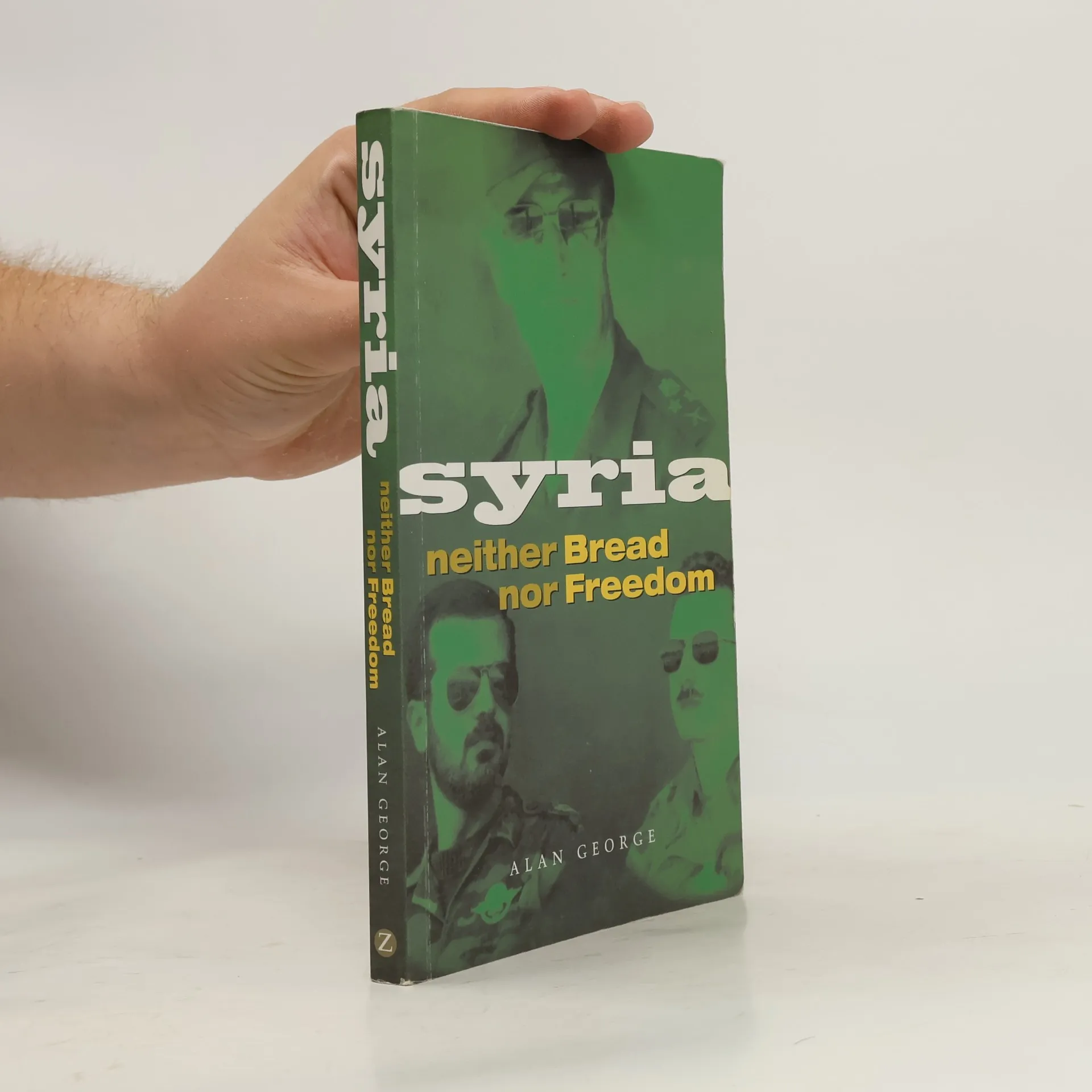

After the death of Syria's President Hafiz al-Asad in mid-2000, hopes were high that his son and successor, Bashar, might succeed in reforming a system that had become a byword for economic stagnation and the pitiless repression of dissent. For six months, and for the first time in decades, Syrians were able to speak freely, without fear of the hated secret police. Political discussion groups mushroomed. The press started carrying articles openly demanding democracy, and petitions were circulated insisting that democracy was essential not only for its own sake but as a condition for desperately needed investment and economic expansion.Based on the testimony of key players, Neither Bread Nor Freedom recounts the drama of the 'Damascus Spring' and its repression, and reveals what happens in a state like Syria to the institutions that occupy the political space between government and governed.From political parties to parliament, from the media to the judicial system and universities, this book lifts the veil of rhetoric and propaganda to reveal a system so demoralized and corrupt that power is wielded for no purpose but power itself. This is Bashar al-Asad's legacy and the system which, given time, he hopes to reform.
Social Work Knowledge: Not Just a Passing Phase
Social Work with Gay, Lesbian, and Bisexual People
- 476 pages
- 17 hours of reading
This comprehensive textbook helps social workers understand and meet the needs of lesbian, gay, and bisexual people. It outlines approaches to a range of everyday problems associated with issues of oppression, family acceptance, shame, identity development, HIV disease, and addiction.The first of the book's three sections provides an overview of what it means to be gay, lesbian, or bisexual, and locates the text within the ecological model of social work on individual, interpersonal, and institutional levels of intervention. This section includes definitions of sexual orientation, forms of heterosexism and homophobia, and issues of community among gay, lesbian, and bisexual people. The second section covers life transitions, including childhood, adolescence, and late life, as well as sexual relationships, parenting, and life in the workplace. The last part covers the special issues and challenges of mental health, substance abuse, violence (both "gay bashing" and domestic violence), and HIV disease. The final chapter pulls together the practice concepts introduced in the book and provides a blueprint for knowledge development and dissemination in the field.