The Fontata Economic History of Europe
The Emergence of Industrial Societies 1
- 368 pages
- 13 hours of reading


Carlo M. Cipolla was an Italian economic historian dedicated to uncovering the fundamental forces shaping human civilization. His work is characterized by an extraordinary breadth, ranging from medieval finance to the history of disease, and a keen insight into how economic factors have molded societies. Cipolla became renowned for his fluid and engaging narrative style, making even complex historical concepts accessible to a broad audience. His essays and books offer a unique perspective on how humanity has evolved and adapted to the challenges of economic life.


The Emergence of Industrial Societies 1
Recounts the history of European clock production and marketing, concentrating on the ways in which clocks and watches economically and socially affected civilization
The stupid are all around us: they are in every place, in every class, ready to cause damage to others and naturally (they are stupid, are they not?) to themselves. The stupid form the most dangerous category of human beings. Woe betide those who underestimate them. The historian Carlo M. Cipolla wrote this essay in a constructive effort to detect, know, and thus possibly neutralize one of the most powerful, dark forces which hinder the growth of human welfare and happiness. And if it then proves impossible to save ourselves from stupidity, at least we can take vengeance by laughing at it. An economic historian of international fame, Carlo M. Cipolla (1922-2000) taught at the University of California, Berkeley, and at the Scuola Normale of Pisa. All his books have been published by il Mulino and translated into numerous languages.
From back cover: 'This book presents a global view of the demographic and economic development of mankind. Professor Cipolla has deliberately adopted a new point of view and has tried to trace the history of the great trends in population and wealth which have affected mankind as a while. For it would have been inadequate to regard such a global history as being merely the sum total of national economic histories in abridged form. Among the massive problems that face the human race the author emphasizes the demographic explosion, the economic backwardness of vast areas, the spread of industrial revolution and of technical knowledge,. Whilst hte theoretical approach can help our analysis of these problems, Professor Cipolla believes that they can only wholly grasped and solved when they are studied in their full historical perspective.
This book examines the methodological problems that have arisen from the clash of these two cultures, and aims to provide an account of the nature and substance of economic history.
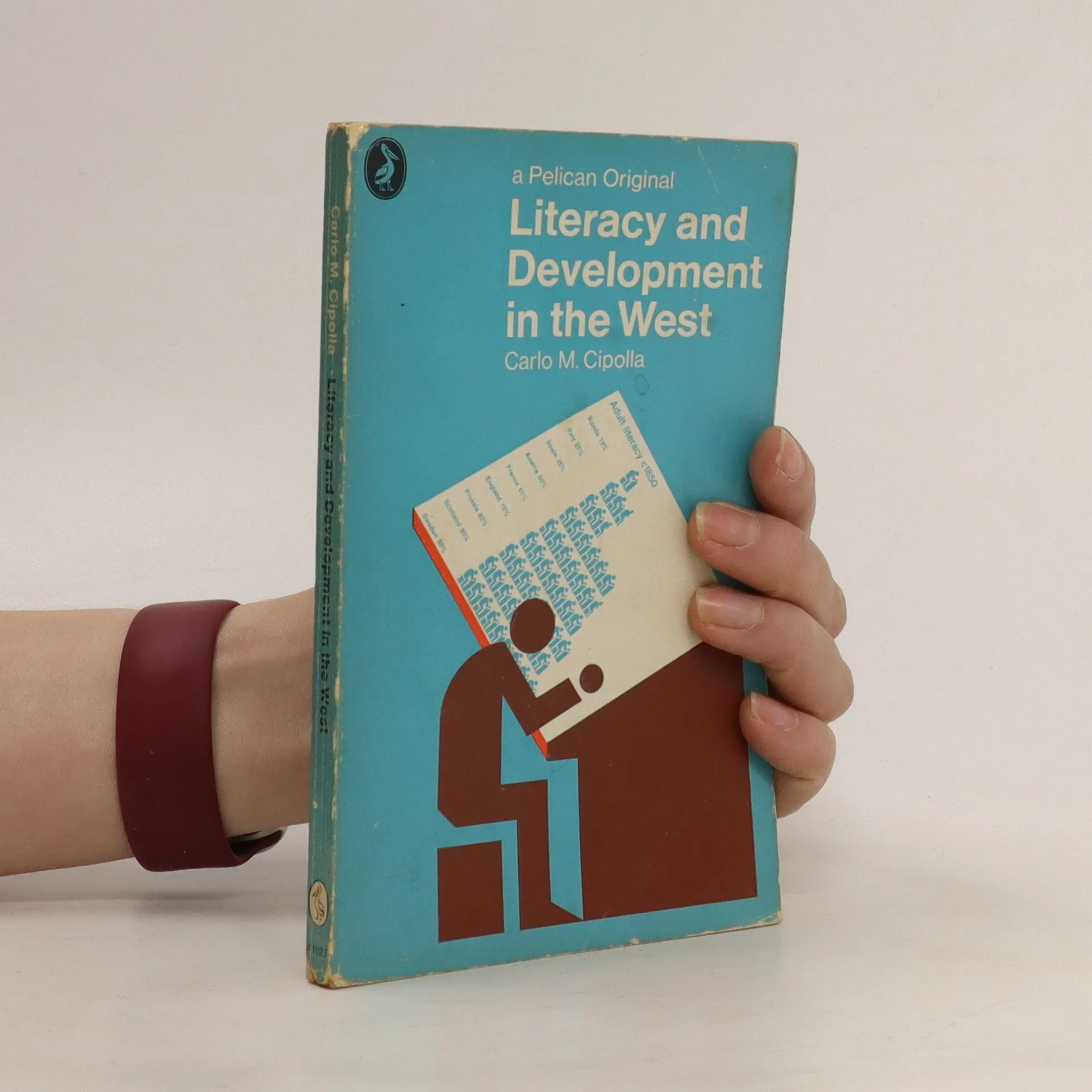
Literacy and Development in the West( Pelican Original)
Benelux, 1920-1970 / by Johan de Vries -- France, 1920-1970 / by Claude Fohlen -- Great Britain, 1920-1970 / by A.J. Youngson -- Germany, 1914-1970 / by Karl Hardach -- Italy, 1920-1970 / by Sergio Ricossa -- Europe in the world economy, 1920-1970 / by John Pinder.
In this volume, Carlo M. Cipolla throws new light on the subject, utilizing newly uncovered and significant archival material.
Sono tre storie curiose, fuori dal comune, ma tutte rigorosamente vere. La prima storia è ambientata nel '300 e riguarda una famiglia fiorentina potentissima dall'intensa attività finanaziaria. Andati a picco per insolvenza della corona inglese cui avevano prestato somme ingentissime, ne combinano di tutti i colori: si danno a intrighi politici, al brigantaggio, agli omicidi, all'attività di falsari. La seconda storia riguarda una truffa clamorosa che, intorno alla metà del '600, ebbe come protagonisti alcuni nobili liguri. Nell'ultima storia Cipolla si sofferma su un'opera apparsa nella seconda metà del '600 in Francia, Le parfait négociant, una sorta di Bibbia del commercio e delle frodi relativa ai vari paesi d'Europa.
In 5 Bänden : sechzehntes und siebzehntes Jahrhundert - Taschenbuchausg.