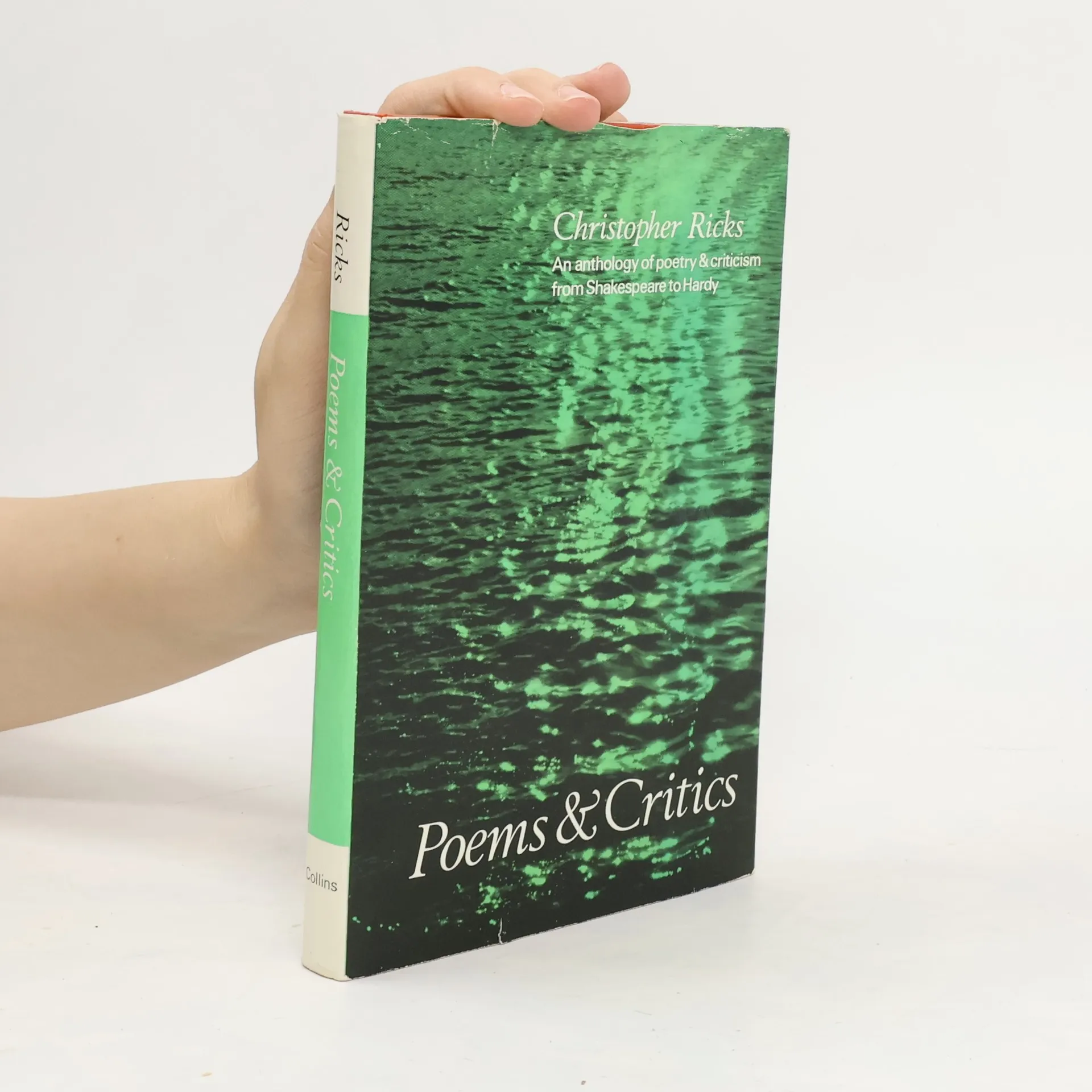
Christopher Ricks is a British literary critic and scholar, known for his championship of Victorian poetry and his enthusiasm for the lyrics of Bob Dylan. His reviews are trenchant, attacking those he deems pretentious, while warmly praising those he finds humane or humorous. His critical intelligence and eloquent prose are unparalleled, making him the kind of critic every poet dreams of finding.
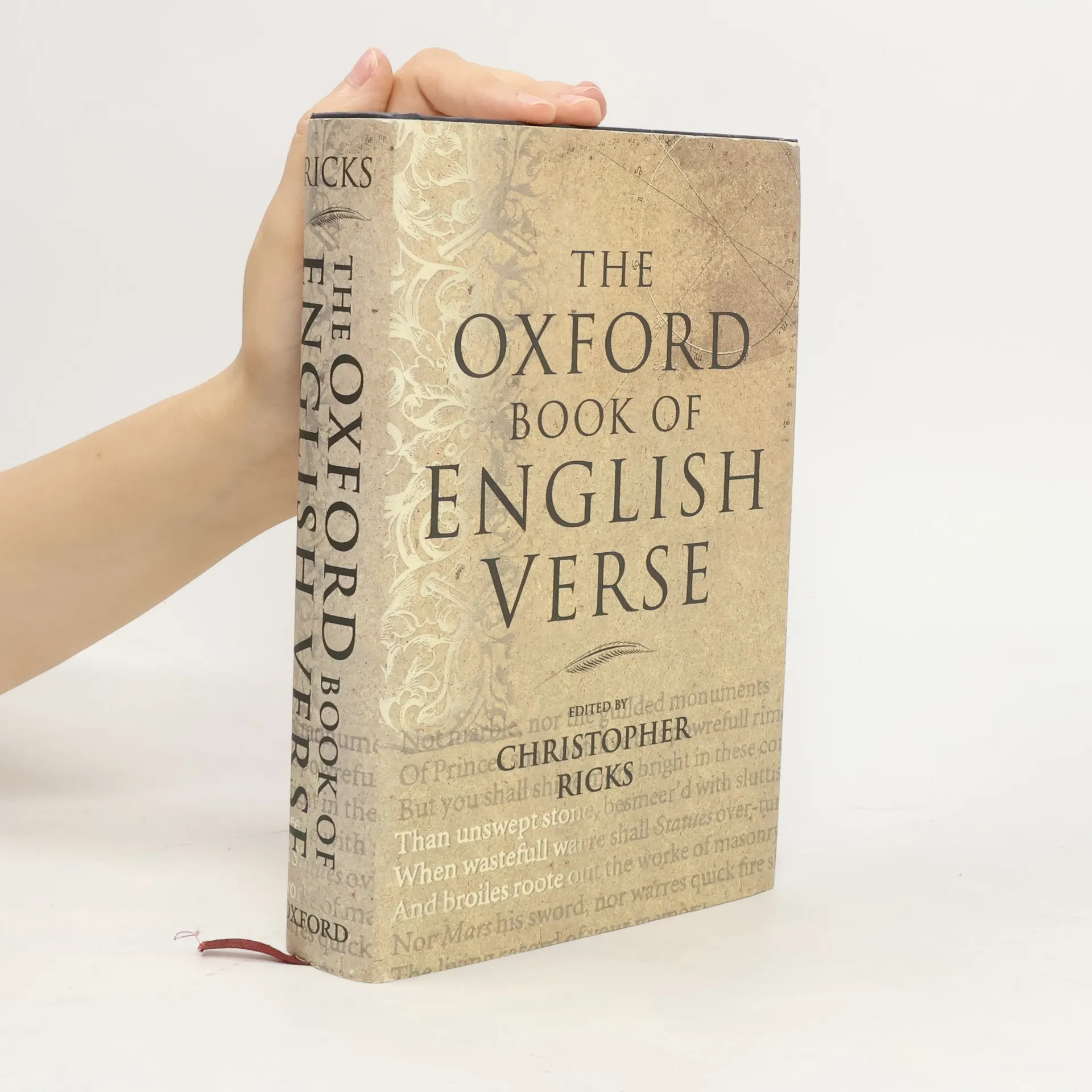
Christopher Ricks's 'Oxford Book of English Verse' -- third in succession,
after Arthur Quiller-Couch's original volume (1900) and Helen Gardner's new
selection (1972) -- is a treasury from more than seven centuries of the poet's
art. Poems that are also translations are included.
In Essays in Appreciation, Christopher Ricks continues the work of his highly-praised The Force of Poetry, with lively and provoking essays on poets and poetry. In addition, Ricks puts his appreciative pen in the service of other literary figures and genres, including drama, the novel, history and philosophy, and a discussion of Victorian biographies. Ricks wraps up the collection with a series of critical questions on literature and theory; plus two notes--on the canon, and on Empson and political criticism. W.H. Auden once wrote of Christopher Ricks that "he is exactly the kind of critic every poet dreams of finding;" with this latest volume every scholar as well as serious reader will join the poet in finding much to appreciate.
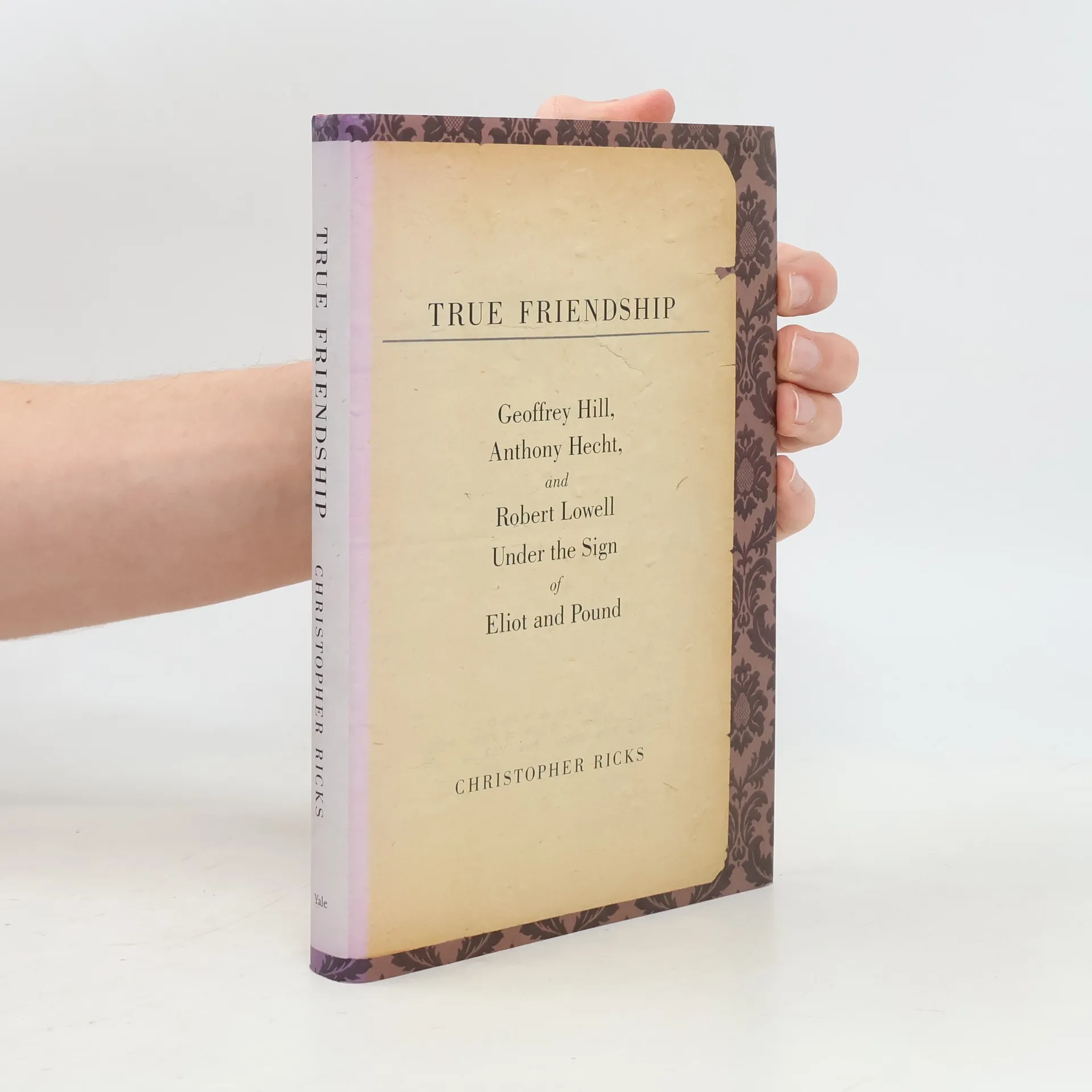
Geoffrey Hill, Anthony Hecht, and Robert Lowell Under the Sign of Eliot and Pound
258 pages
10 hours of reading
True Friendship looks closely at three outstanding poets of the past half-century—Geoffrey Hill, Anthony Hecht, and Robert Lowell—through the lens of their relation to their two predecessors in genius, T. S. Eliot and Ezra Pound. The critical attention then finds itself reciprocated, with Eliot and Pound being in their turn contemplated anew through the lenses of their successors. Hill, Hecht, and Lowell are among the most generously alert and discriminating readers, as is borne out not only by their critical prose but (best of all) by their acts of new creation, those poems of theirs that are thanks to Eliot and Pound. “Opposition is true Friendship.” So William Blake believed, or at any rate hoped. Hill, Hecht, and Lowell demonstrate many kinds of friendship with Eliot and Pound: adversarial, artistic, personal. In their creative assent and dissent, the imaginative literary allusions—like other, wider forms of influence—are shown to constitute the most magnanimous of welcomes and of tributes.
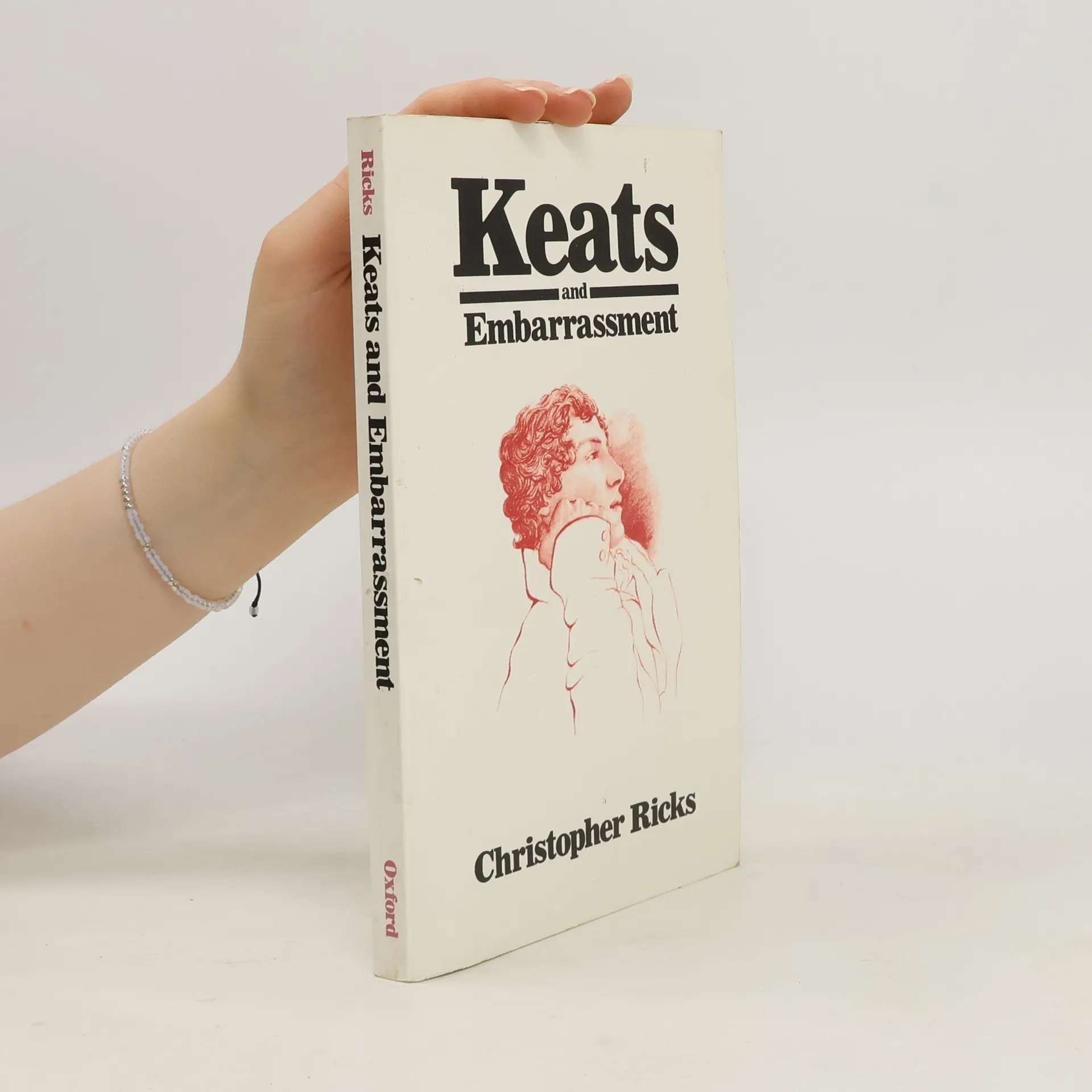
In this acclaimed book, Professor Ricks argues for the importance of embarrassment in human life and for the value works of art which help us deal with embarrassment by recognizing and refining it. As a poet and a man, Keats was especially sensitive to, and morally intelligent about, embarrassment. This study demonstrates the particular direction of his insight and moral concern to acknowledge embarrassability and its involvement in important moral concerns.
Most people want to live forever. But there is another the longing for oblivion. With pain, wit, and humor, the art of Samuel Beckett variously embodies this truth, this ancient enduring belief that it is better to be dead than alive, best of all never to have been born. Beckett is the supreme writer of an age which has created new possibilities and impossibilities even in the matter of death and its definition--an age of transplants and life-support.But how does a writer give life to dismay at life itself, to the not unwelcome encroachments of death, when it is for the life, the vitality of their language that we value writers? Beckett became himself as a writer when he realized in his very words a principle of in clichés, which are dead but won't lie down; in a dead language and its memento mori; in words which mean their own opposites, like cleaving; and in what Beckett called a syntax of weakness.This artful study explores the relation between deep convictions about life or death and the incarnations which these take in the exact turns of a great writer, the realizations of an Irishman who wrote in English and in French, two languages with different apprehensions of life and of death.
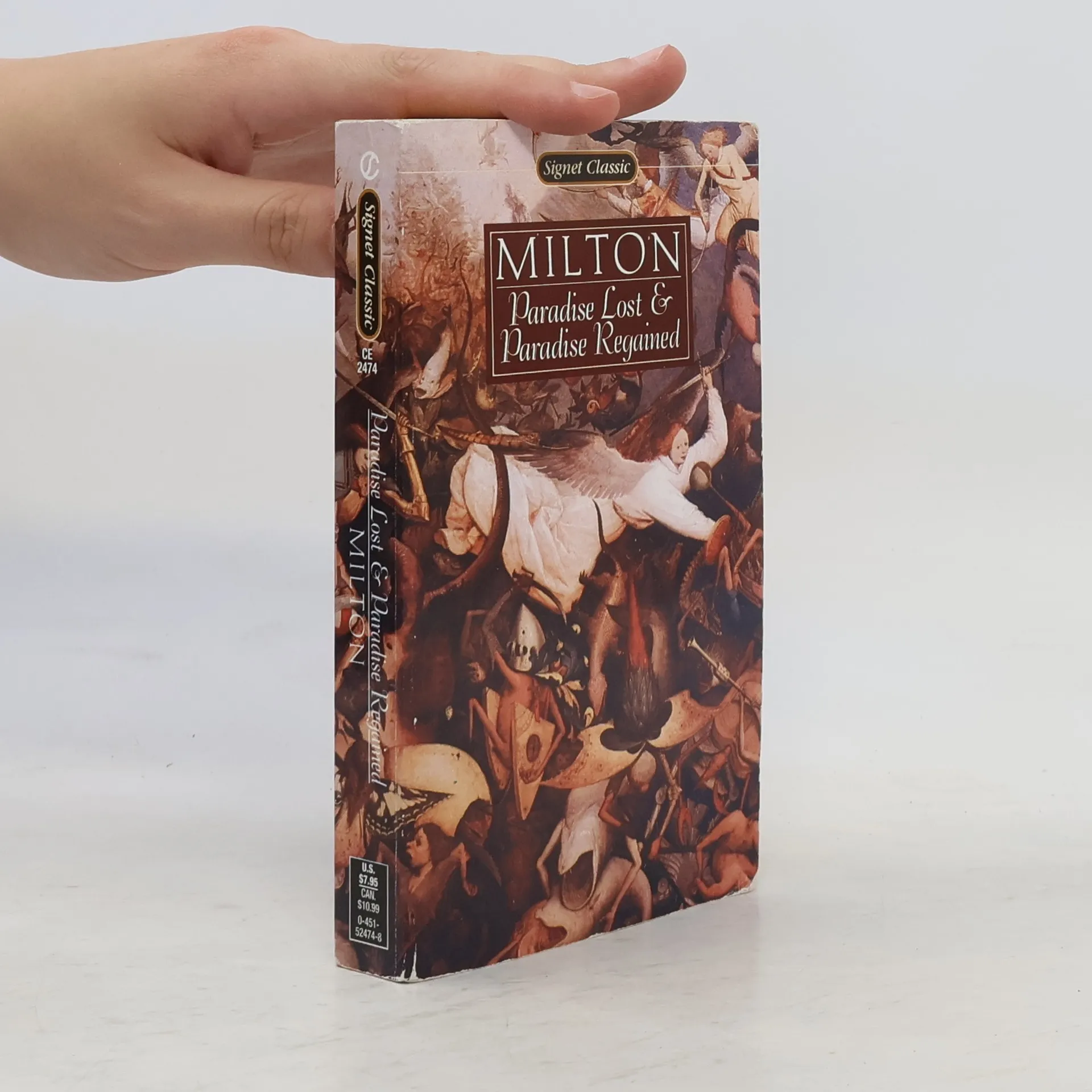
Milton's Paradise Lost is one of the greatest epic poems in the English language. It tells the story of the Fall of Man, a tale of immense drama and excitement, of rebellion and treachery, of innocence pitted against corruption, in which God and Satan fight a bitter battle for control of mankind's destiny. The struggle rages across three worlds - heaven, hell, and earth - as Satan and his band of rebel angels plot their revenge against God. At the center of the conflict are Adam and Eve, motivated by all too human temptations, but whose ultimate downfall is unyielding love. Marked by Milton's characteristic erudition is a work epic both in scale and, notoriously, in ambition. For nearly 350 years it has held generation upon generation of scholars, students and readers in rapt attention and its profound influence can be seen in almost every corner of Western culture.
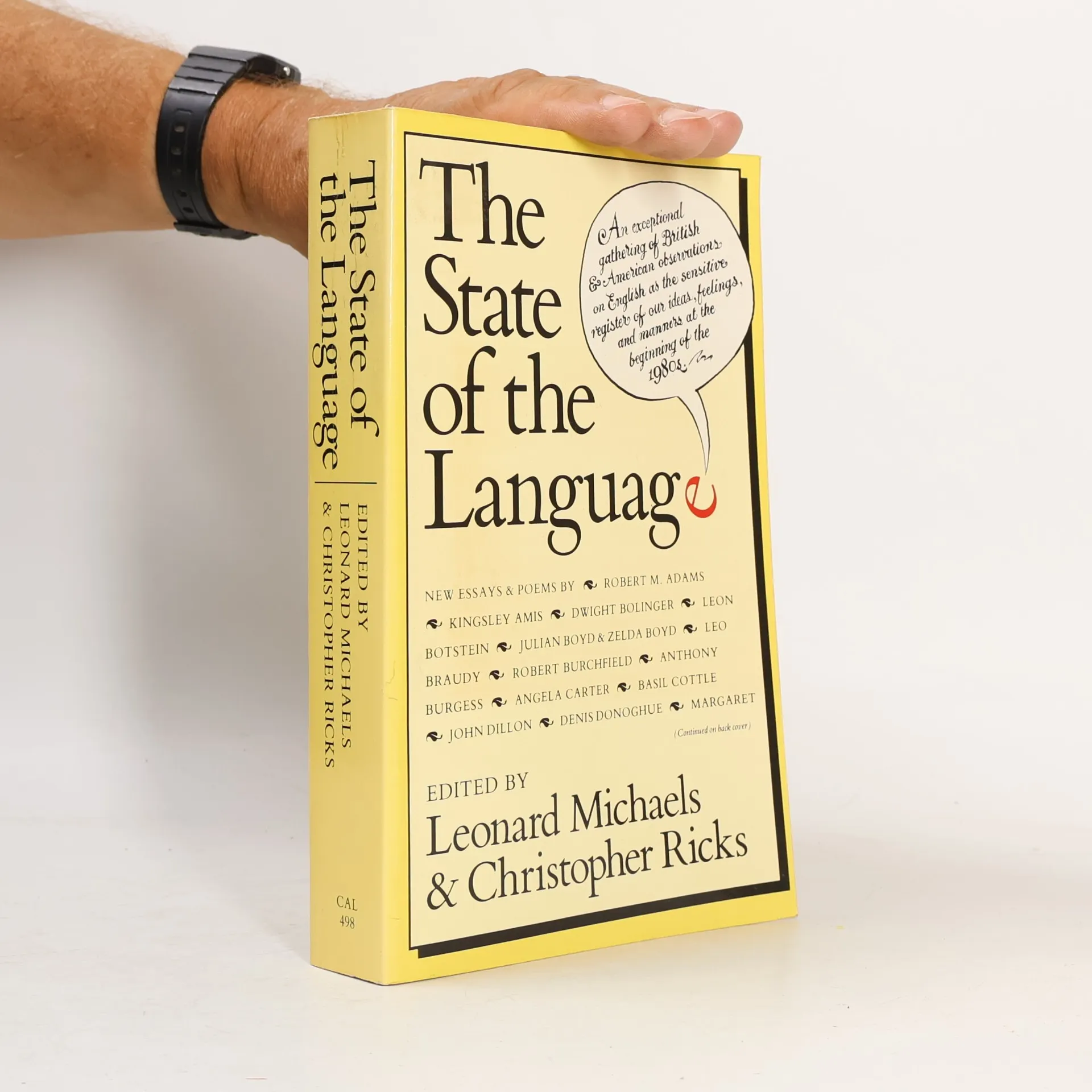
"Sprawling, uncoordinated, uneven, noisy, and appealing," wrote one reviewer of this book. "The language is in rude health," wrote another. Here is the book anew, with fifty fresh contributors writing essays and poems that engage our language today. Imaginative attention is bestowed on the changes of recent years, changes not only in the language but in how language is understood. In the forefront are the relations between different varieties of English and those with which they compete or cooperate. The nervous negotiations of gender and feminism. The darkness of AIDS. The bright flicker of the computer. The old smolderings of "standard English" and correctness. The "bad language" that has lately done so well in our society. How all this has been politicized--or is it rather that its inevitably political nature has only now been recognized? Here these and many other facets of the language catch the various light. What has changed is understood in relation to what has not changed, and what has been gained in relation to what has been lost. There is sweep as well as detail, telescope as well as microscope, in this contemplation of the world of our language as it enters the world of the 1990s.
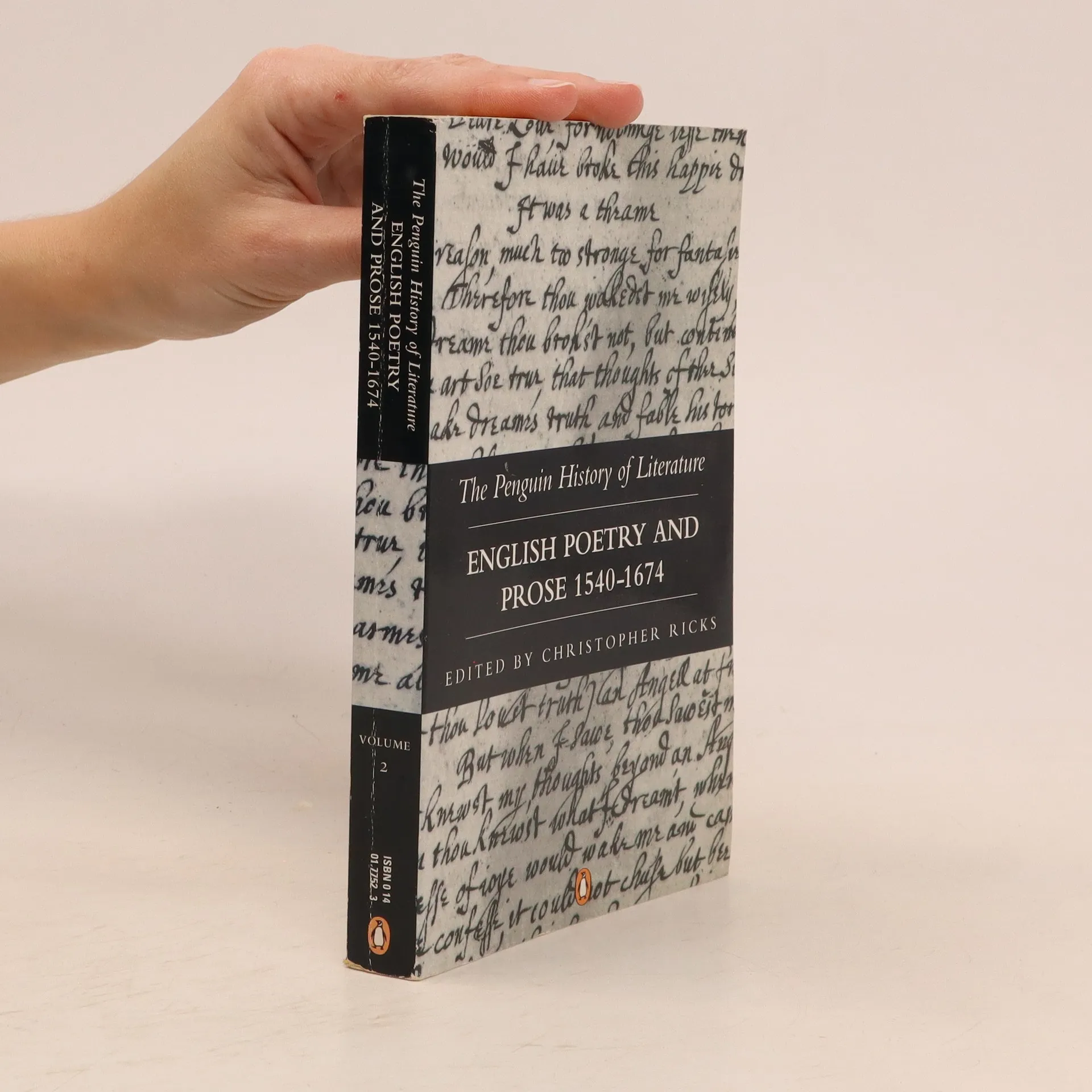
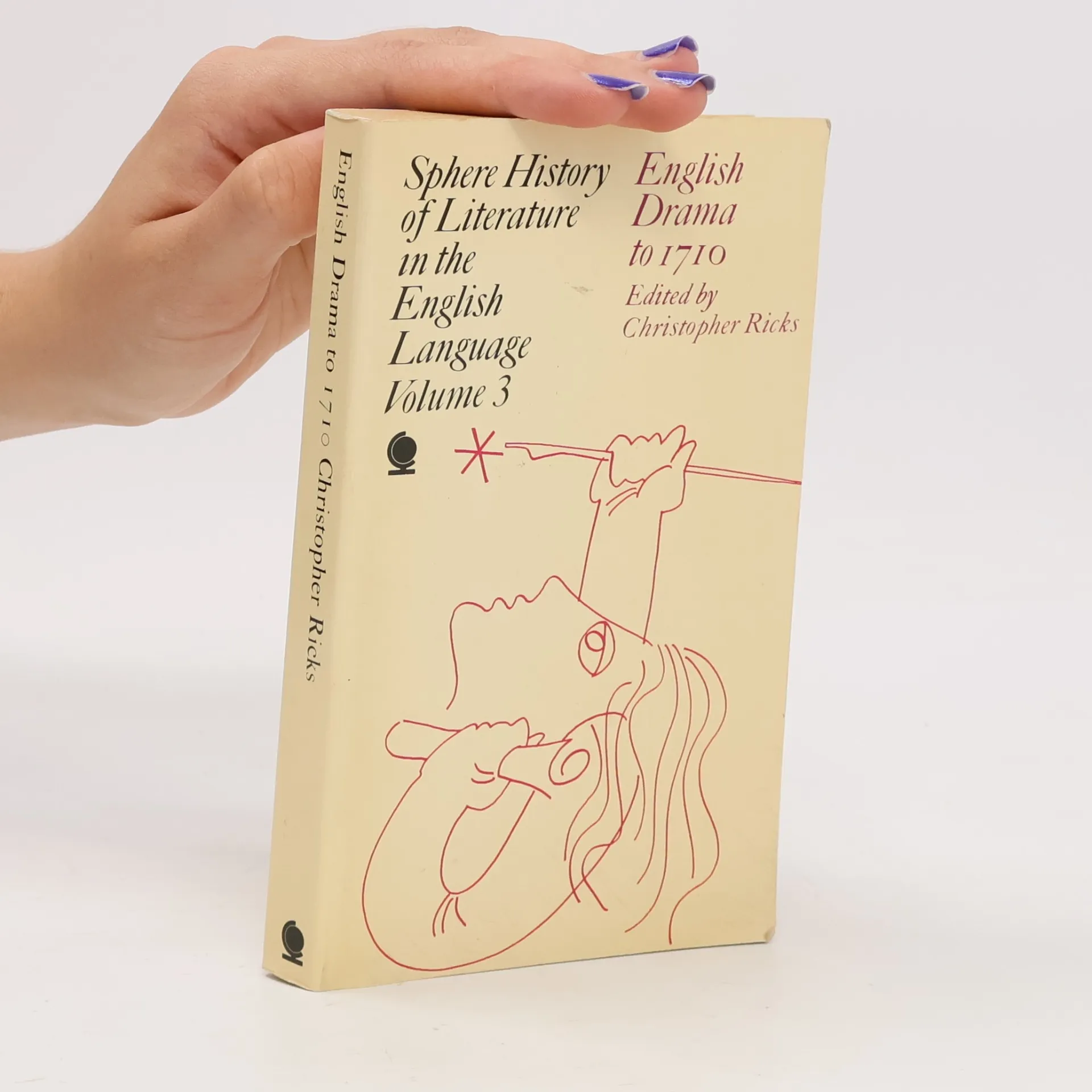
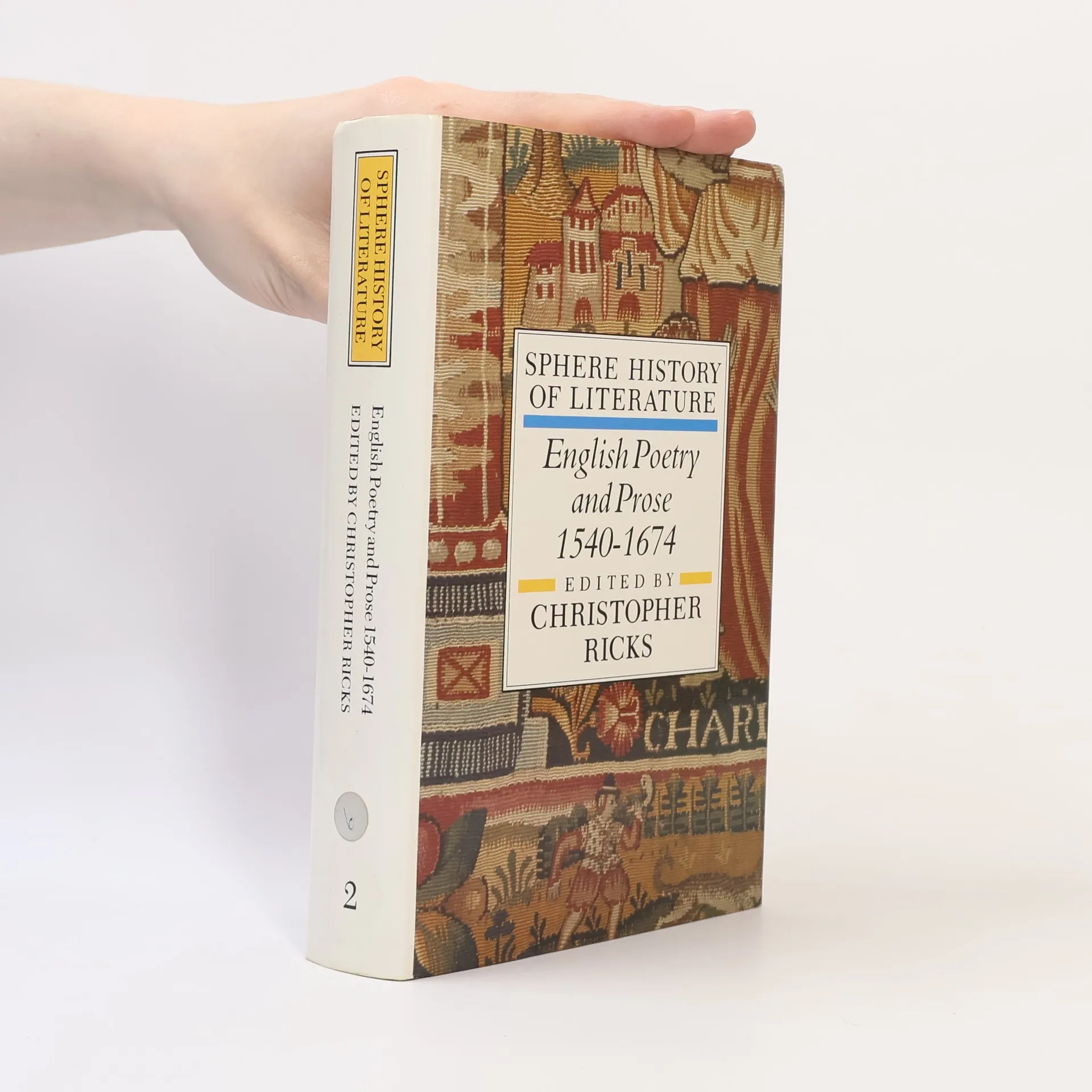
The essays in this volume are intended to give a modern reader a sense of the many contexts within which literature exists. The particular angle or emphasis is the contributor's choice. Thus Spenser's work is discussed in relation to his life and times; Shakespeare's sonnets are explored as transforming a specific genre; while Marvell is read in the context of the Caroline circle. Writers such as Sidney, Donne and Milton are discussed in more than one context. There are substantial chapters on genres, such as the epyllion or minor epic, the lyric and the prose of the period, as well as chapters on individual writers, and there is a bibliography and a table of dates. Published in ten volumes, "The Penguin History of Literature" is a critical survey of English and American literature covering 14 centuries, from the Anglo-Saxons to the present.
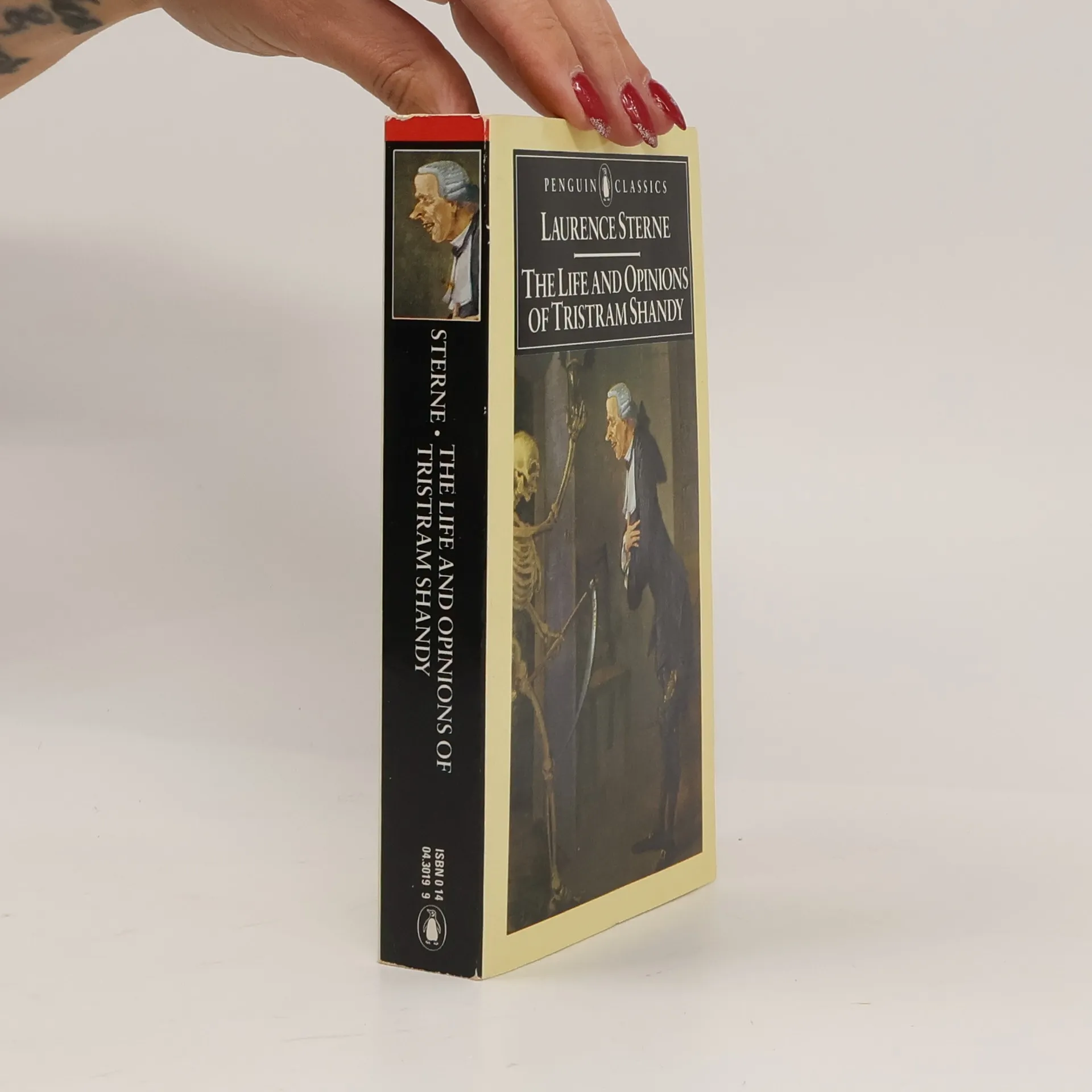
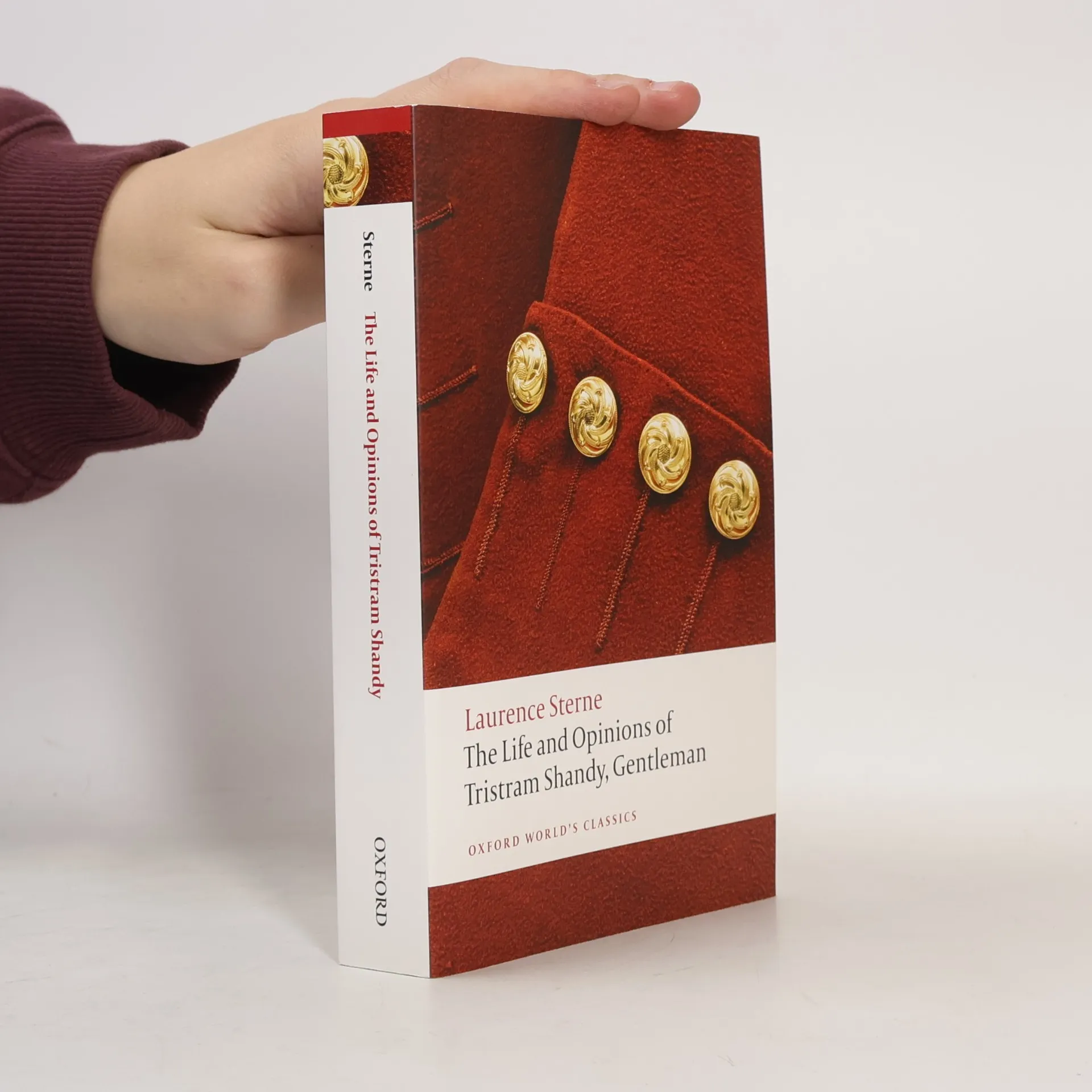
'Nothing odd will do long', said Dr Johnson; 'Tristram Shandy did not last.' But Tristram Shandy has lasted, to be cherished in the century of Joyce and Pirandello perhaps even more than in the eighteenth. No one description will fit this strange, eccentric, endlessly complex masterpiece. It is a novel about writing a novel in which the invented world is as much infused with wit and genius as the theme of inventing it. It is a joyful celebration of the infinite possibilities of the art of fiction, and a wry demonstration of its limitations. It is also, in Christopher Ricks's words, 'the greatest shaggy dog story in the language'.
A novel about writing a novel is the subject of this complex classic which has been described as the greatest shaggy dog story in the English language.
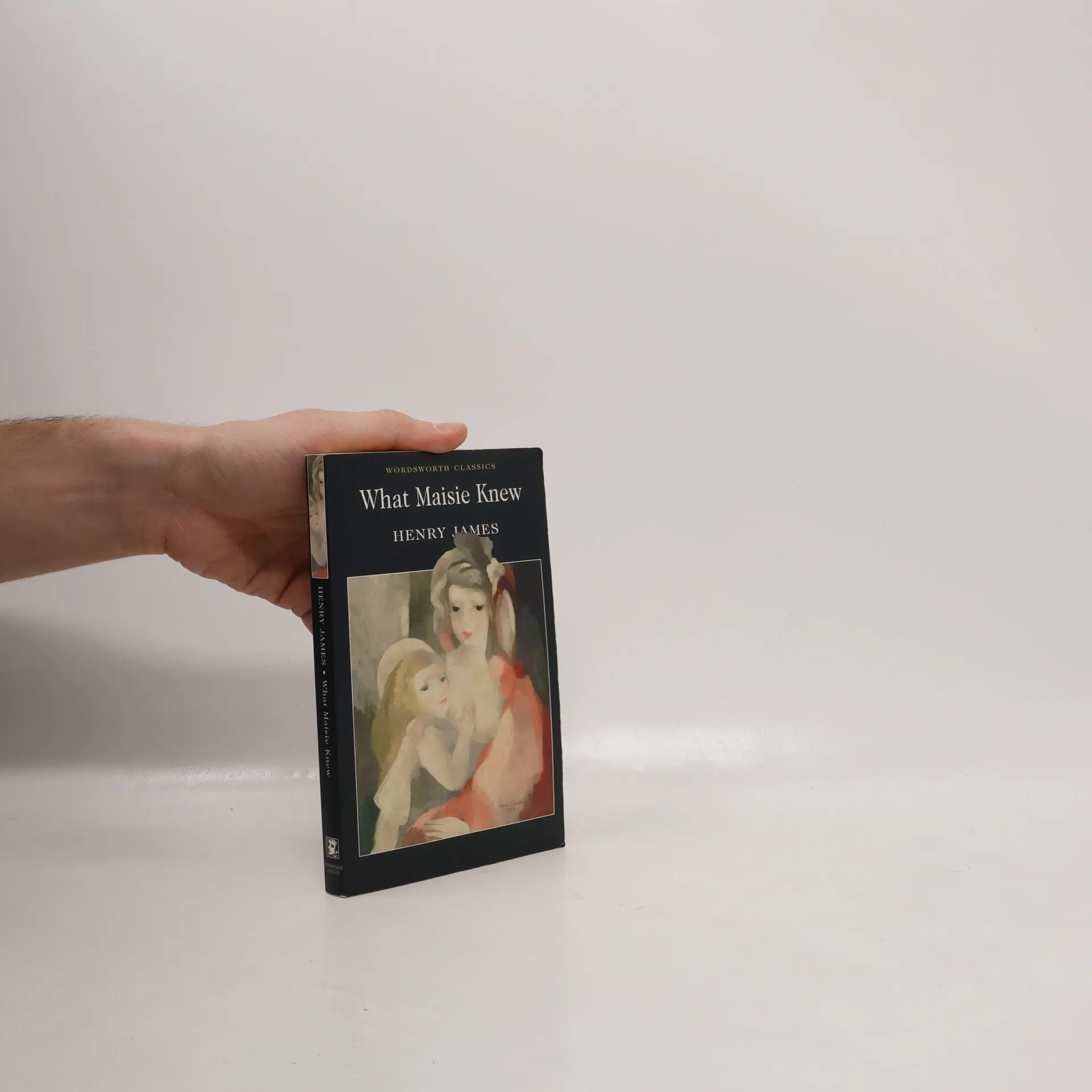
What Maisie Knew (1897) represents one of James's finest reflections on the rites of passage from wonder to knowledge, and the question of their finality. The child of violently divorced parents, Maisie Farange opens her eyes on a distinctly modern world. Mothers and fathers keep changing their partners and names, while she herself becomes the pretext for all sorts of adult sexual intrigue.In this classic tale of the death of childhood, there is a savage comedy that owes much to Dickens. But for his portrayal of the child's capacity for intelligent `wonder', James summons all the subtlety he devotes elsewhere to his most celebrated adult protagonists. Neglected and exploited by everyone around her, Maisie inspires James to dwell with extraordinary acuteness on the things that may pass between adult and child. In addition to a new introduction, this edition of the novel offers particularly detailed notes, bibliography, and a list of variant readings.
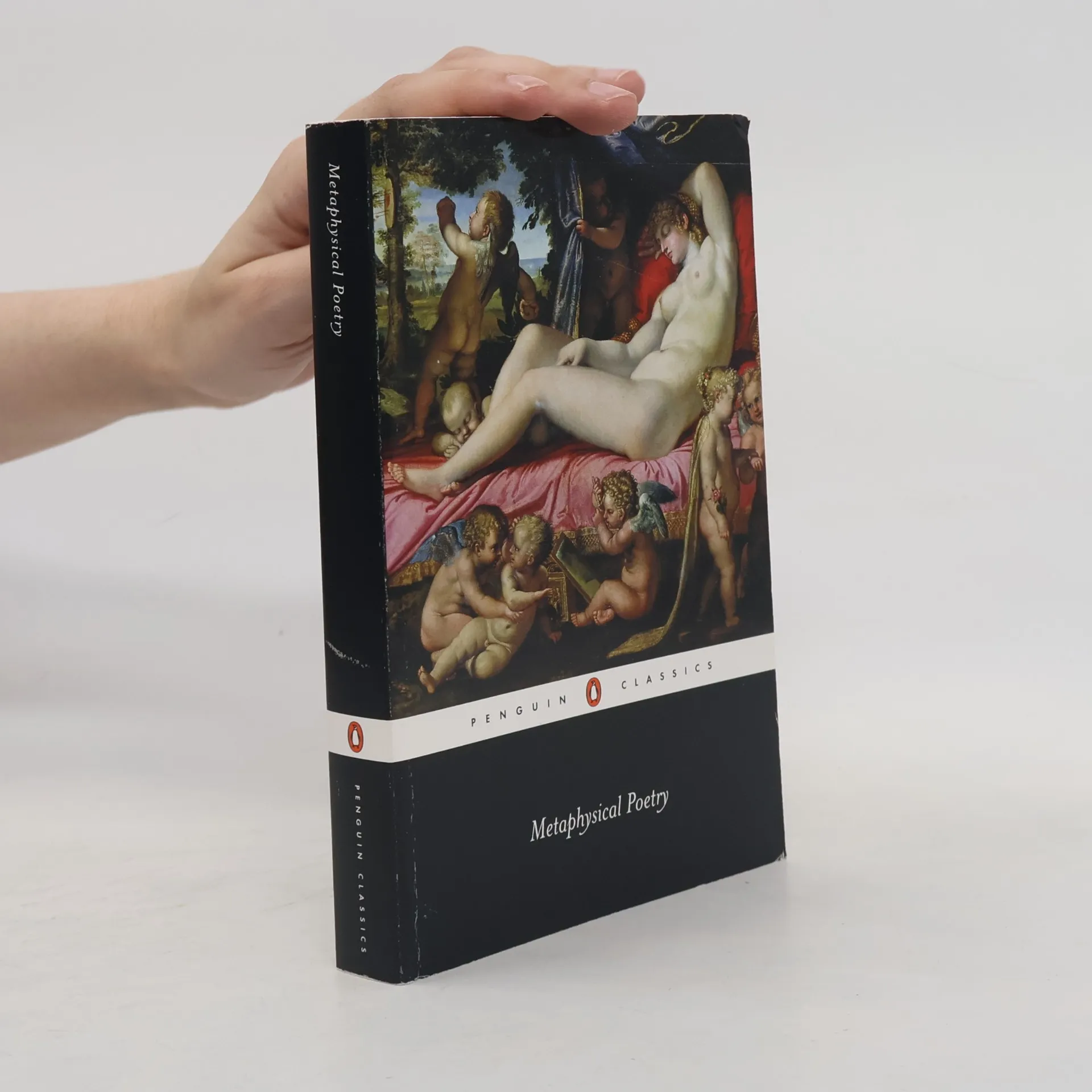
Includes tightly argued lyrics, erotic and libertine considerations of love, divine poems and elegies of lament by such great figures as John Donne, George Herbert, Andrew Marvell and John Milton, alongside pieces from many other less well known but equally poets of the age, such as Anne Bradstreet, Katherine Philips and Thomas Traherne.
The essays in this volume are intended to give a modern reader a sense of the many contexts within which literature exists. The particular angle or emphasis is the contributor's choice. Thus Spenser's work is discussed in relation to his life and times; Shakespeare's sonnets are explored as transforming a specific genre; while Marvell is read in the context of the Caroline circle. Writers such as Sidney, Donne, and Milton are discussed in more than one context. There are substantial chapters on genres, such as the epyllion or minor epic, the lyric, and the prose of the period, as well as chapters on individual writers, and there is a bibliography and a table of dates. This volume is part of a critical survey of English and American literature covering 14 centuries, from the Anglo-Saxons to the present.