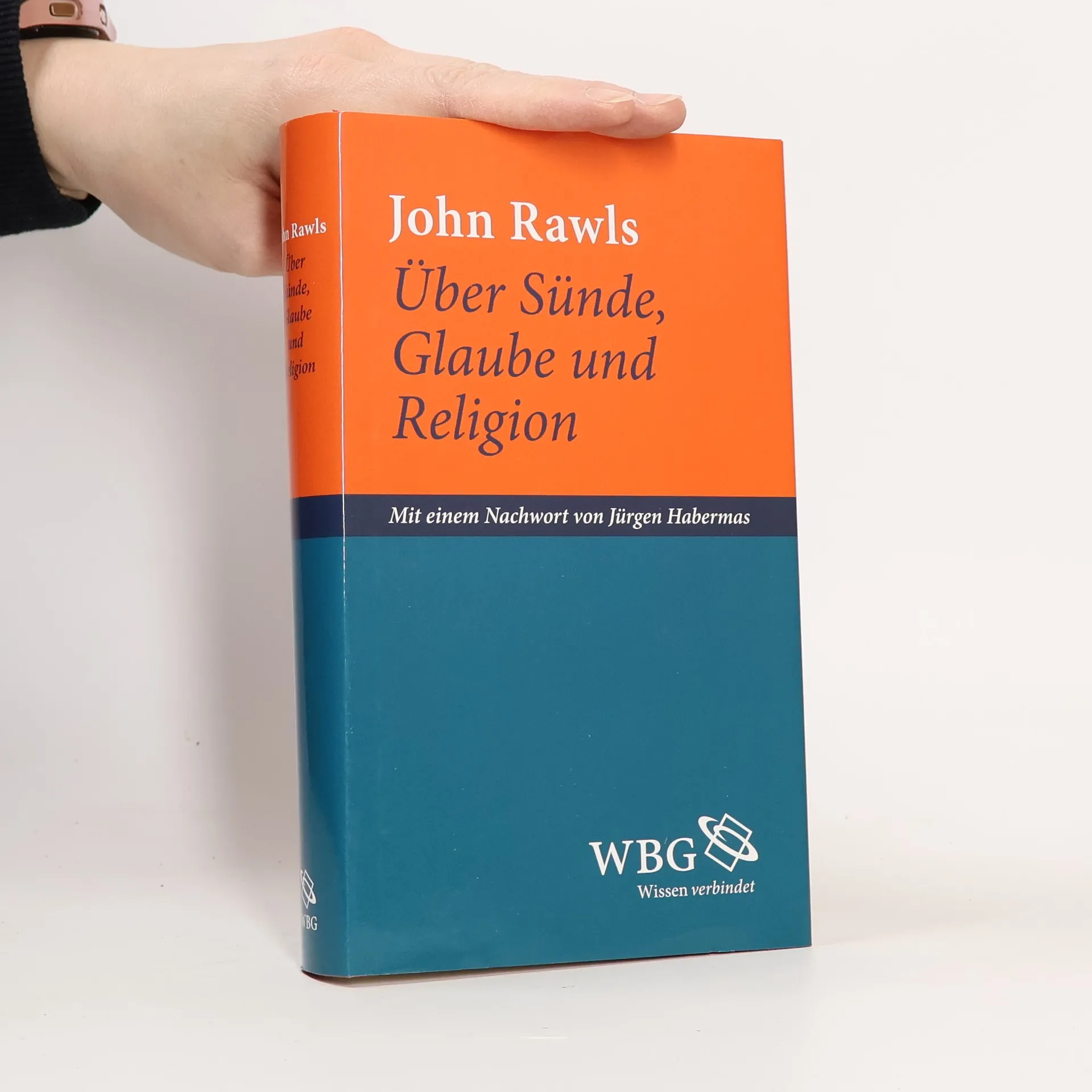
John Rawls veröffentlichte nie etwas über seine eigenen religiösen Überzeugungen, doch nach seinem Tod wurden zwei Texte entdeckt, die außergewöhnliche Einblicke in das Thema bieten. "Eine kurze Untersuchung über die Bedeutung von Sünde und Glauben" ist Rawls' Abschlussarbeit von Dezember 1942, die er kurz vor seinem Eintritt in die Armee einreichte. Zu diesem Zeitpunkt war Rawls tiefgläubig; die Arbeit ist ein bedeutendes Werk der theologischen Ethik, das sowohl eigenständig als auch in Bezug auf seine späteren Schriften von Interesse ist. "Über meinen Glauben", eine 1997 verfasste Erklärung, beschreibt die Entwicklung seiner religiösen Überzeugungen und seine Einstellung zur Religion, einschließlich seines Abfalls von der Orthodoxie während des Zweiten Weltkriegs. Der vorliegende Band enthält diese beiden Texte sowie eine Einleitung von Joshua Cohen und Thomas Nagel, die ihre Beziehung zu Rawls' veröffentlichtem Werk erörtern, und einen Aufsatz von Robert Merrihew Adams, der die Abschlussarbeit in ihren theologischen Kontext einordnet. Die Texte zeigen Rawls' tiefgreifendes Engagement mit Religion, das den Hintergrund seiner späteren Ansichten zur Trennung von Religion und Politik bildet. Zudem stehen die moralischen und sozialen Überzeugungen, die in der Arbeit religiös ausgedrückt werden, in aufschlussreicher Weise im Zusammenhang mit den zentralen Ideen seiner späteren Schriften. Seine Vorstellungen von Sünde, Glauben
John Rawls Book order (chronological)
John Rawls was a leading figure in moral and political philosophy whose magnum opus is considered a primary text in the field. His work begins with the argument that the most reasonable principles of justice are those that everyone would accept from a fair position. Rawls employs thought experiments, such as the famous veil of ignorance, to establish fair agreements where all are impartially situated as equals, thereby determining principles of social justice. His thought helped a generation revive faith in democracy itself.


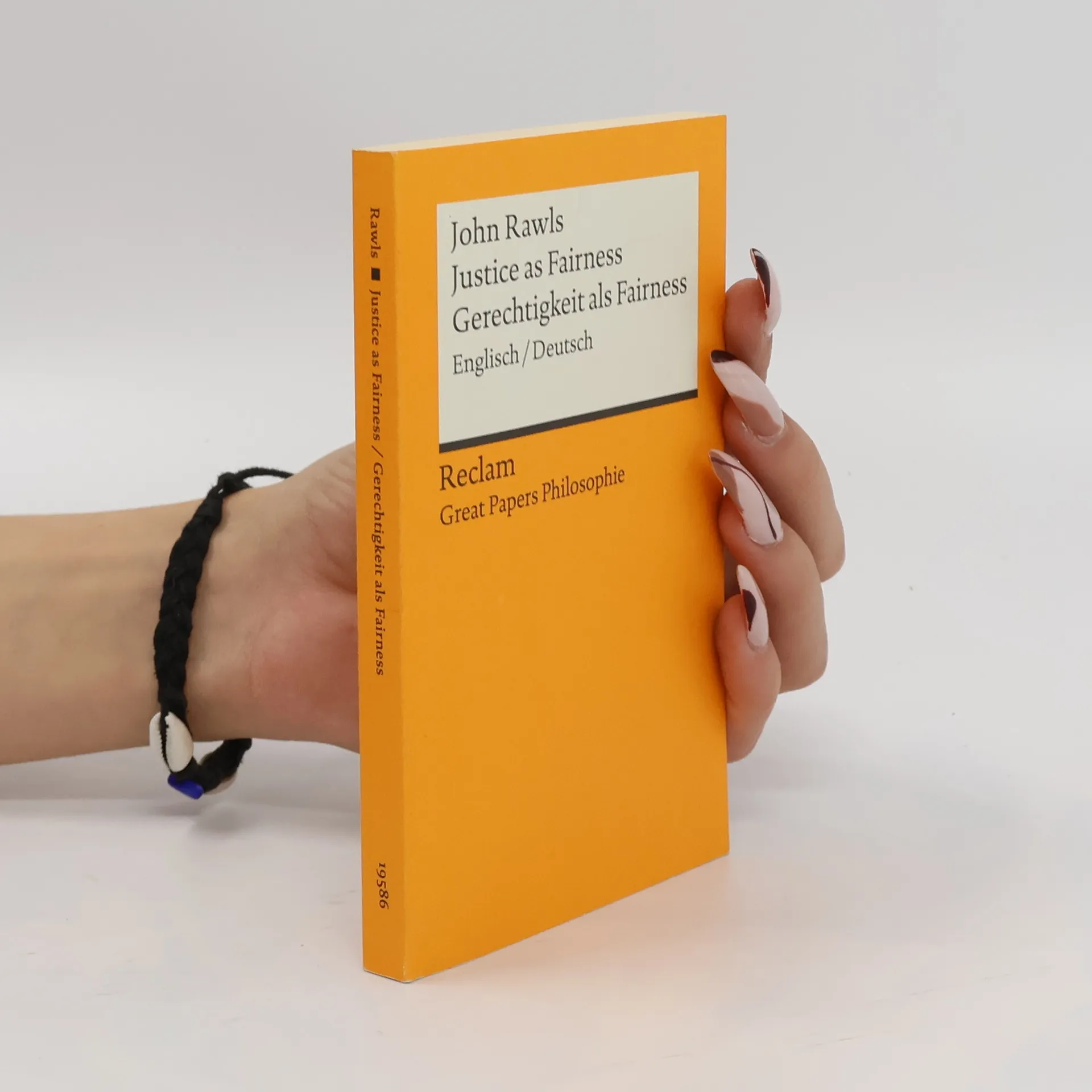


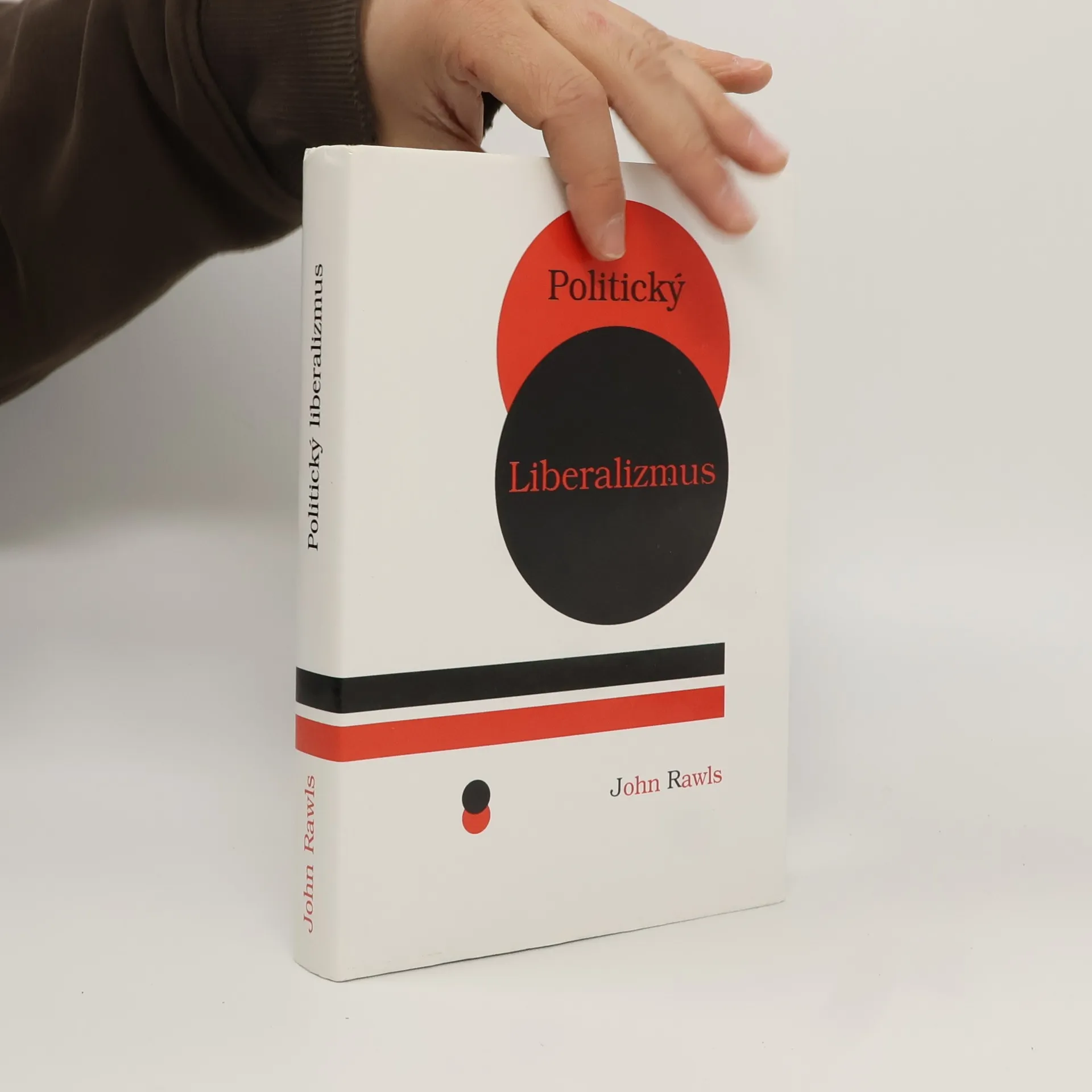
Offers readers an account of the liberal political tradition from a scholar viewed by many as the greatest contemporary exponent of the philosophy behind that tradition.
This book originated as lectures for a course on political philosophy that Rawls taught regularly at Harvard in the 1980s. In time the lectures became a restatement of his theory of justice as fairness, revised in light of his more recent papers and his treatise "Political Liberalism." As Rawls writes in the preface, the restatement presents an account of justice as fairness as he now sees it, drawing on all his previous works. He offers a broad overview of his main lines of thought and also explores specific issues never before addressed in any of his writings. Rawls is well aware that since the publication of "A Theory of Justice," American society has moved farther away from the idea of justice as fairness. Yet his ideas retain their power and relevance to debates in a pluralistic society about the meaning and theoretical viability of liberalism. This book demonstrates that moral clarity can be achieved even when a collective commitment to justice is uncertain.
A collection of the lectures on moral philosophy given by John Rawls over three decades of teaching at Harvard. This book looks at thinkers such as Leibniz, Hume and Kant, in their struggle to define the role of a moral conception in human life. schovat popis
The Law of Peoples
- 210 pages
- 8 hours of reading
This work consists of two parts: 'The Idea of Public Reason Revisited', published in 1997, and 'The Law of Peoples', a reworking of an article published in 1993. Taken together, they are the culmination of more than 50 years of reflection on liberalism and on some pressing problems of our times. schovat popis
Suhrkamp Taschenbuch Wissenschaft: Zur Idee des politischen Liberalismus
John Rawls in der Diskussion
- 452 pages
- 16 hours of reading
Der Band enthält zwölf Beiträge zur aktuellen Diskussion über den politischen Liberalismus. Er geht aus einer Arbeitstagung mit John Rawls hervor, deren Ziel es war, die philosophische und politische Tragfähigkeit einer nur auf den Bereich des Politischen beschränkten Theorie der Gerechtigkeit zu prüfen, wie sie Rawls in seinen jüngsten Aufsätzen vorgestellt hatte. Vom traditionellen Liberalismus unterscheidet sich John Rawls᾿ politischer Liberalismus durch seine philosophische Bescheidenheit. Der für moderne demokratische Gesellschaften charakteristische Pluralismus schließt es aus, die obersten Grundsätze einer das menschliche Leben insgesamt umfassenden moralischen Lehre zu rechtfertigen, wie Kant und John Stuart Mill dies versucht hatten. Dieser Einwand gilt nach Rawls auch für Habermas᾿ Versuch einer diskursethischen Rekonstruktion der normativen Voraussetzungen pluralistischer Demokratie.
Politický liberalizmus
- 304 pages
- 11 hours of reading
Oxford Amnesty Lectures: I diritti umani
Oxford Amnesty Lectures 1993 (memorie documenti biografie)
- 280 pages
- 10 hours of reading
O slobode a spravodlivosti
- 256 pages
- 9 hours of reading
Zborník filozofov hlásiacich sa k liberalizmu.
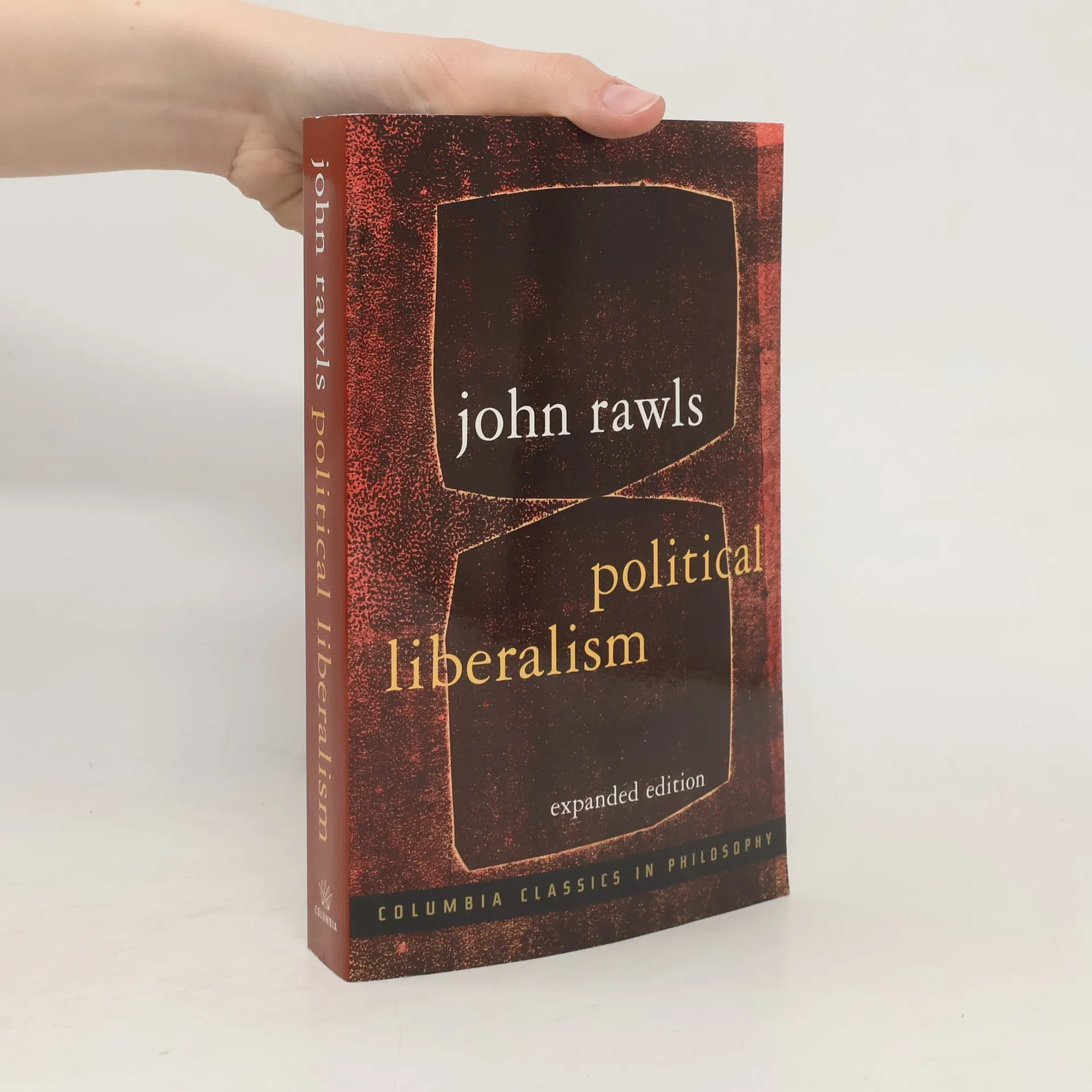
Political Liberalism
- 496 pages
- 18 hours of reading
This book continues and revises the ideas of justice as fairness that John Rawls presented in "A Theory of Justice" but changes its philosophical interpretation in a fundamental way. That previous work assumed what Rawls calls a "well-ordered society," one that is stable and relatively homogenous in its basic moral beliefs and in which there is broad agreement about what constitutes the good life. Yet in modern democratic society a plurality of incompatible and irreconcilable doctrines--religious, philosophical, and moral--coexist within the framework of democratic institutions. Recognizing this as a permanent condition of democracy, Rawls asks how a stable and just society of free and equal citizens can live in concord when divided by reasonable but incompatible doctrines?This edition includes the essay "The Idea of Public Reason Revisited," which outlines Rawls' plans to revise "Political Liberalism, " which were cut short by his death."An extraordinary well-reasoned commentary on "A Theory of Justice."..a decisive turn towards political philosophy."--"Times Literary Supplement"
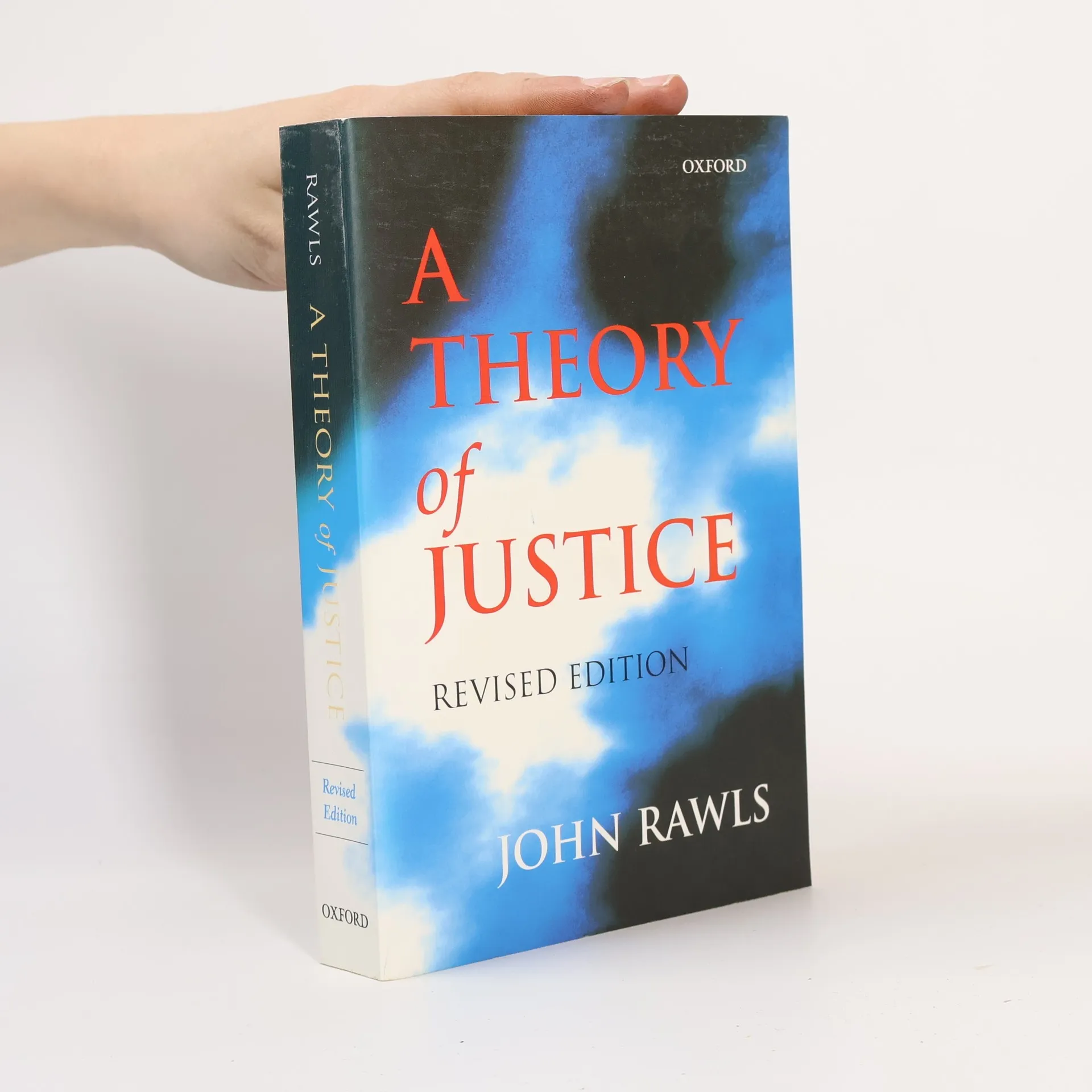
A Theory of Justice
- 560 pages
- 20 hours of reading
Since it appeared in 1971, John Rawls's A Theory of Justice has become a classic. The author has now revised the original edition to clear up a number of difficulties he and others have found in the original book. Rawls aims to express an essential part of the common core of the democratic tradition--justice as fairness--and to provide an alternative to utilitarianism, which had dominated the Anglo-Saxon tradition of political thought since the nineteenth century. Rawls substitutes the ideal of the social contract as a more satisfactory account of the basic rights and liberties of citizens as free and equal persons. "Each person," writes Rawls, "possesses an inviolability founded on justice that even the welfare of society as a whole cannot override." Advancing the ideas of Rousseau, Kant, Emerson, and Lincoln, Rawls's theory is as powerful today as it was when first published.