


Explore the latest books of this year!
Bookbot

Denis de Rougemont Books

    September 8, 1906 – December 6, 1985

    Denis de Rougemont was a Swiss writer and cultural theorist, recognized as a non-conformist thinker of the 1930s. He addressed the perils of totalitarianism from a Christian perspective and became a proponent of European federalism after World War II. His writings, including his influential work on love in the Western world, delve into profound questions of human existence and society. De Rougemont left an indelible mark as a champion of freedom and European identity.

    Denis de Rougemont
    Grenzgänge - Ein Lesebuch
    L'attitude fédéraliste / Die föderalistische Haltung / L'attitudine federalista / The Federalist Attitude
    Les chances de l'Europe
    VINGT-HUIT SIÈCLES D'EUROPE
    Journal aus Deutschland
    Love in the Western world
    • In this classic work, often described as "The History of the Rise, Decline, and Fall of the Love Affair," Denis de Rougemont explores the psychology of love from the legend of Tristan and Isolde to Hollywood. At the heart of his ever-relevant inquiry is the inescapable conflict in the West between marriage and passion--the first associated with social and religious responsiblity and the second with anarchic, unappeasable love as celebrated by the troubadours of medieval Provence. These early poets, according to de Rougemont, spoke the words of an Eros-centered theology, and it was through this "heresy" that a European vocabulary of mysticism flourished and that Western literature took on a new direction. Bringing together historical, religious, philosophical, and cultural dimensions, the author traces the evolution of Western romantic love from its literary beginnings as an awe-inspiring secret to its commercialization in the cinema. He seeks to restore the myth of love to its original integrity and concludes with a philosophical perspective on modern marriage.
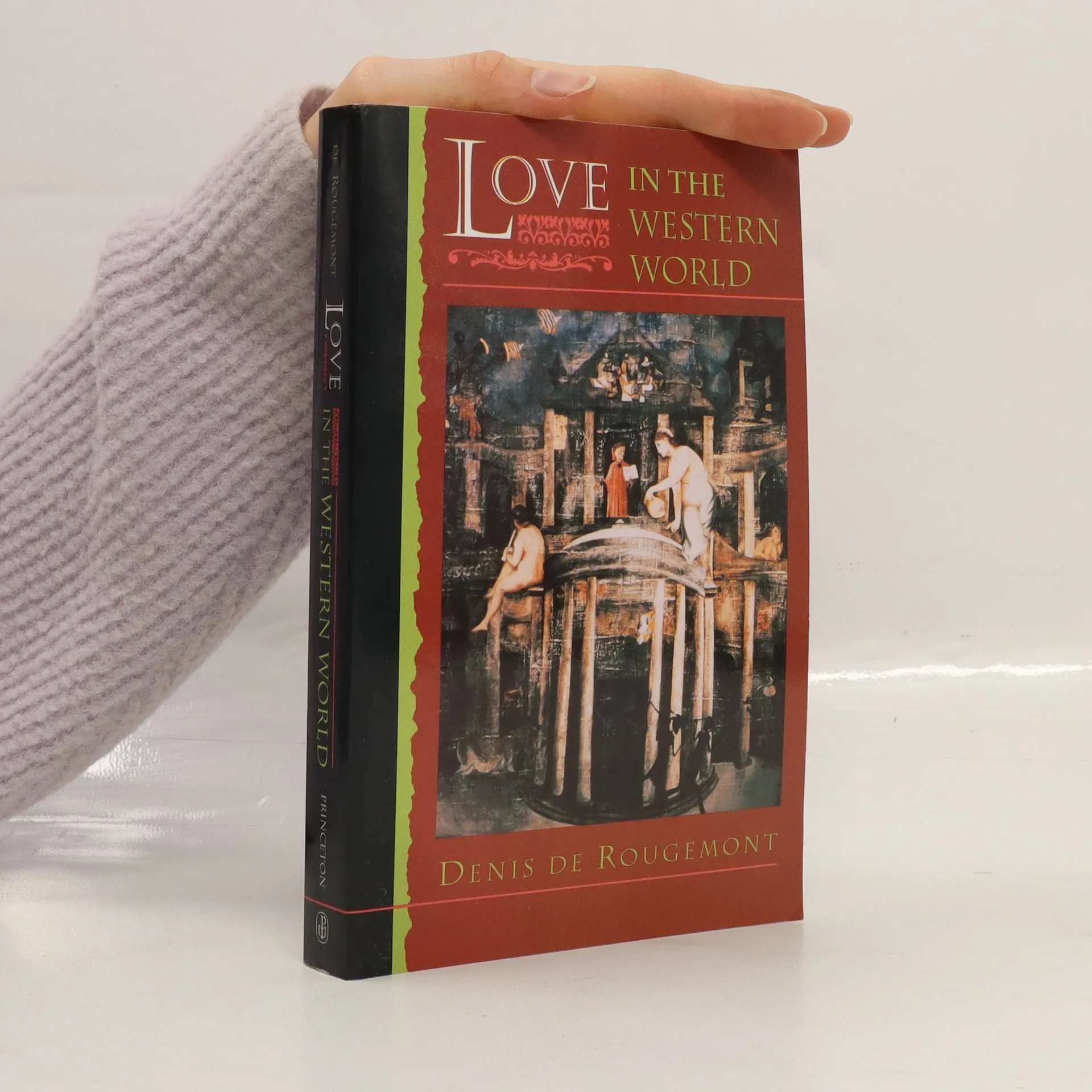
      Love in the Western world
      4.1
    • Journal aus Deutschland

      1935-1936

      • 151 pages
      • 6 hours of reading

      L'écrivain suisse Denis de Rougemont a établi au jour le jour le recueil de notes Journal d'Allemagne paru en 1938. Il représente une analyse lucide et dense de l'origine et de l'essence du national-socialisme.Pour l'auteur, le nazisme est proche du jacobinisme de 1793: dictature au nom du peuple, centralisation extrême de l'appareil étatique, répression de tous les courants de pensée, suppression de toute libre expression, divinisation des masses, exaltation du culte de la nation, dictature.L'Allemagne nazie représente la déchéance de l'État-Nation; elle s'est construite sur la misère du peuple, trompé par une mystique qui dit unir l'individu à la nation. L'auteur appelle à une résistance déterminée face au totalitarisme et prône une renaissance spirituelle de l'homme.Au niveau politique, le fédéralisme, valeur mythique de la Suisse, lui apparaît comme la seule solution durable. (Wikipédia)

      Journal aus Deutschland
    • Grenzgänge - Ein Lesebuch

      • 523 pages
      • 19 hours of reading

      Hans Rudolf Hiltys Anthologie beleuchtet die Schweiz der 30er Jahre und des Zweiten Weltkriegs durch Texte von Schweizer und internationalen Autoren, die als Emigranten oder Flüchtlinge lebten. Sie thematisiert die gesellschaftlichen Herausforderungen, die europäische Schicksale und die Nachkriegsveränderungen. Ein eindrucksvolles Zeitzeugnis.

      Grenzgänge - Ein Lesebuch
    • Preuves

      Une revue européenne à Paris

      Preuves
    • Budoucnost je naše věc

      • 332 pages
      • 12 hours of reading

      Úvahy o stavu současného světa a příčinách jeho krize.

      Budoucnost je naše věc
      5.0
    • Západ a láska

      • 341 pages
      • 12 hours of reading

      Západ a láska je ťažiskové dielo švajčiarskeho frankofónneho filozofa histórie a kultúrneho a literárneho historika Denisa de Rougemont (1906 – 1985). Kniha je fascinujúcim prienikom do európskej kultúry videnej cez prizmu lásky. Toto dielo možno považovať za jednu zo základných prác o koreňoch, smerovaní i zmysle západného človeka a jeho civilizácie a kultúry.

      Západ a láska
      4.0
    • Švýcarský filosof a esejista Denis de Rougemont (1906–1985) patřil k nejproslulejším evropským intelektuálům 20. století. Počínaje rokem 1930 se vřadil do okruhu francouzských personalistů (prosazujících třetí cestu oproti individualismu i kolektivismu), po druhé světové válce pak též obhajoval a aktivně prosazoval ideu evropské federace. Jeho zdaleka nejslavnějším dílem zůstává Láska a Západ, spis, jehož prvním vydáním v říjnu 1939 k sobě autor okamžitě přitáhl pochvalnou i kritickou pozornost celé západní kulturní veřejnosti. Kritický výklad příběhu Tristana a Isoldy jakožto mýtu, který se počínaje středověkem stává hlavní hybnou silou duchovní Evropy a uvolňuje v ní síly tvůrčí i ničivé, překračuje hranice všech akademických disciplín a ani s odstupem takřka sto let neztrácí na působivosti.

      Láska a západ: Mýtus vášně a evropská kultura
      3.8