
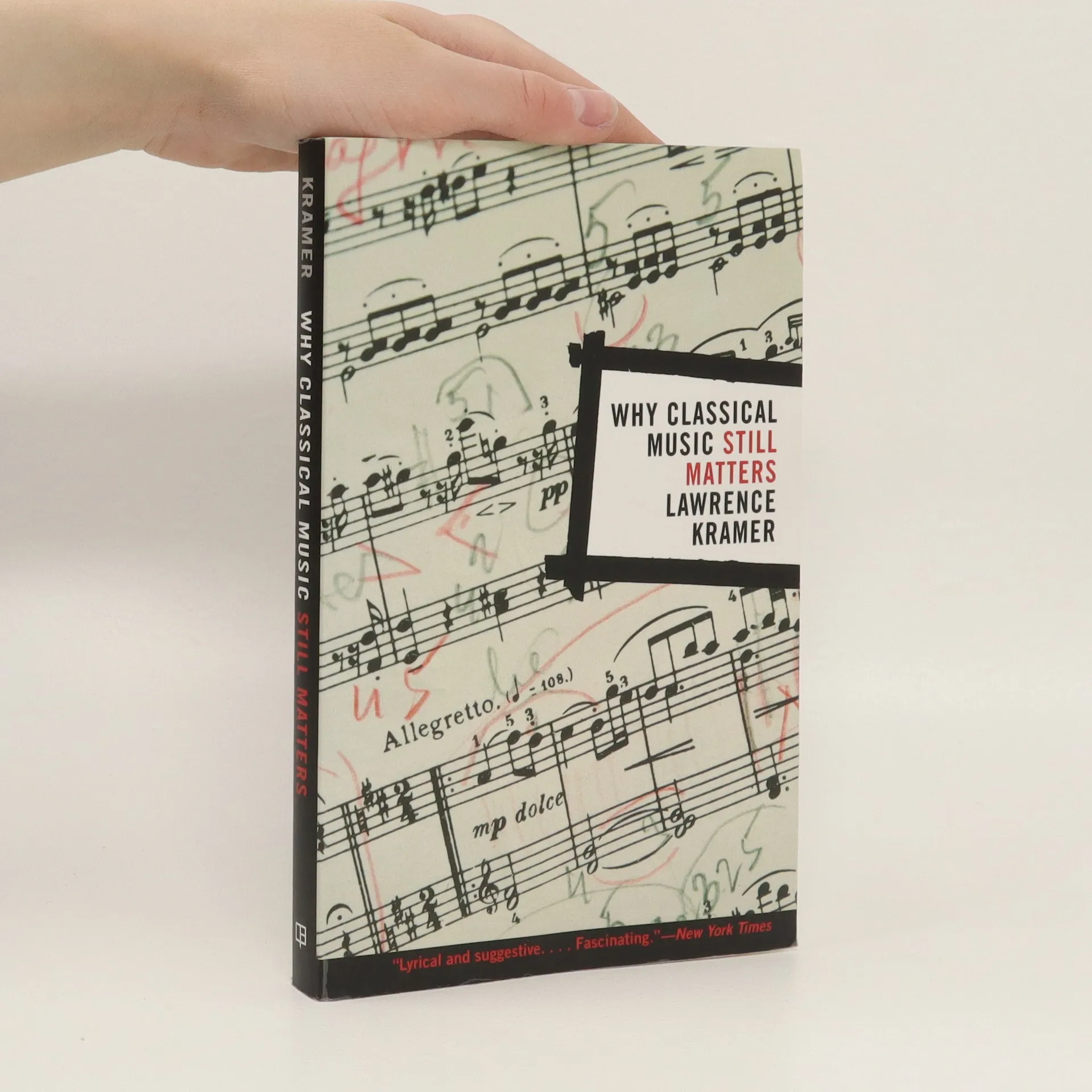
Lawrence Kramer's work illuminates the intricate intersections of music, culture, and society. He delves into how music shapes and is shaped by broader social and cultural currents. Through his essays and books, Kramer explores the deeper meanings and representations of music across various contexts. His approach offers readers a penetrating look into the dynamic relationship between sound and the world around us.
In lucid and engaging prose, the book explores the sources of classical music's power in a variety of settings, from concert performance to film and TV, from everyday life to the historical trauma of September 11. Addressed to a wide audience, this book will appeal to aficionados and skeptics alike.
The Hum of the World is an invitation to contemplate what would happen if we heard the world as attentively as we see it. Balancing big ideas, playful wit and lyrical prose, this imaginative volume identifies the role of sound in Western experience as the primary medium in which the presence and persistence of life acquires tangible form. The positive experience of aliveness is not merely in accord with sound, but inaccessible, even inconceivable, without it. Lawrence Kramer’s poetic book roves freely over music, media, language, philosophy, and science from the ancient world to the present, along the way revealing how life is apprehended through sounds ranging from pandemonium to the faint background hum of the world. This warm meditation on auditory culture uncovers the knowledge and pleasure waiting when we learn that the world is alive with sound.
Exploring the intersections of sound with various disciplines, this book showcases Lawrence Kramer's deep knowledge of poetry, music, philosophy, and history. It offers fresh insights into how sound shapes our understanding of self and the world, making complex ideas accessible without jargon. Kramer's engaging narrative invites readers to reconsider their perceptions of music and literature within the broader context of Western cultural history, establishing him as a master essayist in the field of sound studies.
Ranging widely over classical music, jazz, popular music, and film and television music, Musical Meaning uncovers the historical importance of asking about meaning in the lived experience of musical works, styles, and performances. Lawrence Kramer has been a pivotal figure in the development of new resources for understanding music. In this accessible and eloquently written book, he argues boldly that humanistic, not just technical, meaning is a basic force in music history and an indispensable factor in how, where, and when music is heard. He demonstrates that thinking about music can become a vital means of thinking about general questions of meaning, subjectivity, and value. First published in 2001, Musical Meaning anticipates many of the musicological topics of today, including race, performance, embodiment, and media. In addition, Kramer explores music itself as a source of understanding via his composition Revenants for piano, revised for this edition and available on the UC Press website.
Inventors in the age of the Enlightenment created lifelike androids capable of playing music on real instruments. Music and the Forms of Life examines the link between such simulated life and music, which began in the era's scientific literature and extended into a series of famous musical works by Haydn, Mozart, and Beethoven. Music invented auditory metaphors for the scientific elements of life (drive, pulse, sensibility, irritability, even metabolism), investigated the affinities and antagonisms between life and mechanism, and explored questions of whether and how mechanisms can come to life.The resulting changes in the conceptions of both life and music had wide cultural resonance at the time, and those concepts continued to evolve long after. A critical part of that evolution was a nineteenth-century shift in focus from moving androids to the projection of life in motion, culminating in the invention of cinema. Weaving together cultural and musical practices, Lawrence Kramer traces these developments through a collection of case studies ranging from classical symphonies to modernist projections of waltzing specters by Mahler and Ravel to a novel linking Bach's Goldberg Variations to the genetic code.The publisher gratefully acknowledges the generous support of the AMS 75 PAYS Fund of the American Musicological Society, supported in part by the National Endowment for the Humanities and the Andrew W. Mellon Foundation.