

You may not be interested in Russia. But Russia is interested in you. Russia's 2022 attack on Ukraine saw confrontation between Moscow and the West spill over into open conflict once again. But Russia has also been waging a clandestine war against the West for decades. Hostile acts abroad, from poisoning dissidents to shooting down airliners, interfering in elections, spying, hacking and murdering, have long seemed to be the Kremlin's daily business. But what is it all for? Why does Russia consistently behave like this? And what does it achieve? Now containing a new preface to the paperback edition, Keir Giles explains how and why Russia pushes for more power and influence wherever it can reach, far beyond Ukraine – and what it means not just for governments, but for ordinary people. Bringing together stories from the military, politics, diplomacy, espionage, cyber power, organised crime and more, Giles describes how Moscow conducts its campaigns across the globe, and how nobody is too unimportant to be caught up in them. By lifting the lid on the daily struggle going on behind the scenes to protect governments, businesses, societies and people from Russian hostile activity, Russia's War On Everybody shows how Moscow's hostile intentions for the rest of the world are far broader and more ambitious, and the ways it tries to achieve them far more pervasive and damaging, than we realise.
Keir Giles Books
Keir Giles has dedicated his career to observing, studying, and explaining Russia. He contributes his analytical work to Chatham House in London and the Conflict Studies Research Centre, collaborating with a team of defense and security experts. His deep and long-standing expertise on Russia extends to Europe and North America, where he offers specialized advice and analysis.

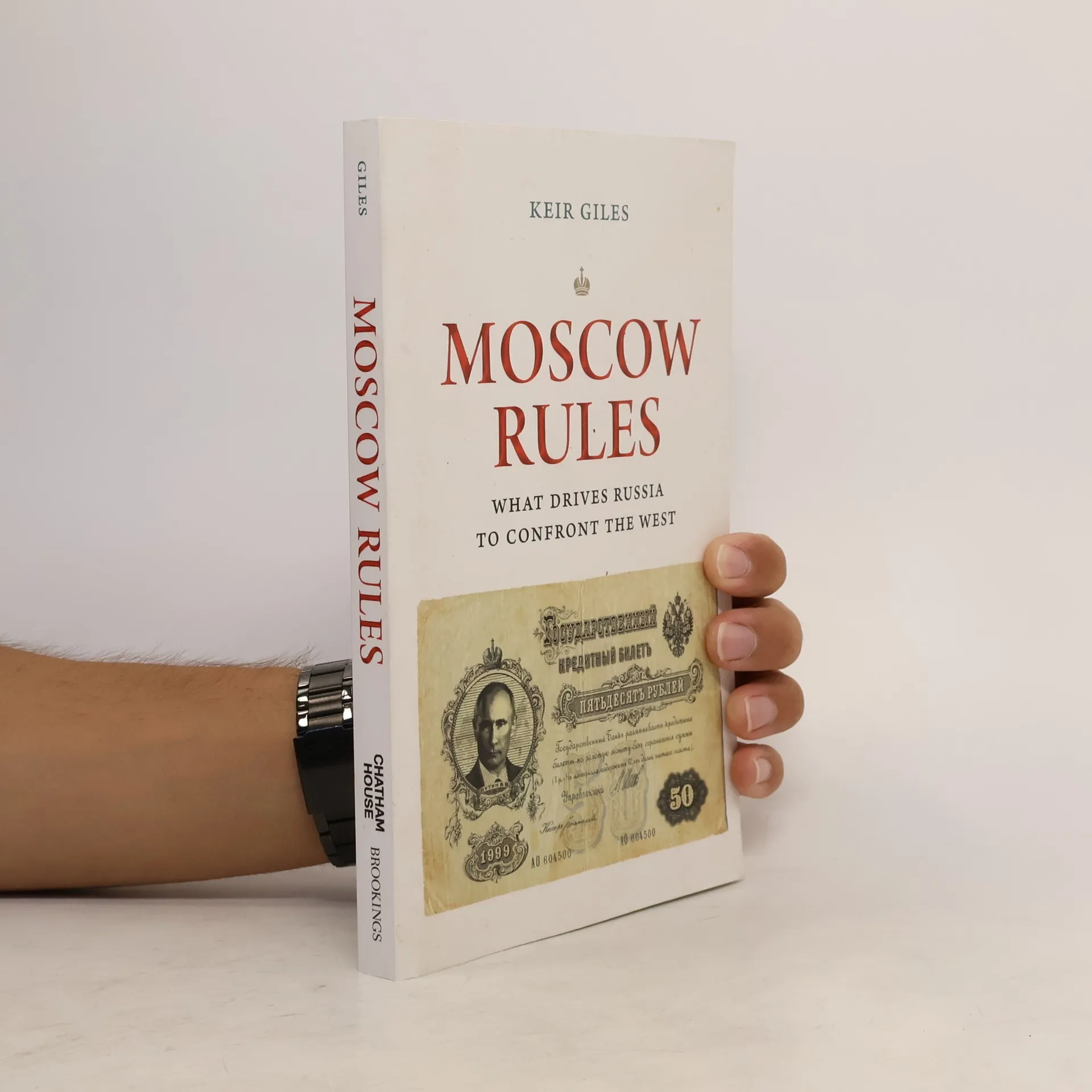

Moscow Rules. What Drives Russia to Confront the West
- 256 pages
- 9 hours of reading
From Moscow, the world looks different. It is through understanding how Russia sees the world--and its place in it--that the West can best meet the Russian challenge. Russia and the West are like neighbors who never seem able to understand each other. A major reason, this book argues, is that Western leaders tend to think that Russia should act as a "rational" Western nation--even though Russian leaders for centuries have thought and acted based on their country's much different history and traditions. Russia, through Western eyes, is unpredictable and irrational, when in fact its leaders from the czars to Putin almost always act in their own very predictable and rational ways. For Western leaders to try to engage with Russia without attempting to understand how Russians look at the world is a recipe for repeated disappointment and frequent crises. Keir Giles, a senior expert on Russia at Britain's prestigious Chatham House, describes how Russian leaders have used consistent doctrinal and strategic approaches to the rest of the world. These approaches may seem deeply alien in the West, but understanding them is essential for successful engagement with Moscow. Giles argues that understanding how Moscow's leaders think--not just Vladimir Putin but his predecessors and eventual successors--will help their counterparts in the West develop a less crisis-prone and more productive relationship with Russia.
The narrative explores Europe's precarious situation as it faces an escalating threat from Russia, highlighting the continent's complacency and the urgent need for awakening and action. It delves into the political dynamics, potential consequences, and the critical role of leadership in addressing the looming crisis. The book serves as a call to recognize and confront the challenges ahead before it's too late.