An economist whose research focuses on the business and economics of sports, as well as their culture and history. They write books to reach a wider audience than is feasible through peer-reviewed academic papers, which have been the mainstay of their career. They also occasionally write for the Soccernomics blog.
"Examines, from an economic perspective, how the different traditions of soccer and baseball have shaped the possibilities for their commercial organization and exploitation, and considers how each sport might learn from the other's experiences to develop meaningful reforms"--Provided by publisher.
SELECTED AS ONE OF WATERSTONES BEST SPORT BOOKS OF 2022.A CRICKETER BOOK OF THE YEAR.'Superb' Matthew Syed, The Times'Fascinating' The Observer 'Crickonomics is packed with sufficient statistical analysis to have the most ardent cricket geek purring with pleasure' Mail on Sunday 'An insightful, Hawk-Eye-like analysis of the numbers behind cricket' Financial TimesAn engaging tour of the modern game from an award-winning journalist and the economist who co-authored the bestselling Soccernomics. Why does England rely on private schools for their batters - but not their bowlers? How did demographics shape India's rise? Why have women often been the game's great innovators? Why does South Africa struggle to produce Black Test batters? And how does the weather impact who wins? Crickonomics explores all of this and much more - including how Jayasuriya and Gilchrist transformed Test batting but T20 didn't; English cricket's great missed opportunity to have a league structure like football; why batters are paid more than bowlers; how Afghanistan is transforming German cricket; what the rest of the world can learn from New Zealand and even the Barmy Army's importance to Test cricket. This incisive book will entertain and surprise all cricket lovers. It might even change how you watch the game.
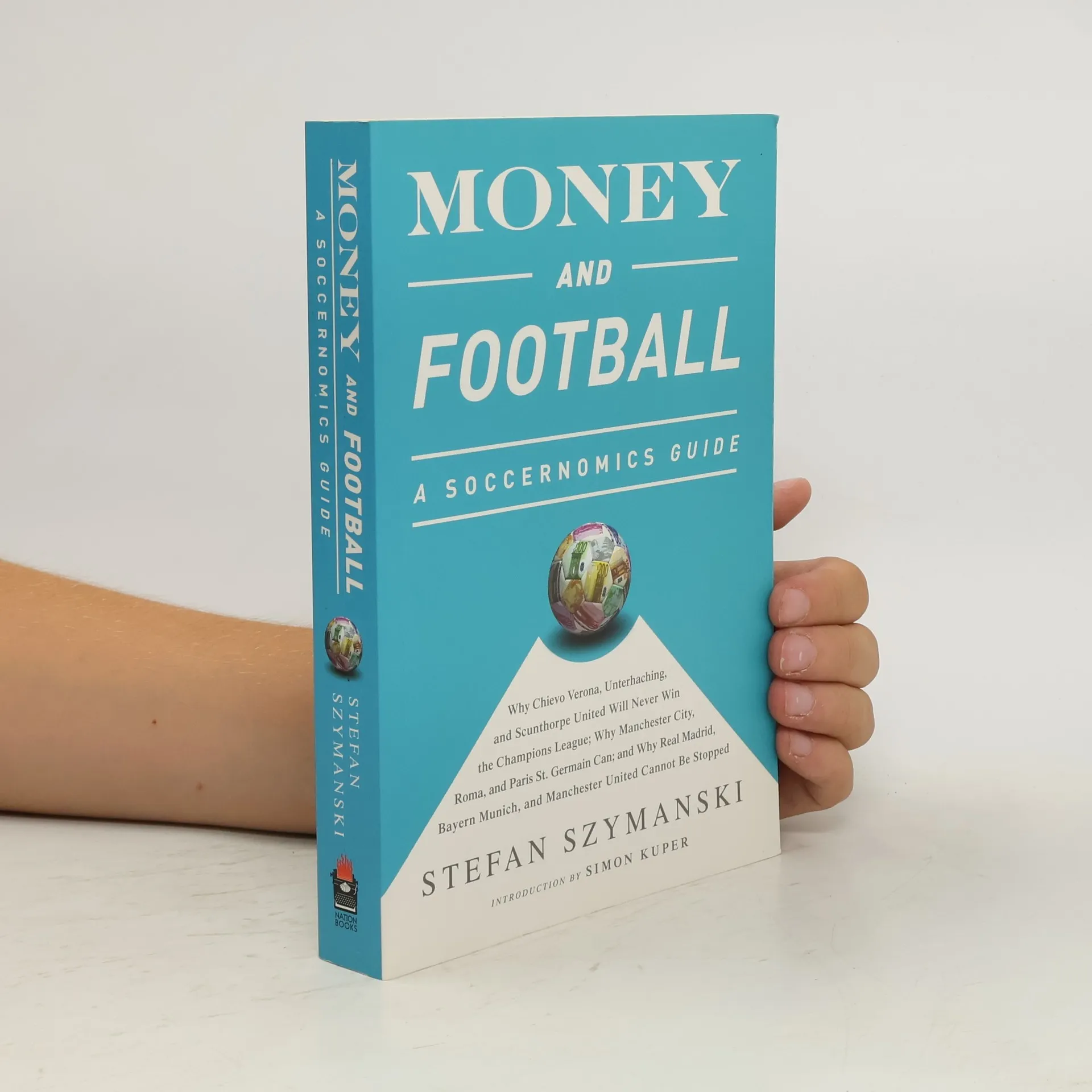
"The most recent winners of the UEFA Champions League are the richest club in the world; the richest club in Germany; the billionaire oligarch-owned English club; the second richest club in the world, twice; and the richest club in England. Meanwhile, more than half of all clubs lose money. With startling clarity, Stefan Szymanski reveals how money decides the destiny of your soccer club."--Back cover.
What economic rules govern sports, and how does the sports business differ from other industries? This book offers a step-by-step exploration of the fundamental economic relationships shaping modern sports. It reveals a core paradox: the sports industry cannot thrive if competitors eliminate each other, as rivals are essential for generating sales. The text examines how this unique economic reality manifests in the sports world, both on and off the field.
Economist Stefan Szymanski analyzes the evolution of sporting contests, the organization of competitions, and the influence of economics on antitrust, monopoly, and cartel issues within sports. He discusses the motivations behind prize money, highlights discrepancies in player salaries, and explains how the incentive structure can lead professional athletes to cheat through performance-enhancing drugs and match-fixing. Additionally, Szymanski explores the impact of media broadcasting on reaching a global audience and investigates why governments continue to fund events like the Olympics despite the likelihood of financial losses.
By employing economic tools to dissect the intricate dynamics of the sports industry, this work sheds light on the interplay between sports and economics, providing insights into both realms.
Crickonomics answers those questions you have about the sport, and many more that you haven’t: you’ll be delighted to know all the answers. Just as the bestselling Soccernomics did for football, this book will take a rational look at the game of cricket, past and present
Dieses Buch beantwortet alle Fragen. Warum dominiert Spanien z.Z. den internationalen Fußball? Und warum eigentlich nicht die USA? Welche Nation ist die fußballbegeistertste? Warum werden so horrende Ablösesummen bezahlt, obwohl es keine Garantie gibt, daß sich die Investition auszahlt? Dieses Buch benutzt Einsichten und Analogien aus der Ökonomie, Statistik und Psychologie, um ein neues Licht darauf zu werfen, wie das Spiel funktioniert. Manche Wahrheiten über Fußball stimmen nicht mit der Intuition überein, viele Klischees werden über Bord geworfen. Dieses Buch schaut auf neue, unterhaltsame Weise auf den beliebtesten Sport der Welt.