

Explore the latest books of this year!
Bookbot

Rhacel Salazar Parreñas

    Servants of Globalization
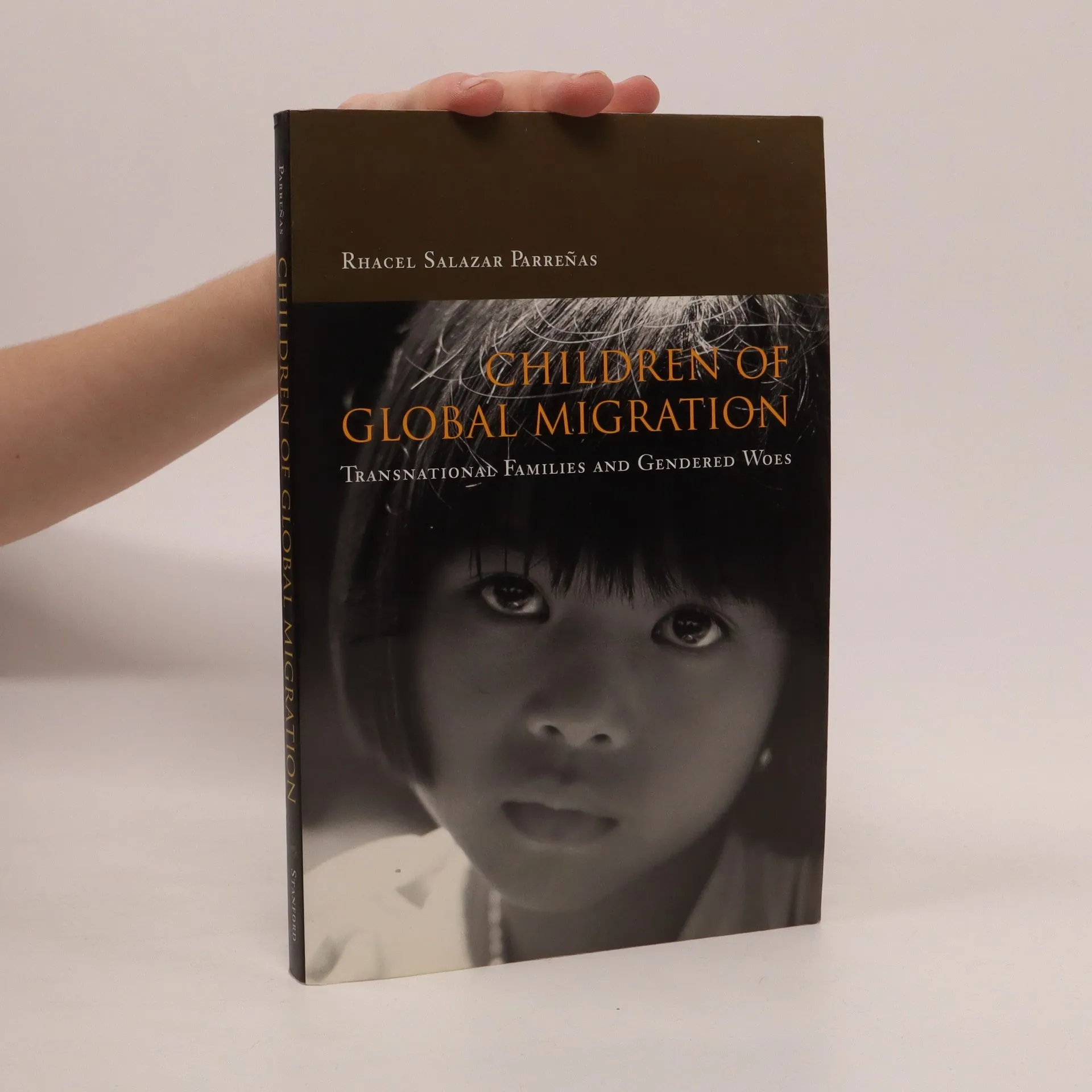
    Children of Global Migration
    • Children of Global Migration

      • 224 pages
      • 8 hours of reading

      In the Philippines, a dramatic increase in labor migration has created a large population of transnational migrant families. Thousands of children now grow up apart from one or both parents, as the parents are forced to work outside the country in order to send their children to school, give them access to quality health care, or, in some cases, just provide them with enough food. While the issue of transnational families has already generated much interest, this book is the first to offer a close look at the lives of the children in these families. Drawing on in-depth interviews with the family members left behind, the author examines two dimensions of the transnational family. First, she looks at the impact of distance on the intergenerational relationships, specifically from the children’s perspective. She then analyzes gender norms in these families, both their reifications and transgressions in transnational households. Acknowledging that geographical separation unavoidably strains family intimacy, Parreñas argues that the maintenance of traditional gender ideologies exacerbates and sometimes even creates the tensions that plague many Filipino migrant families.

      Children of Global Migration2005
      3.8
    • Servants of Globalization

      Women, Migration, and Domestic Work

      • 328 pages
      • 12 hours of reading

      This study provides a poignant examination of migrant Filipina domestic workers who leave their families to fulfill caretaking roles in the global economy, particularly in Rome and Los Angeles. Through interviews with these workers, the narrative highlights the emotional and economic costs of their migration, revealing the impact on their familial relationships and sense of belonging. Many experience a sense of exclusion from their host societies and face downward mobility, transitioning from professional roles in the Philippines to menial labor abroad. The book also explores the dynamics of solidarity and competition among migrant workers within their communities. Employing a new theoretical framework that focuses on the individual subject, the author moves beyond traditional migration models, analyzing the local, transnational, and global contexts that shape the lives of these workers. Drawing from diverse fields such as international migration studies, family sociology, women's work, and cultural studies, the work illustrates how migration and globalization reshape family structures and social identities. Ultimately, it reveals how globalization drives the migration of Filipina domestic workers and creates parallel realities in cities with varying reception contexts.

      Servants of Globalization2001