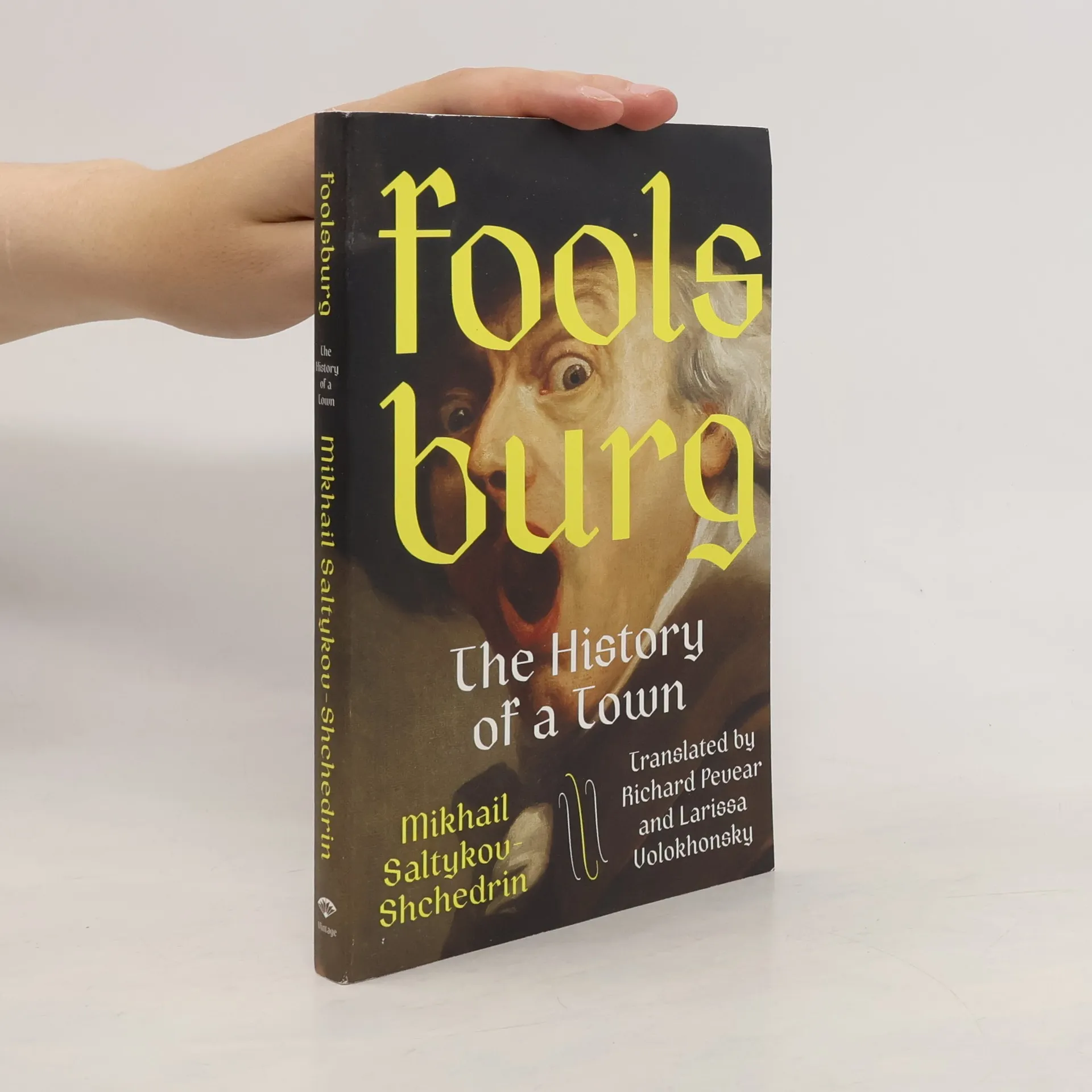
The award-winning translators bring us a new translation of an 1870 comic novel by Russia's greatest satirist—whose mockery of Russian autocracy is as relevant as ever. “Pevear and Volokhonsky [are the] reigning translators of Russian literature. . . . In Russia, The History of a Town is read in schools and regarded as a masterpiece of 19th-century satire. . . . [This new translation] is an argument for the book’s Swiftian wit and its relevance to Russia and the United States today.” —The New York Times A major classic in Russia since its publication, Foolsburg is the farcical chronicle of a fictional town and its hapless inhabitants as they passively endure the violence and lunacy of their rulers. The succession of brutal mayors of the town include such surreal extremes as a man with a music box instead of a brain and one so tall that he snaps in half during a windstorm. Mikhail Saltykov-Shchedrin marries biting satire reminiscent of Jonathan Swift with the fantastical absurdity of Nikolai Gogol, imbued throughout with his own brand of playful wordplay. The award-winning translators Richard Pevear and Larissa Volokhonsky have produced the first translation of this work into English that successfully captures its zany humor and enduring relevance.
Larissa Volokhonsky Book order (chronological)





Contemporary / British English The Russian Revolution -- four young people, Yury, Tonya, Lara and Pasha, find love and lose it in this extraordinary time. Their heart-breaking stories make Dr Zhivago one of the greatest romantic books, and films, of the century.
The Death of Ivan Ilyich
- 96 pages
- 4 hours of reading
A middle-aged judge who had never thought about his own mortality, must readjust his thinking when he learns he has a terminal illness
A Raw Youth (The Adolescent)
- 366 pages
- 13 hours of reading
The novel explores the tumultuous relationship between 19-year-old Arkady Dolgoruky and his father, the notorious landowner Versilov, as Arkady returns to St. Petersburg after years at boarding school. As he navigates the complexities of his family's scandalous affairs, the story delves into deep psychological, emotional, and moral conflicts, reflecting the intricacies of the human condition. Dostoyevsky's rich characterizations and themes make this work a significant contribution to literature, showcasing the author's profound understanding of human nature.
The Modern Library Classics: Anna Karenina
- 938 pages
- 33 hours of reading
Considered by some to be the greatest novel ever written, Anna Karenina is Tolstoy's classic tale of love and adultery set against the backdrop of high society in Moscow and Saint Petersburg. A rich and complex masterpiece, the novel charts the disastrous course of a love affair between Anna, a beautiful married woman, and Count Vronsky, a wealthy army officer. Tolstoy seamlessly weaves together the lives of dozens of characters, and in doing so captures a breathtaking tapestry of late-nineteenth-century Russian society. As Matthew Arnold wrote in his celebrated essay on Tolstoy, "We are not to take Anna Karenina as a work of art; we are to take it as a piece of life."
Richard Pevear and Larissa Volokhonsky, the highly acclaimed translators of War and Peace, Doctor Zhivago, and Anna Karenina, which was an Oprah Book Club pick and million-copy bestseller, bring their unmatched talents to The Selected Stories of Anton Chekhov, a collection of thirty of Chekhov’s best tales from the major periods of his creative life. Considered the greatest short story writer, Anton Chekhov changed the genre itself with his spare, impressionistic depictions of Russian life and the human condition. From characteristically brief, evocative early pieces such as “The Huntsman” and the tour de force “A Boring Story,” to his best-known stories such as “The Lady with the Little Dog” and his own personal favorite, “The Student,” Chekhov’s short fiction possesses the transcendent power of art to awe and change the reader. This monumental edition, expertly translated, is especially faithful to the meaning of Chekhov’s prose and the unique rhythms of his writing, giving readers an authentic sense of his style and a true understanding of his greatness.
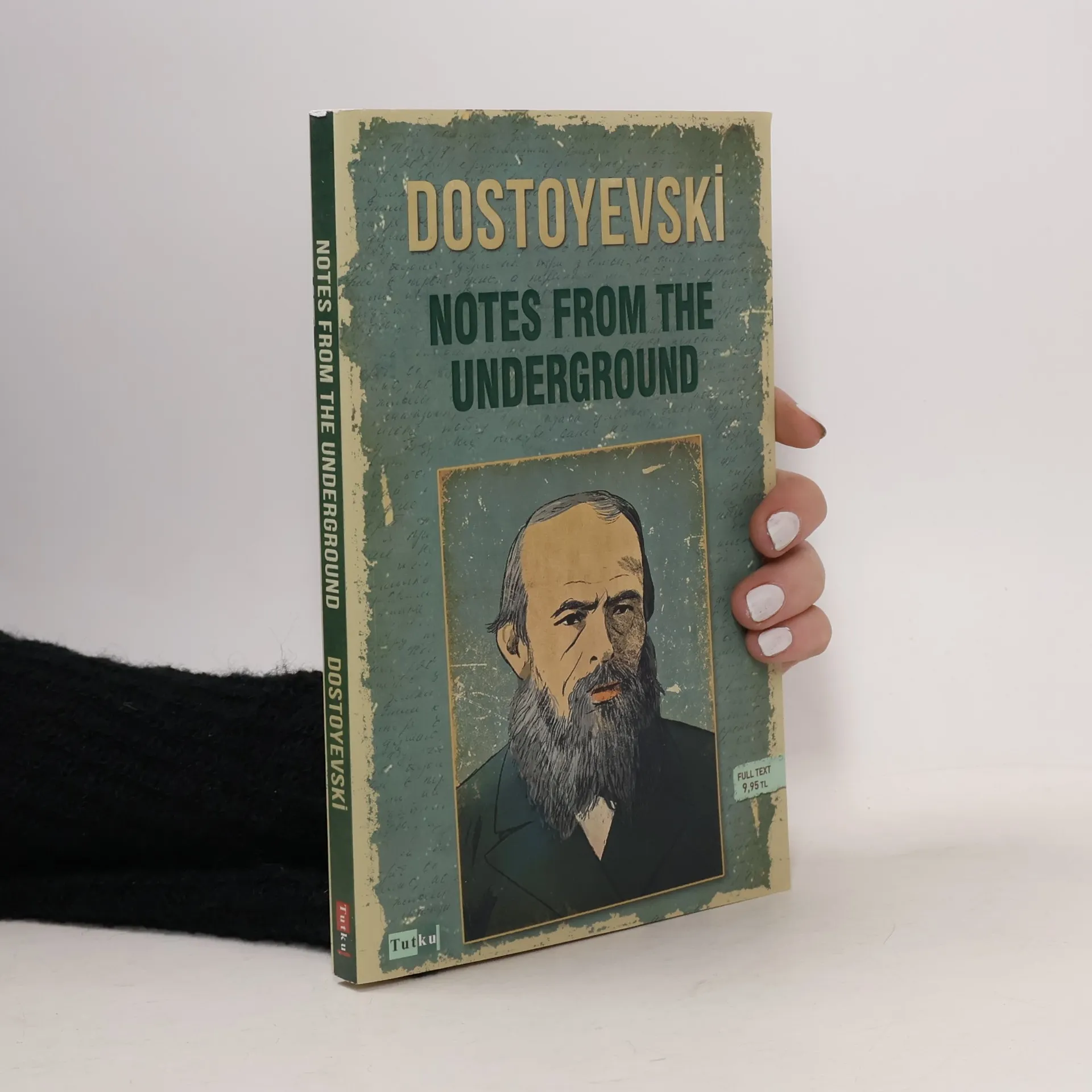
Notes From The Underground
- 160 pages
- 6 hours of reading
Dostoevsky's underground man is a psychologically tourtured poor clerk, who muses on his 'sickness' and the detested notions of self-interest. Scornful of himself and of others, he recalls finding love at a brothel - but it is a love by his very nature he cannot accept, and so debases instead.
A novel in four parts and an epilogue. Translated with an introduction and notes by David Mcduff