Oswald Spengler
- 304 pages
- 11 hours of reading

4.0



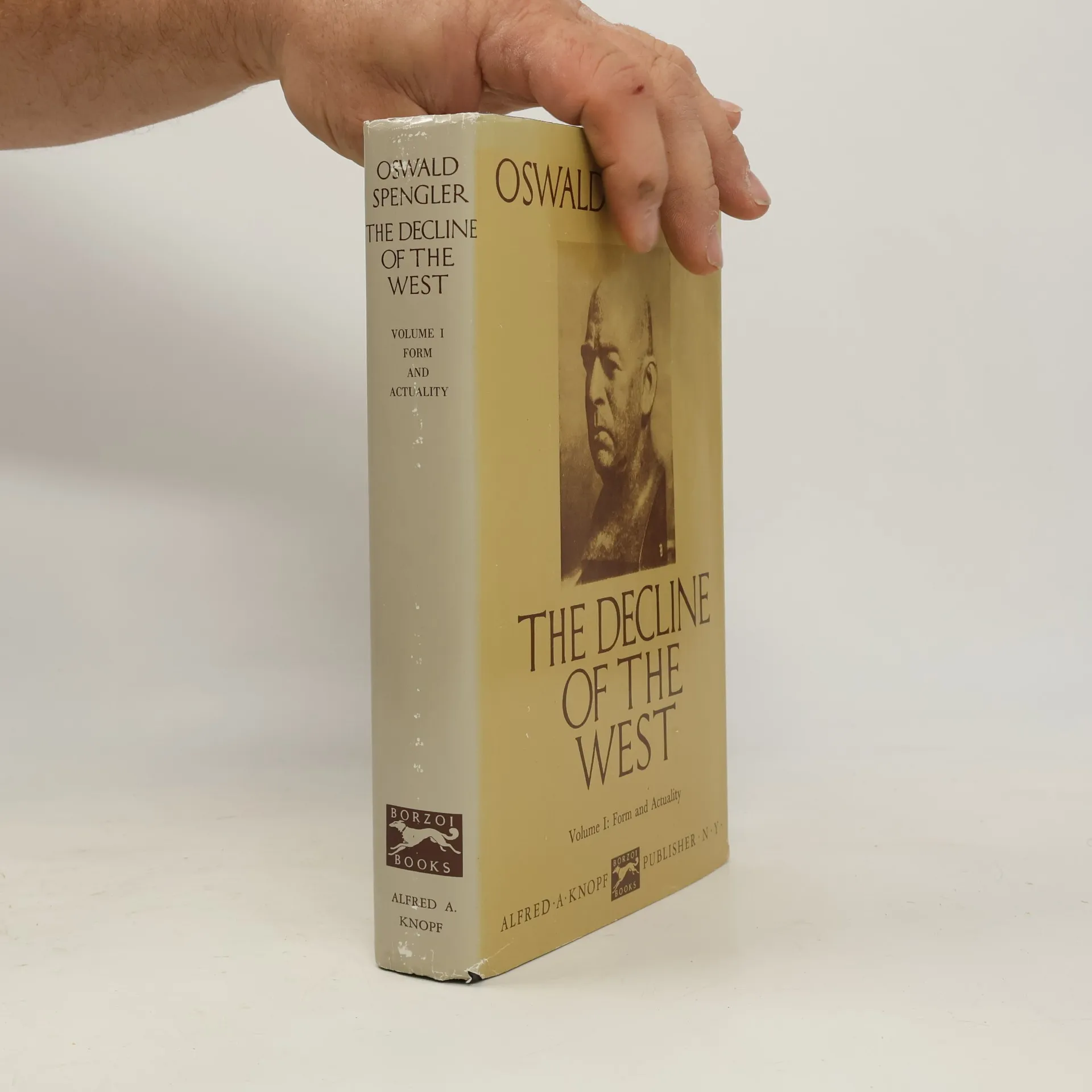
Oswald Spengler was born in 1880 at Blankenburg, Germany. He studied mathematics, philosophy, and history at Munich and Berlin. Except for his doctor's thesis on Heraclitus, he published nothing before the first volume of The Decline of the West, which appeared when he was thirty-eight. The Agadir crisis of 1911 provided the immediate incentive for his exhaustive investigations of the background and origins of our civilization. He chose his main title in 1912, finished the first draft of "Form and Actuality" ("Gestalt und Wirklichkeit") two years later, and published the volume in 1918. The second, extensively revised edition, from which the present translation was made, appeared in 1923. The concluding volume, "Perspectives of World-History" ("Welthistorische Perspektiven"), was published in 1922. The Decline of the West was first published in this country in 1906 (Vol. I) and 1928 (Vol. II).For many years Spengler lived quietly in his home in Munich. thinking, writing, and pursuing his hobbies - the collecting of pictures and primitive weapons, listening to Beethoven quartets, reading the comedies of Shakespeare and Moliere, and taking occasional trips to the Harz Mountains and to Italy. He died suddenly of a heart attack in Munich three weeks before his fifty-sixth birthday.
Der Autor als Leser Der Autor als Leser - dieser einfache Grundgedanke stand am Ausgangspunkt der hier versammelten Beiträge. Rund 150 Autorinnen und Autoren des Verlages C. H. Beck beschreiben darin ihre persönlichen Erfahrungen mit Büchern. Nicht mit irgendwelchen Büchern indessen, sondern solchen, die ihr Leben verändert haben. Vom Kinderbuch und Wilhelm Busch bis zu Walter Benjamins „Ursprung des deutschen Trauerspiels“ oder Martin Heideggers „Sein und Zeit“, vom „Don Quijote“ des Cervantes bis zu den „Buddenbrooks“ von Thomas Mann, von Adalbert Stifters „Bunten Steinen“ bis zur „Suche nach der verlorenen Zeit“ des Marcel Proust, von Charles Dickens „David Copperfield“ und George Orwells „1984“ bis zu „Der Fremde“ von Albert Camus und José Saramagos „Stadt der Blinden“ - dieser Band lädt ein zu kurzweiligen Reisen in fremde Lesewelten, in denen man bekannten und unbekannten Büchern auf eine ganz eigene Weise begegnet. „Das Paradies habe ich mir immer als eine Art Bibliothek vorgestellt.“ Jorge Luis Borges Ausgezeichnet im Wettbewerb „Die schönsten deutschen Bücher 2007“ der Stiftung Buchkunst.