Explore the latest books of this year!
Bookbot

Thomas Schmidinger

    August 25, 1974
    Die Linke in Palästina. Eine Einführung
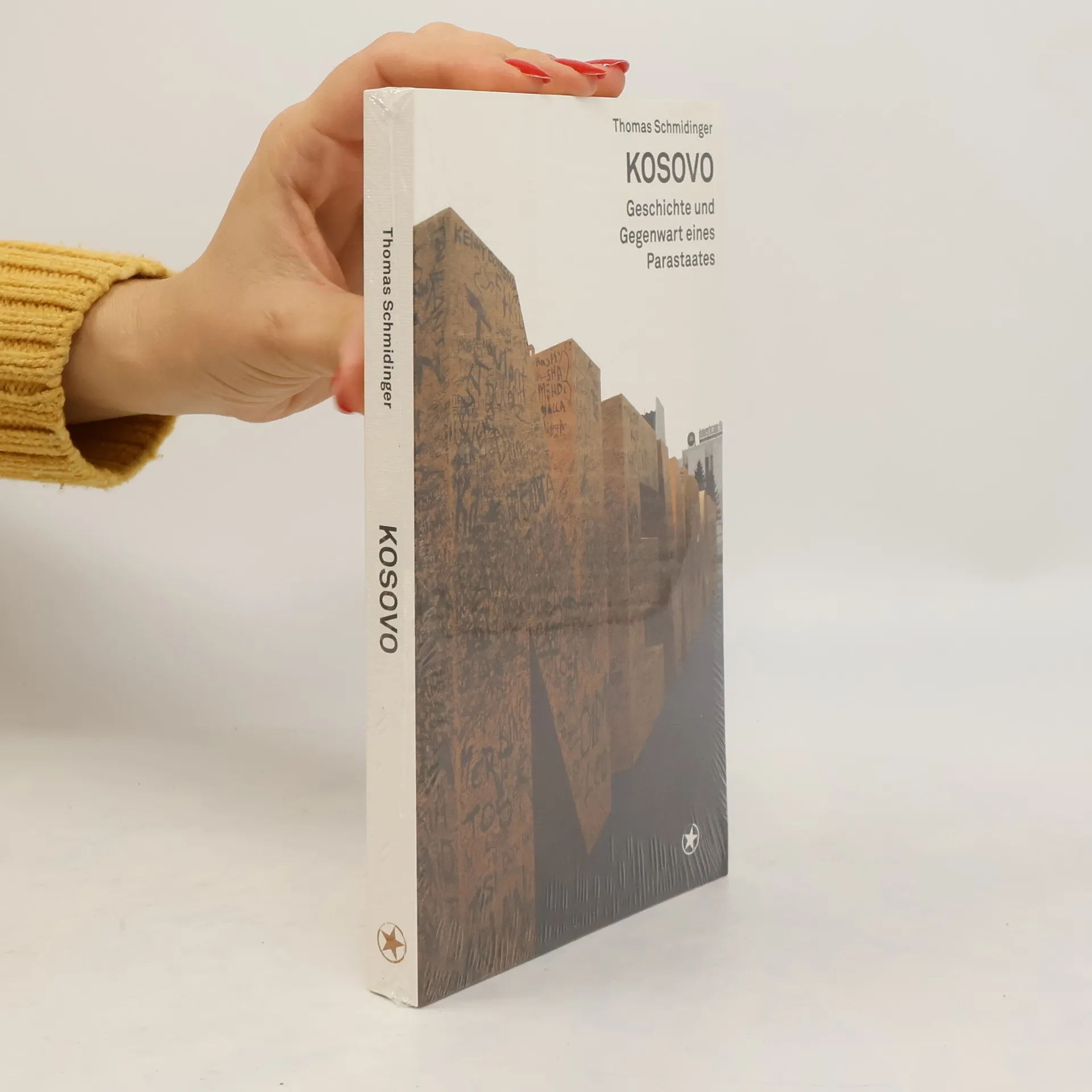
    Kosovo - Geschichte und Gegenwart eines Parastaates
    Battle for the Mountain of the Kurds
    The Autonomous Administration of North and East Syria: Between A Rock and A Hard Place
    Beyond ISIS: History and Future of Religious Minorities in Iraq
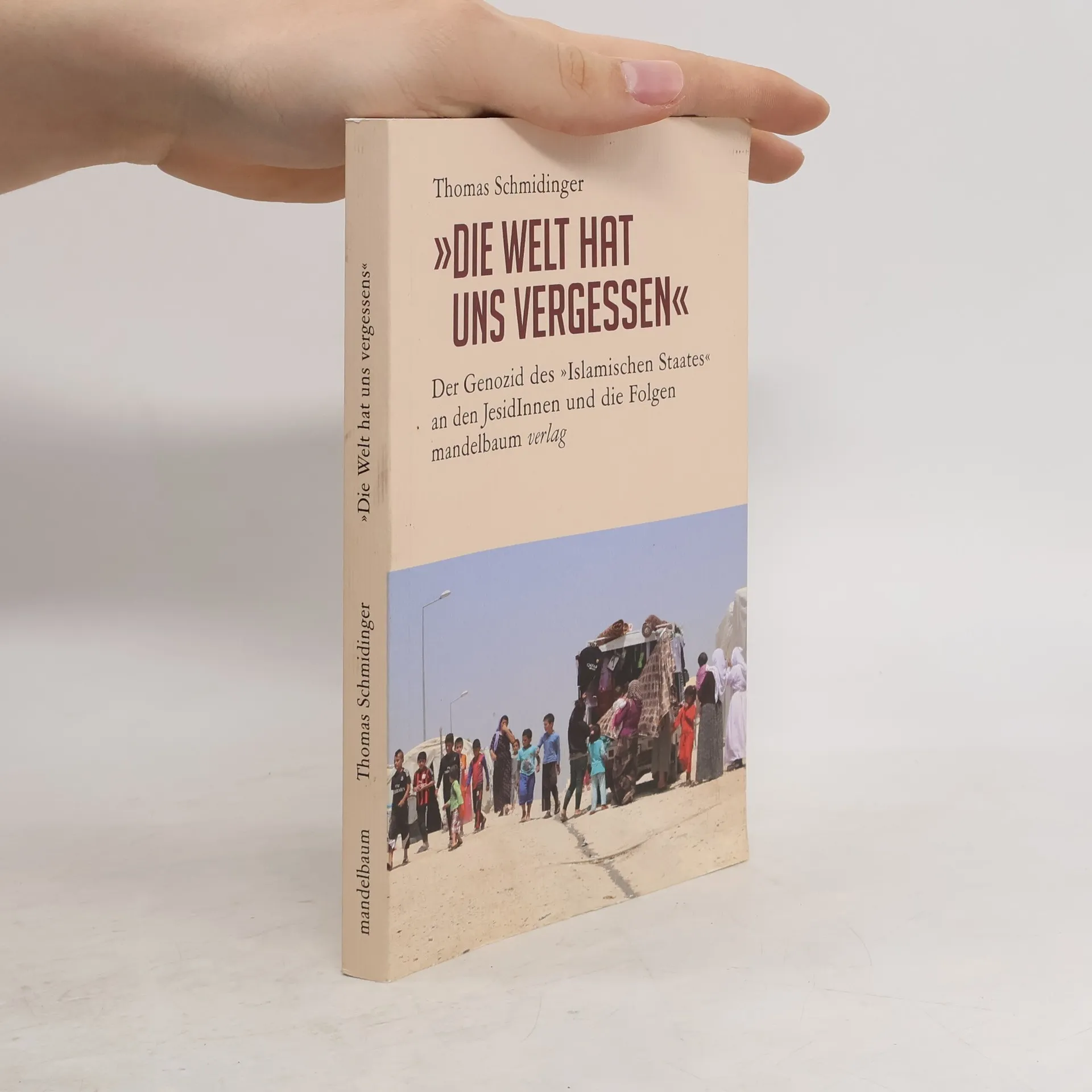
    The World Has Forgotten Us
    • This book shares papers from a conference taking a deeper look at the victims of ISIS and beyond that all religious minorities of Iraq. This is the first book that considers all the religious minorities that existed in modern Iraq, including both historic communities and new groups that recently came with labour migration, especially to the Autonomous Region of Kurdistan. The book resulted from a conference in 2018 organized exactly at the site of the Simele Massacre in 1933. The campus of the American University of Kurdistan is located on the site of the first big massacre against a religious minority in Iraq. The conference entitled ‘Beyond ISIS: Minorities and Religious Diversity in Iraq and the Future of Êzîdî, Christians, Shabak, Yarsan, Mandeans and other Religious Minorities in the Middle East’ brought together Iraqi and international scholars, activists, and religious and community representatives. This book contains papers presented at the conference that included contributions on Iraq’s religious diversity and the historical and contemporary consequences of genocide and persecution on the religious minorities of Iraq.

      Beyond ISIS: History and Future of Religious Minorities in Iraq
    • This book is based on papers presented at the conference. However, it is not a typical publication of academic conference proceedings because the topics are not completely congruent with those of the conference. Some lectures that could not be held due to travel restrictions related to the coronavirus pandemic were submitted as book contributions. In addition, I also wrote a short contribution on the Jewish history of the region, which has been often neglected in previous presentations of the region. The various authors for this volume have been intensively involved with the region in recent years. However, the authors do not only focus on the situation on the ground, but also on the international context of the autonomous administration. The conflict in Syria is no longer just a civil war, but a transnational conflict with important roles played not only by actors such as Russia or the USA, but also Turkey or Iran. Given the transnationality of the conflict and the role of the hegemonic powers, these authors share thoughtful analyses from very different perspectives. It is important to share these diverse views with the world so that the tragic conflict might become more comprehensible. This does not mean, however, that I necessarily advocate each particular position taken by the varied contributors to this book. The intent is to offer you multiple perspectives and certainly not a common narrative.

      The Autonomous Administration of North and East Syria: Between A Rock and A Hard Place
    • Battle for the Mountain of the Kurds

      Self-Determination and Ethnic Cleansing in Rojava

      • 192 pages
      • 7 hours of reading

      In early 2018, Turkey invaded the autonomous Kurdish region of Afrin in Syria and is currently threatening to ethnically cleanse the region. Between 2012 and 2018, the "Mountain of the Kurds" (Kurd Dagh) had been one of the quietest regions in a country otherwise torn by civil war. After the outbreak of the Syrian civil war in 2011, the Syrian army withdrew from the region, enabling the Party of Democratic Union (PYD) to introduce a Kurdish self-administration and later to establish the Canton Afrin as one of the three parts of the heavily Kurdish Democratic Federation of North-Syria, or Rojava. This self-administration, which had seen multi-party elections in 2017, included autonomy for a number of ethnic and religious groups, and provided a safe haven for up to 300,000 Syrian refugees, is now at risk of being annihilated. In this volume, Schmidinger provides a comprehensive history of the region and gives inhabitants of a variety of ethnicities, religions, political orientations, and walks of life the opportunity to speak for themselves. As things stand now, the book might seem to be in danger of becoming an epitaph for the "Mountain of the Kurds," but as the author writes, "the battle for the Mountain of the Kurds is far from over yet."

      Battle for the Mountain of the Kurds
    • Von der Peripherie des Osmanischen Reiches zur Kolonie Serbiens, über die italienische und deutsche Besatzung im Zweiten Weltkrieg, die anschließende Autonomie im sozialistischen Jugoslawien zum Protektorat der EU: Die Geschichte des Kosovo hat ihren Abschluss in einem wirklich unabhängigen Staat bislang noch nicht gefunden. Serbien kontrolliert weite Teile im Norden des Landes, die EU überwacht mittels der EULEX-Mission, die Türkei agiert wiederum als «Schutzmacht» der türkischen Minderheit und Saudi-Arabien missioniert. Zwanzig Jahre nach dem Krieg und elf Jahre nach der Unabhängigkeitserklärung des Kosovo bleibt diese umkämpfte Region politisch instabil und ökonomisch an den Rand gedrängt.

      Kosovo - Geschichte und Gegenwart eines Parastaates
      4.3
    • Die Geschichte der palästinensischen Linken beginnt im britischen Mandatsgebiet und war anfangs mit der jüdischen Linken verbunden. Nach 1948 verschob sich der Fokus auf das Westjordanland, Gaza und die Diaspora. In den 1990ern wandten sich viele gegen den Oslo-Friedensprozess. Thomas Schmidinger beleuchtet diese Entwicklungen und die Bedeutung des Linksseins unter Besatzung.

      Die Linke in Palästina. Eine Einführung
      4.1
    • Zwischen Gottesstaat und Demokratie

      • 318 pages
      • 12 hours of reading

      Fundamentalismus, Selbstmordattentäter, Hassprediger, Dschihad - Begriffe wie diese beherrschen die Reden wahlkämpfender Politiker wie die alltäglichen Diskussionen in den Medien. Zwischen religiösen Überzeugungen, politischen Absichten und politisch motivierter Gewalt wird oft nicht differenziert. Dieses Buch schafft Klarheit und liefert Antworten auf die wichtigsten Fragen: Wie weit ist der Islam als Religion zu verstehen, und wo beginnt er sich als Politik zu begreifen? Welche Bewegungen und Gruppierung brechen mit dem überkonfessionellen Staat? Basierend auf einer ausführlichen Darstellung historischer Entwicklungen bietet dieses Handbuch einen fundierten Überblick über die Strömungen und Vernetzungen des politischen Islam und benennt in einem zweiten praktischen Teil die verschiedenen Parteien und Organisationen, die auch in Österreich und Deutschland aktiv sind, ihre Protagonisten, Strukturen und Ziele.

      Zwischen Gottesstaat und Demokratie
      4.0
    • Virenregime

      Wie die Coronakrise unsere Welt verändert. Befunde, Analyse, Anregungen

      Wie die Coronakrise unsere Welt verändert. Befunde, Analysen, Anregungen

      Virenregime
      3.0
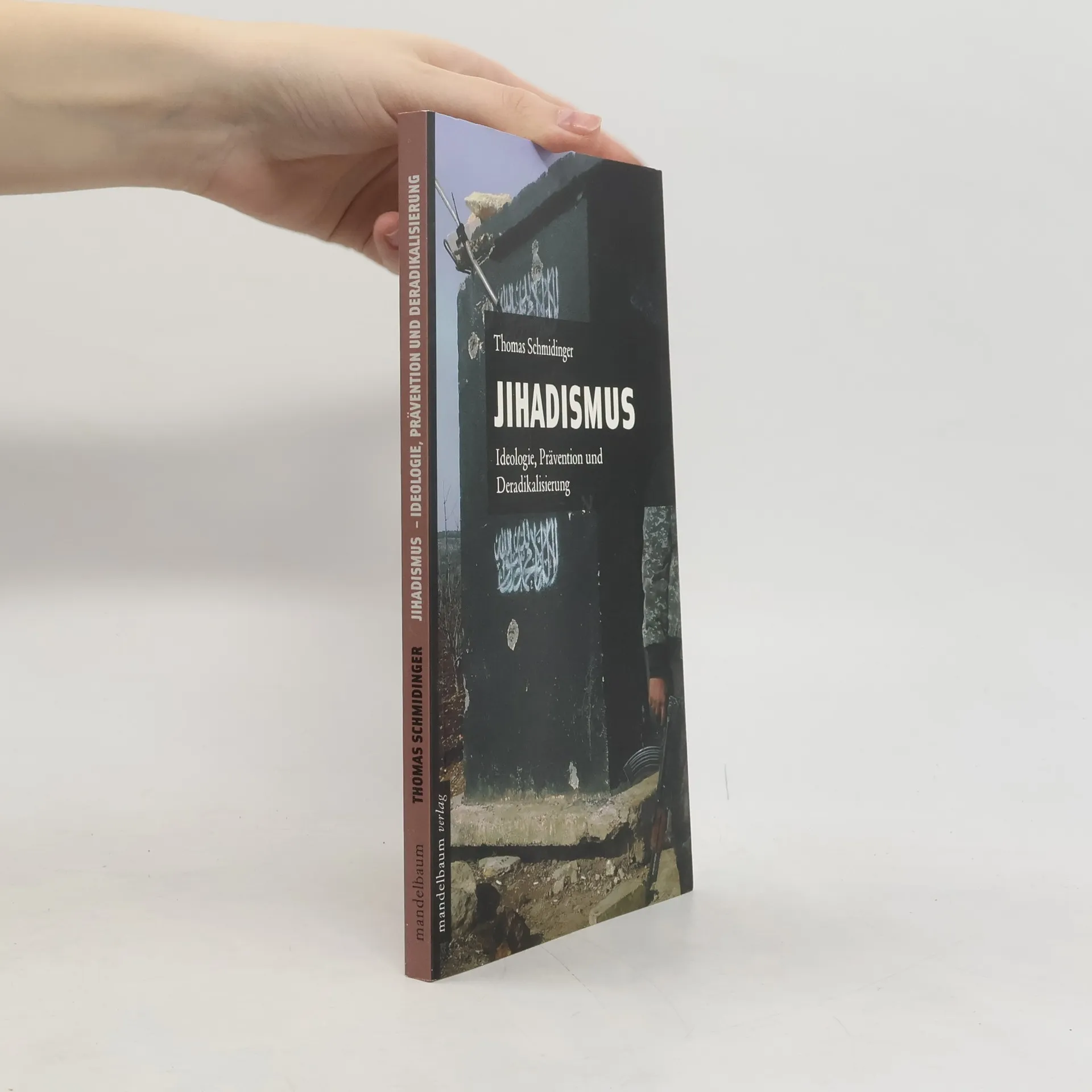
    • Jihadismus

      Ideologie, Prävention und Deradikalisierung

      • 125 pages
      • 5 hours of reading

      Mit der raschen Expansion des so genannten »Islamischen Staates«, dem Genozid und den Vertreibungen von Ezidis, Christen und Schiiten im Irak und die wachsende Zahl junger EuropäerInnen, die sich dem IS, der al-Qaida und anderen jihadistischen Gruppen anschließt, ist auch Europa auf das Problem des Jihadismus aufmerksam geworden. Der Politikwissenschafter Thomas Schmidinger legt hier erstmals eine Einführung zum Thema mit praktischen Hinweisen für SozialarbeiterInnen, LehrerInnen oder Eltern vor, die mit dem Problem konfrontiert sind, dass Jugendliche und junge Erwachsene sich jihadistischen Gruppen zuwenden. Gemeinsam mit dem islamischen Religionspädagogen Moussa al-Hassan Diaw hatte Schmidinger 2014 mit dem „Netzwerk Sozialer Zusammenhalt“ eine NGO zur Beratung von Angehörigen und Betroffenen gegründet. Damit basiert dieses Buch nicht nur aus einer politischwissenschaftlichen Beschäftigung mit dem Thema, sondern auch auf der Beratungspraxis mit zahlreichen Jugendlichen und jungen Erwachsenen. Zusätzlich zu seiner Arbeit mit betroffenen JugendarbeiterInnen, BewährungshelferInnen, PolizeibeamtInnen, LehrerInnen wurde Schmidinger auch auf europäischer Ebene zum gefragten Experten. Im September 2015 erhielt das „Netzwerk Sozialer Zusammenhalt“ für seine Arbeit den Bürgerpreis des Europäischen Parlaments.

      Jihadismus
      3.8
    • Sudan

      Unvollendete Revolutionen in einem brüchigen Land

      • 176 pages
      • 7 hours of reading
      Sudan