

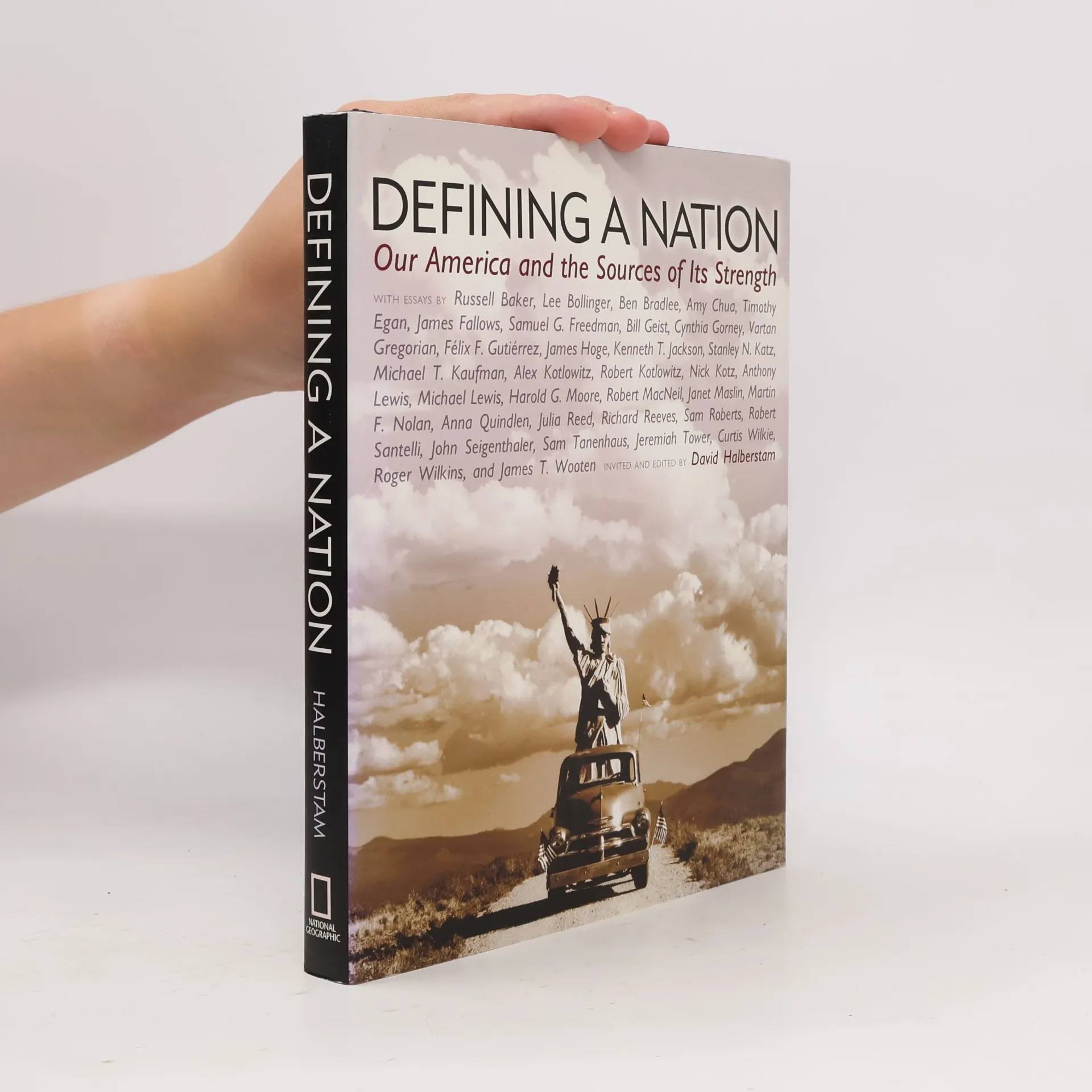
"The freer we are … the stronger we are," writes David Halberstam in this probing compilation of original essays which distill the essence of America, an evergreen subject rendered even more timely by recent world events that highlight cultural clashes and prompt us not just to reconsider foreign attitudes and aspirations but to think anew about our own.Each chapter explores fundamental qualities, concepts and accomplishments that shape the American the sheer size of our country; the legendary events of our history; the heroes, villains, and icons of our national mythology; our enduring dream of a meritocratic society; and the unmistakable spirit that defines us both to ourselves and the rest of the world. Halberstam's keen observations introduce richly varied contributions by distinguished and eloquent commentators like Russell Baker, Ben Bradlee, James Fallows, Cynthia Gorney, Vartan Gregorian, and Janet Maslin, among others, who consider everything from Manifest Destiny to the McCarthy hearings and from Paul Revere's midnight gallop to John Wayne's classic cowboy riding tall through the American Century. Inspiring, enlightening, and enhanced by more than 300 photographs and illustrations, this wide-ranging collection provides thought-provoking, often surprising insights into how today's America took shape, who we are as a nation now, and where our country is headed.From the Trade Paperback edition.
Sam Roberts Books


This is the definitive history of the Ford Model Y of 1932 to 1937 and all of its worldwide variants. Referred to as the first "world car," the Y is the car that made Ford a truly international company. Most of the great names of the Ford Motor Company were involved with this first streamlined, mass-produced car, including Edsel Ford.
Hand-Painted Signs of Kratie
The Art and Craft of Cambodia's Hand-Painted Advertising
- 138 pages
- 5 hours of reading
It introduces the signs and their creators, linking them to the country's art, culture, and history. The narratives surrounding these signs and their makers are deeply intertwined with Cambodia's tumultuous past, particularly the Khmer Rouge regime, which devastated both art and commerce. The book traces the rise and decline of these signs, leading to the present day and the uncertain future they face. Through the perspectives of sign painters and expatriates in Cambodia, the author shares insights and personal reflections on their significance. This tribute highlights a charming aspect of Cambodian culture that has survived a turbulent history while confronting ongoing challenges.