

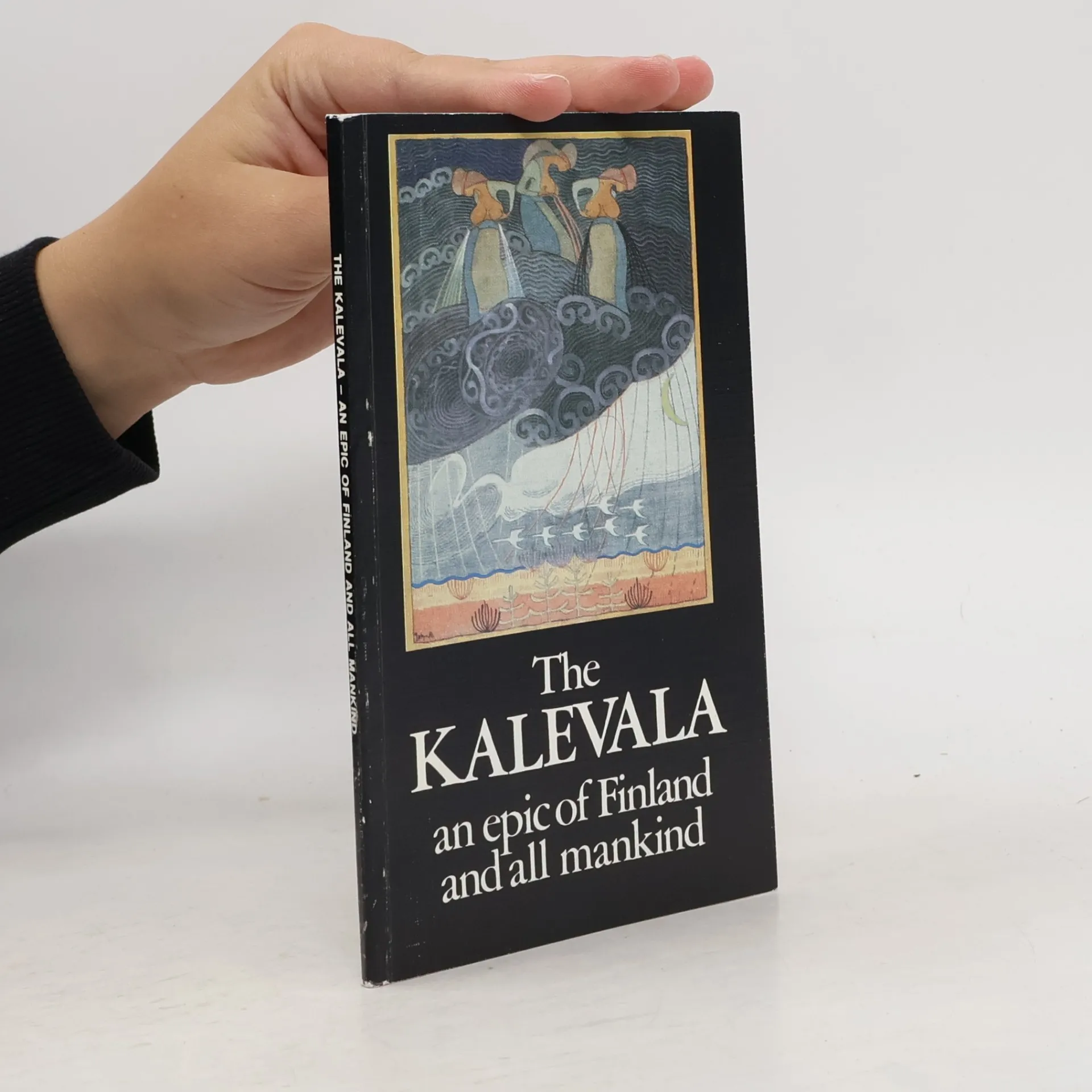
The Kalevala is the great Finnish epic, which like the Iliad and the Odyssey, grew out of a rich oral tradition with prehistoric roots.During the first millenium of our era, speakers of Uralic languages (those outside the Indo-European group) who had settled in the Baltic region of Karelia, that straddles the border of eastern Finland and north-west Russia, developed an oral poetry that was to last into the nineteenth century.This poetry provided the basis of the Kalevala. It was assembled in the 1840s by the Finnish scholar Elias L"onnrot, who took `dictation' from the performance of a folk singer, in much the same way as our great collections from the past, from Homeric poems to medieval songs and epics, have probably been set down.Published in 1849, it played a central role in the march towards Finnish independence and inspired some of Sibelius's greatest works. This new and exciting translation by poet Keith Bosley, prize-winning translator of the anthology Finnish Folk Poetry: Epic, is the first truly to combine liveliness with accuracy in a way which reflects the richness of the original.
Jukka Korpela Books

The world of Ladoga
- 400 pages
- 14 hours of reading
This book focuses on Medieval and Early Modern state formation in the north-eastern periphery of Europe, challenging the traditional view of an East-West conflict between Sweden and Novgorod over the late medieval colonization of northern forest areas. Contrary to the belief that the East Fennoscandian boreal forest was uninhabited, it was actually home to diverse hunting and fishing populations with distinct cultures. The lifestyles of these groups can be explored through a range of palaeoecological, palaeobotanic, genetic, meteorological, folkloristic, philological, and archaeological data. Traditional written sources were limited in this region, primarily reflecting the expansion of European Christian culture and power from both Russia and Sweden. The increase in documentation and population, along with the shift from a semi-nomadic economy to agriculture, indicates a transformation of the existing economic system rather than true colonization. The local populations, once marginalized, gradually emerged in historical records. Although the East Fennoscandian boreal forest was a European periphery during the Viking Age, it was linked to European trade routes that introduced early Christian influences. However, the 14th-century economic crisis led to its exclusion from late medieval state formation, making it a target for Muscovite and Swedish interests only after the 15th century, resulting in the establishment of parishes, l