
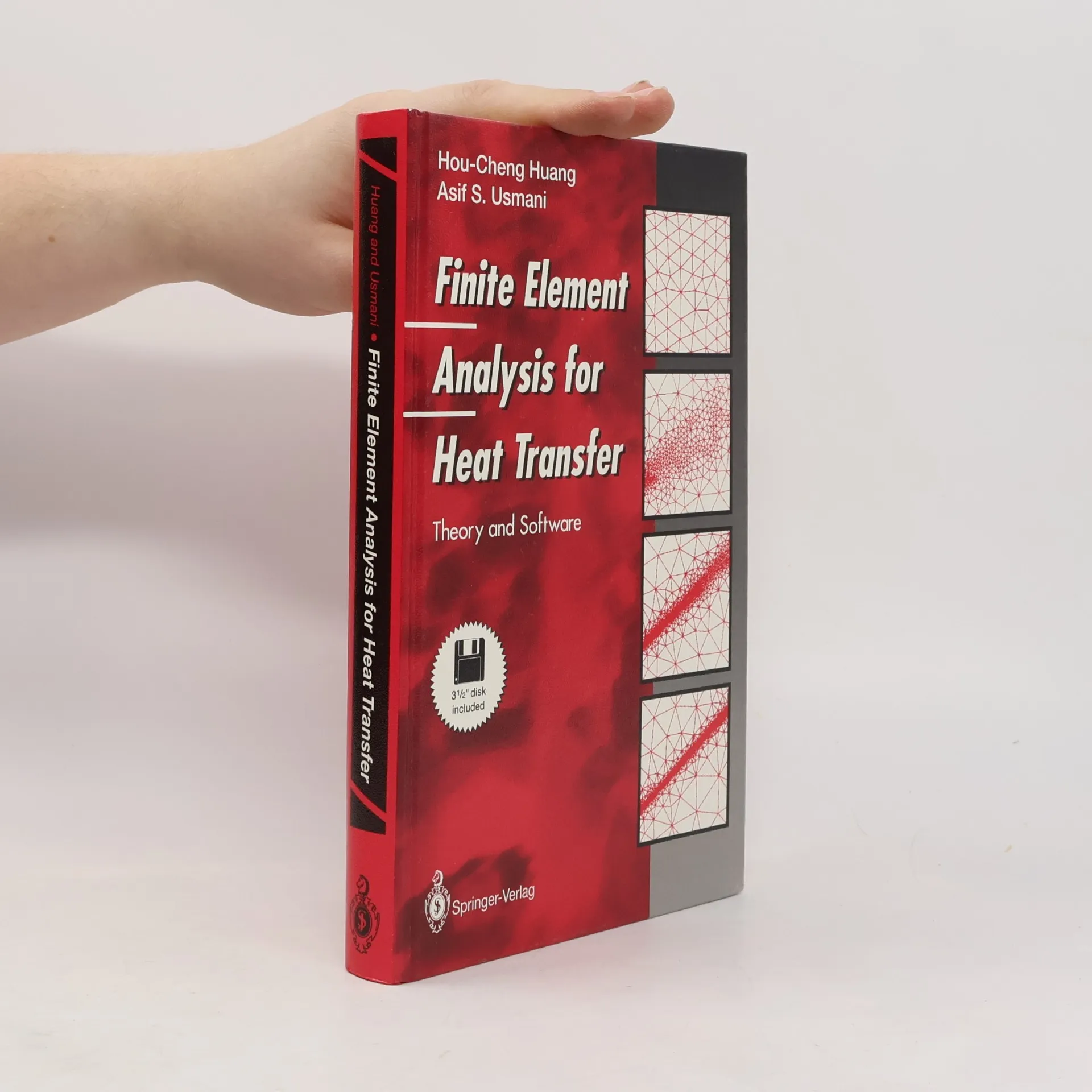
This text introduces the finite element method (FEM) specifically for analyzing heat transfer problems, focusing on diffusion and convection in solids and fluids. The motivation for this work arises from the lack of resources that approach FEM from a heat transfer perspective, as most existing texts are rooted in structural engineering, which may deter non-structural engineers. This approach aims to engage those outside structural disciplines more effectively. The book covers a broad range of topics essential for applying FEM to heat transfer, including comprehensive theory and implementation details, supplemented by two FORTRAN programs. It not only addresses fundamental concepts and practical applications but also introduces modern techniques that enhance the accuracy and efficiency of conventional methods. The text is designed to be accessible for individuals with a background no more advanced than an engineering graduate, making it suitable for beginners, such as undergraduate students and practicing engineers. Additionally, it contains advanced material that may appeal to more experienced practitioners, ensuring a valuable resource for a diverse audience interested in this critical area of engineering.
Hou Cheng Huang Book order (chronological)


Static and dynamic analyses of plates and shells
- 194 pages
- 7 hours of reading
This book illustrates the element technology of plates and shells and compares and contrasts the behaviour of current plate and shell elements for thick and thin shell theories as well as for static and transient dynamic analyses. It also highlights the locking phenomenon experienced by most of the currently available elements and introduces a strategy for avoiding this phenomenon. In addition, the book provides the necessary benchmark tests for plate and shell elements. The book will be useful for undergraduates since all fundamental theories are included. It should also be useful for structural engineers in order to understand shell stress analyses. They would be particularly interested in the shear forces in plate and shell structures where most elements are seen to produce poor results. For postgraduates and researchers in this field, the book will be most helpful. Many research workers have been studying shell element technology for two decades. Consequently, plate and shell element design is still an active area. Two associated programmes are provided with the book. One is for static analysis and the other for dynamic analysis. The programmes can be compiled and run on either a mini or a mainframe computer via a terminal.