Jim Hodges
- 160 pages
- 6 hours of reading
The first in-depth survey of the life and work of one of America's most celebrated contemporary artists



The first in-depth survey of the life and work of one of America's most celebrated contemporary artists
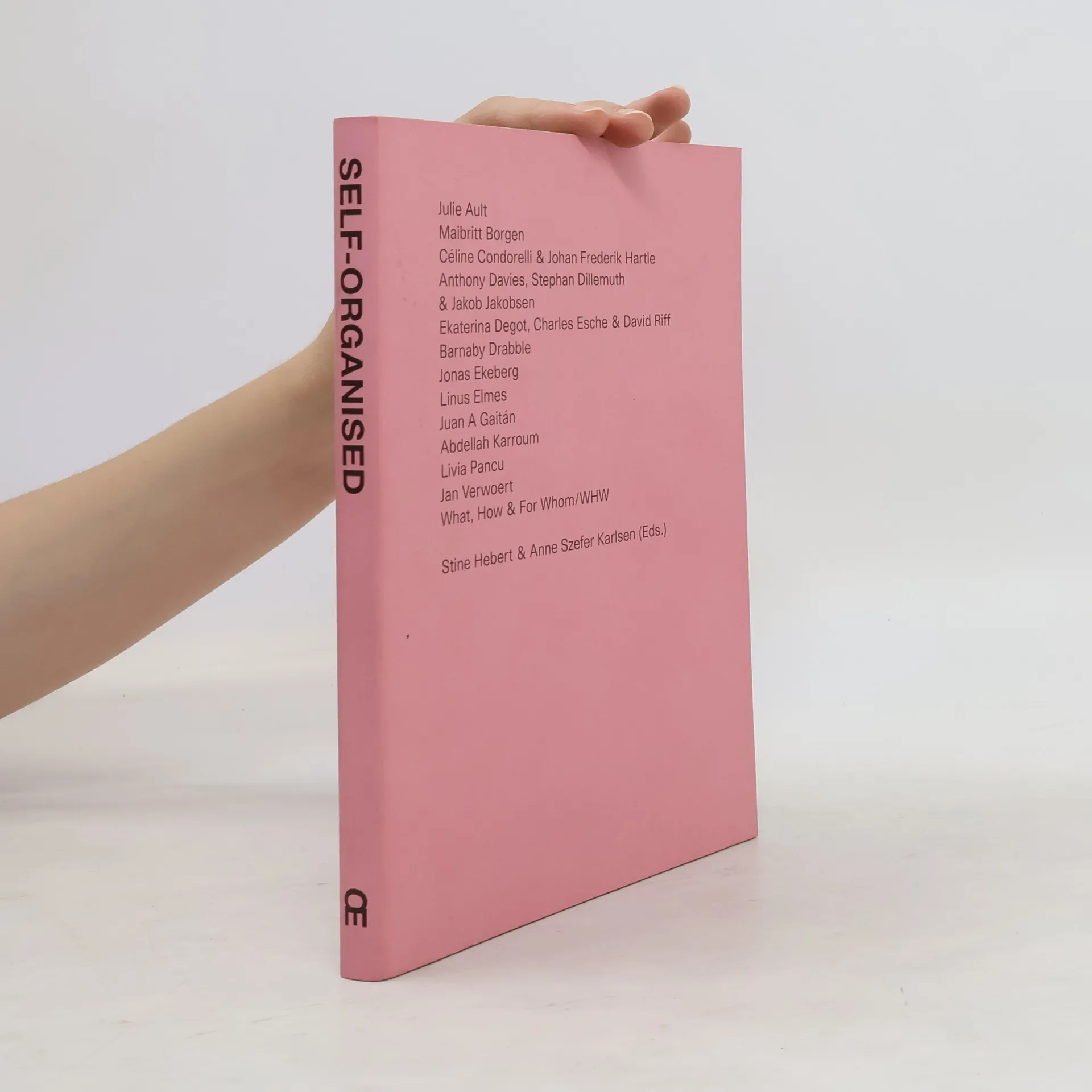
The current economic situation and society’s low confidence in its institutions demands that artists become more imaginative in their self-organization. If labels such as ‘alternative,’ ‘non-profit’ and ‘artist-run’ dominated the self-organized art scene of the late nineties, the separatist position implied by the use of these terms has been moderated during the intervening years. This new anthology of accounts from the frontline includes contributions by artist practitioners as well as their institutional counterparts providing a fascinating account of the art world as a matrix of positions where the balance of power and productivity constantly shifts. Artists, curators and critics discuss empirical and theoretical approaches from Europe, Africa and South and North America on how self-organization today oscillates between the self and the group, self-imposed bureaucratization and flexibility, aestheticization and activism.
First presentation of the Julie Ault Collection The collective process as both the path and the goal of art With an index of works and personal notes
"Admired by Charles and Ray Eames, Buckminster Fuller and Saul Bass, Sister Corita Kent (1918-1986) was one of the most innovative and unusual pop artist of the 1960s, battling the political and religious establishments, revolutionizing graphic design and encouraging creativity of thousands of people--all while living and practicing as a Catholic nun in California. Mixing advertising slogans and poetry in her prints and commandeering nuns and students to help make ambitious installations, processions and banners, Sister Corita's work is now recognized as some of the most striking--and joyful--American art of the 60s. But, at the end of the decade and at the height of her fame and prodigious work rate, she left the convent where she had spent her adult life. Julie Ault's book ls the first to examine Corita's life and career, containing more than 90 illustrations, many reproduced for the first time, capturing the artist's use of vibrant and day-glo colors."--Page 4 of cover.
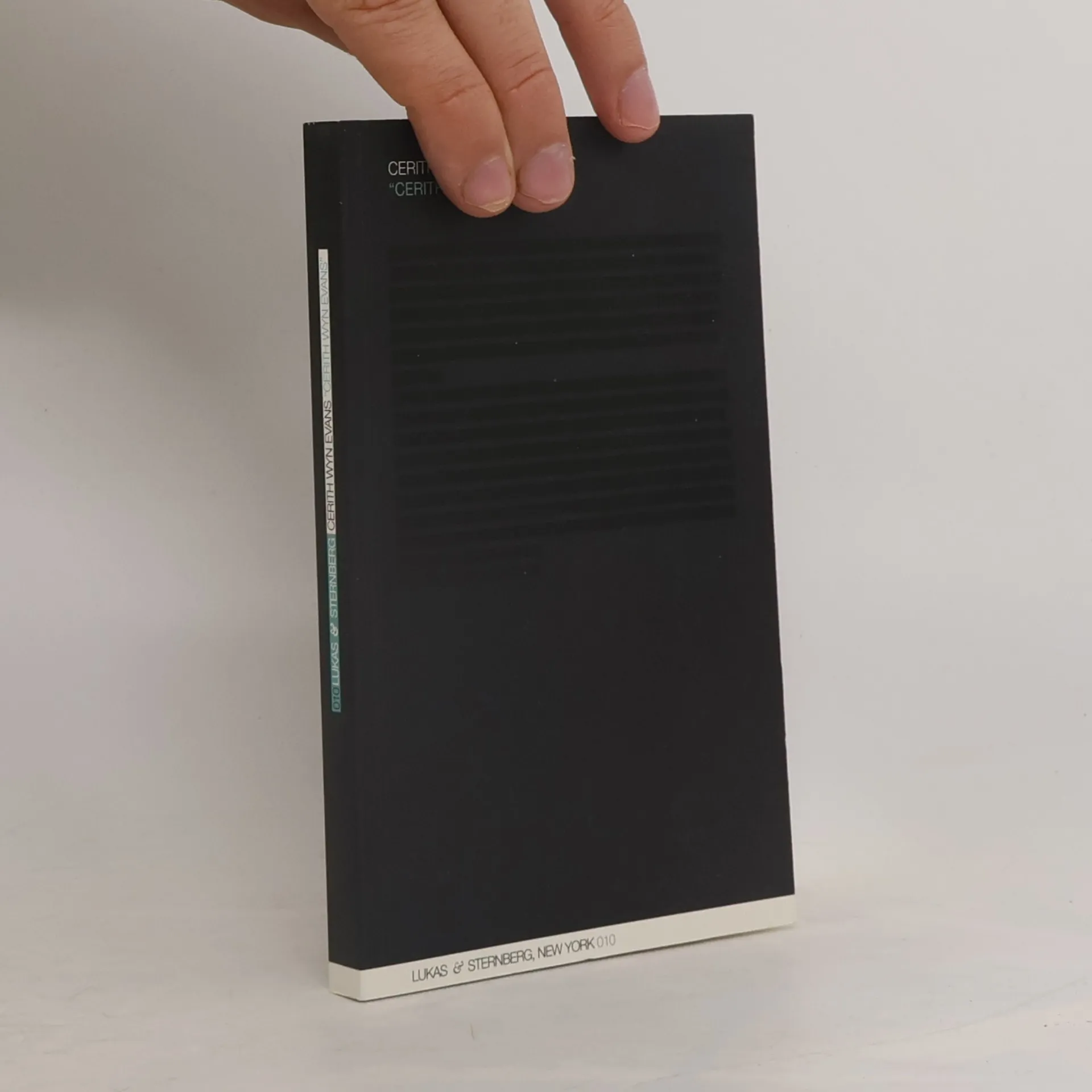
"I had to come up with a "title", and I thought: 'Oh, God. Where do you begin?' The set of references becomes like an endless chain. In this very Klossowskian way there is this notion of the dematerialisation of the proper noun."--Cerith Wyn Evans The Welsh artist Cerith Wyn Evans (*1958) eludes easy categorization: in the mid-eighties, he worked as an assistant to the film director Derek Jarman, making both experimental films and music videos for pop bands such as The Smiths and The Fall; he also was a tutor for six years at the Architectural Association. During the 1990s, he consolidated an international reputation as an artist unafraid to embrace highly complex conceptual issues of communication and perception, with dense textual references invariably spliced with a poetically tongue- in-cheek dandyism, whether the writings of William Blake flashed in Morse code off a disco ball; a homage to Pasolini written in fireworks or the cultivation of hybrid orchids in a Parisian gallery, nourished by the artist's own urine. "Cerith Wyn Evans" accompanied the artist's solo show at the Frankfurter Kunstverein and provides a comprehensive overview of the artist's body of work. Contributors Juliane Rebentisch, Andreas Spiegl, Jan Verwoert, interview by Manfred Hermes
A catalogue published in conjunction with an exhibition held at Neue Gesellschaft fur Bildende Kunst, Berlin, June 17 - July 16, 2000. The show, organized by Julie Ault and Martin Beck, "explored boundaries between installation art and exhibition design. An experimental temporary exhibition, it was a product of Ault and Beck's ongoing engagement with concepts of space and urban form. It drew on their experience of Los Angeles, and looked at the ways in which particular spaces are negotiated as integral parts of an urban metabolism." Essay by Julie Ault and Martin Beck. Unpaginated [64 pages]; color and b&w illustrations throughout; 8.25 x 10.25 inches. Text in English and German.