

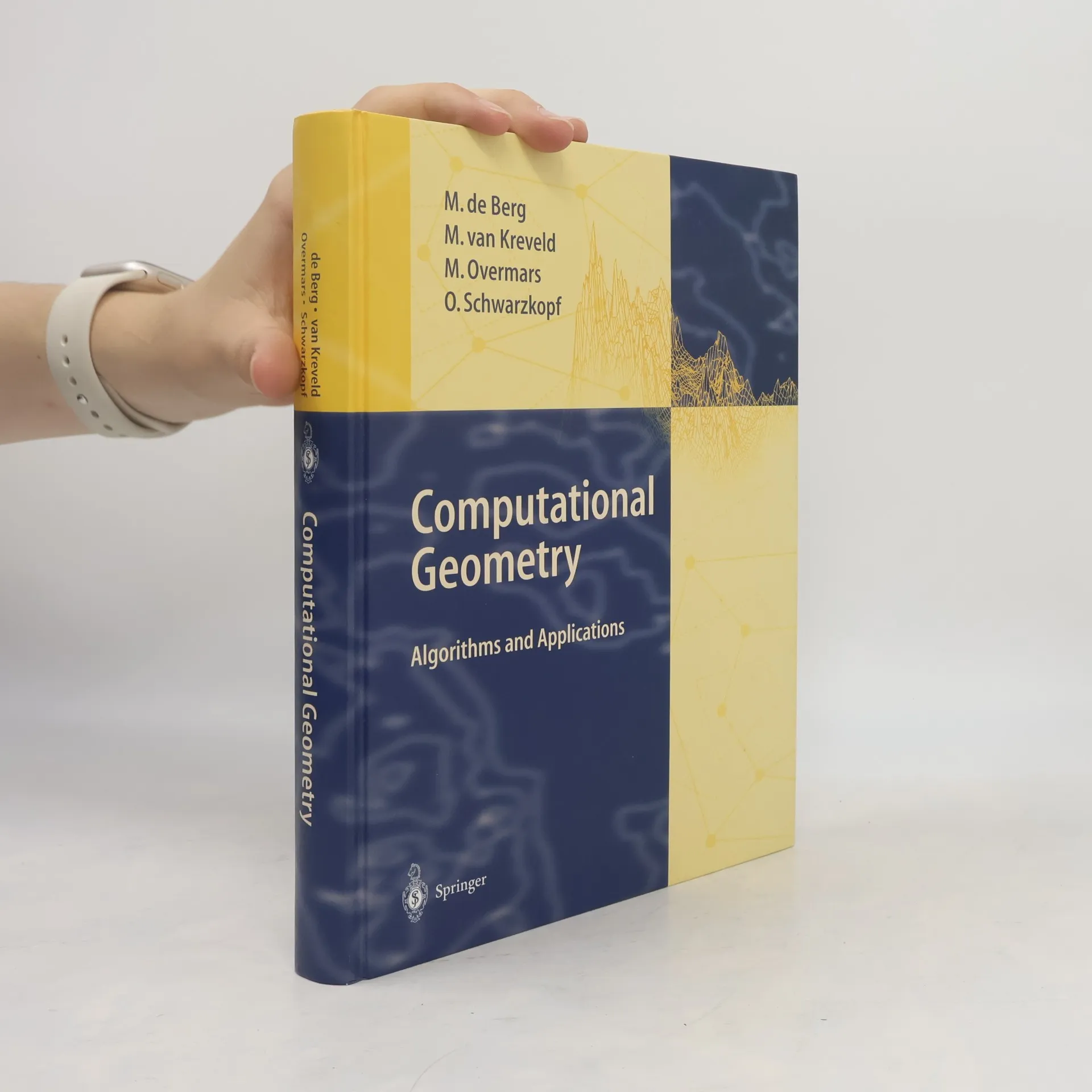
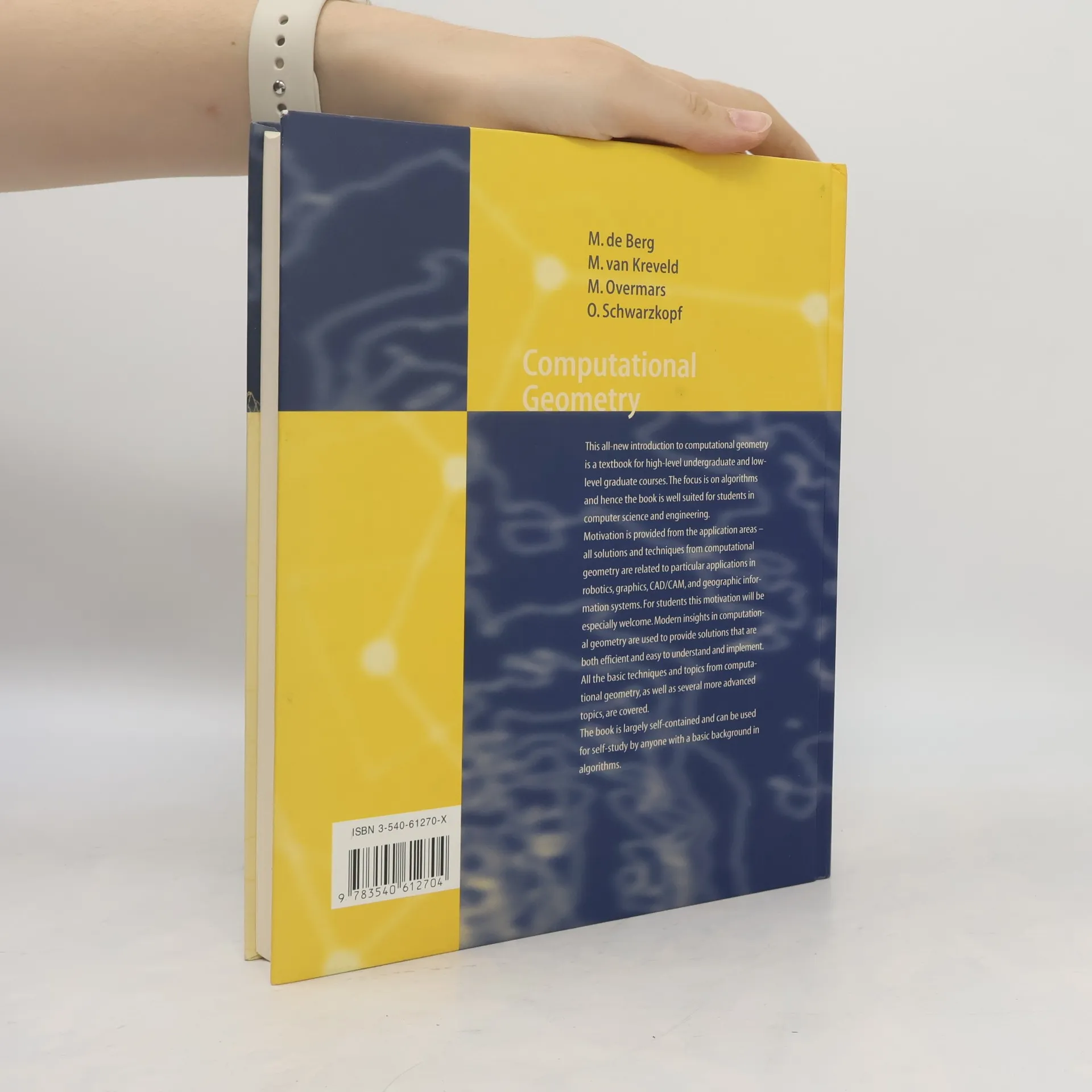
Computational Geometry
Algorithms and Applications
Book rating
More about the book
Computational geometry emerged from the field of algorithms design and anal ysis in the late 1970s. It has grown into a recognized discipline with its own journals, conferences, and a large community of active researchers. The suc cess of the field as a research discipline can on the one hand be explained from the beauty of the problems studied and the solutions obtained, and, on the other hand, by the many application domains--computer graphics, geographic in formation systems (GIS), robotics, and others-in which geometric algorithms play a fundamental role. For many geometric problems the early algorithmic solutions were either slow or difficult to understand and implement. In recent years a number of new algorithmic techniques have been developed that improved and simplified many of the previous approaches. In this textbook we have tried to make these modem algorithmic solutions accessible to a large audience. The book has been written as a textbook for a course in computational geometry, but it can also be used for self-study.
Publication

Book purchase
Computational Geometry, Mark Theodoor de Berg, Mark Overmars, Otfried Schwarzkopf, Marc van Kreveld
- Language

- Released
- 1997
- Binding
- (Hardcover)
Payment methods
We’re missing your review here.
- Title
- Computational Geometry
- Subtitle
- Algorithms and Applications
- Language
- English
- Publisher
- Springer
- Released
- 1997
- Format
- Hardcover
- Pages
- 365
- ISBN10
- 354061270X
- ISBN13
- 9783540612704
- Series
- Rating
- 4.1 out of 5
- Description
- Computational geometry emerged from the field of algorithms design and anal ysis in the late 1970s. It has grown into a recognized discipline with its own journals, conferences, and a large community of active researchers. The suc cess of the field as a research discipline can on the one hand be explained from the beauty of the problems studied and the solutions obtained, and, on the other hand, by the many application domains--computer graphics, geographic in formation systems (GIS), robotics, and others-in which geometric algorithms play a fundamental role. For many geometric problems the early algorithmic solutions were either slow or difficult to understand and implement. In recent years a number of new algorithmic techniques have been developed that improved and simplified many of the previous approaches. In this textbook we have tried to make these modem algorithmic solutions accessible to a large audience. The book has been written as a textbook for a course in computational geometry, but it can also be used for self-study.