



More about the book
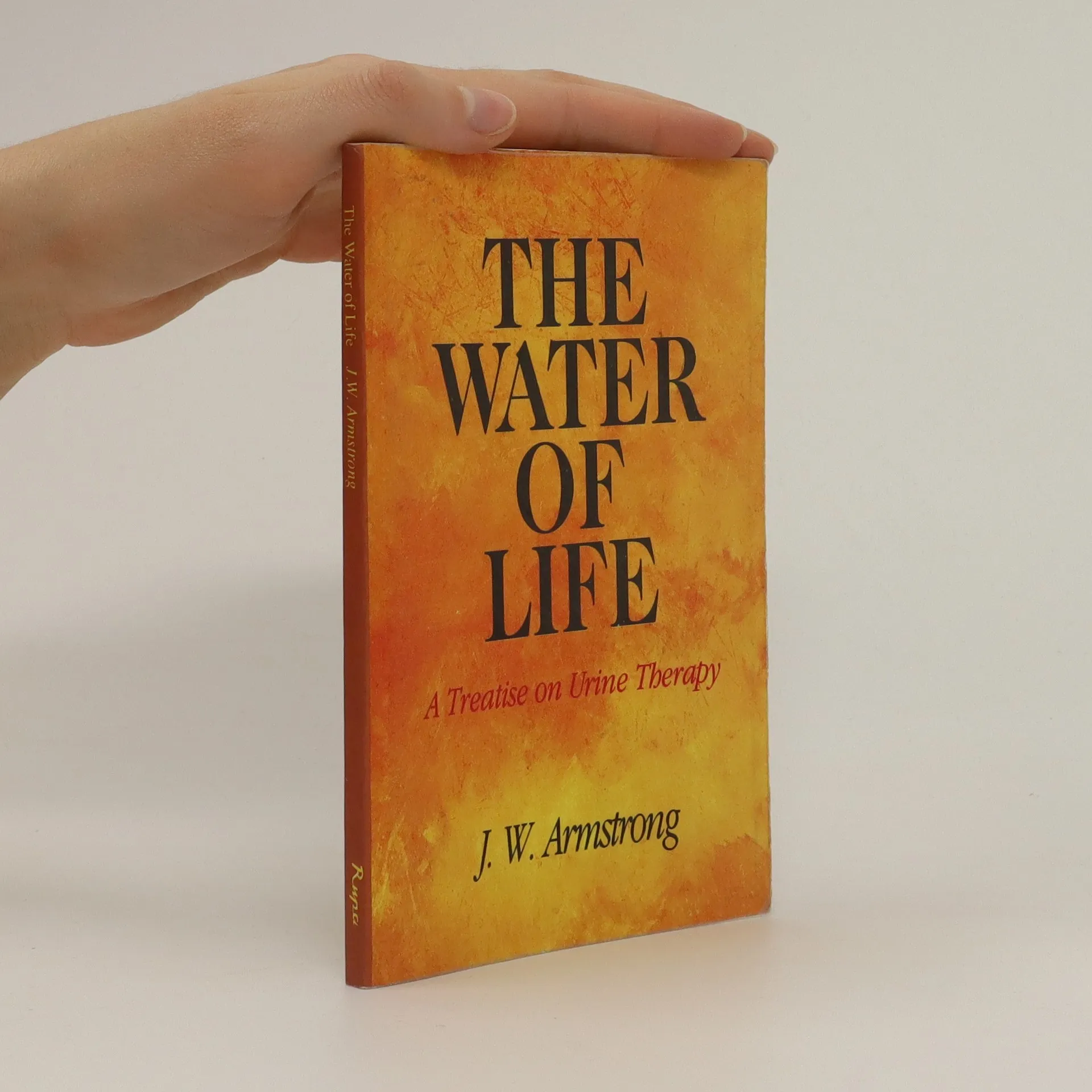
In this revolutionary treatise, J W Armstrong puts the compelling case that all diseases (except those caused by traumatism or structural disorders) can be cured by one simple means: urine therapy. The therapy is an entirely natural treatment, a drugless system of healing that treats the body as a whole. Moreover, the only ingredient needed is a substance manufactured in the body itself, rich in mineral salts, hormones and other vital substances, namely human urine. It may seem strange to take back into the body something that the body is apparently discarding. Yet the theory is similar to the natural practice of organic composting. Fallen leaves, when dug back into the soil, provide valuable mineral salts to nourish new plant life. The same principle holds true for the human body.
Language



Book purchase
The Water of Life, John W. Armstrong
- Language

- Released
- 2003
- Binding
- (Paperback)
Payment methods
We’re missing your review here.
- Title
- The Water of Life
- Language
- English
- Authors
- John W. Armstrong
- Publisher
- Rupa
- Released
- 2003
- Format
- Paperback
- Pages
- 136
- ISBN10
- 001000145x
- ISBN13
- 9780010001457
- Series
- Categories
- Original title
- The Water of Life
- Rating
- 4.35 out of 5
- Description
- In this revolutionary treatise, J W Armstrong puts the compelling case that all diseases (except those caused by traumatism or structural disorders) can be cured by one simple means: urine therapy. The therapy is an entirely natural treatment, a drugless system of healing that treats the body as a whole. Moreover, the only ingredient needed is a substance manufactured in the body itself, rich in mineral salts, hormones and other vital substances, namely human urine. It may seem strange to take back into the body something that the body is apparently discarding. Yet the theory is similar to the natural practice of organic composting. Fallen leaves, when dug back into the soil, provide valuable mineral salts to nourish new plant life. The same principle holds true for the human body.