

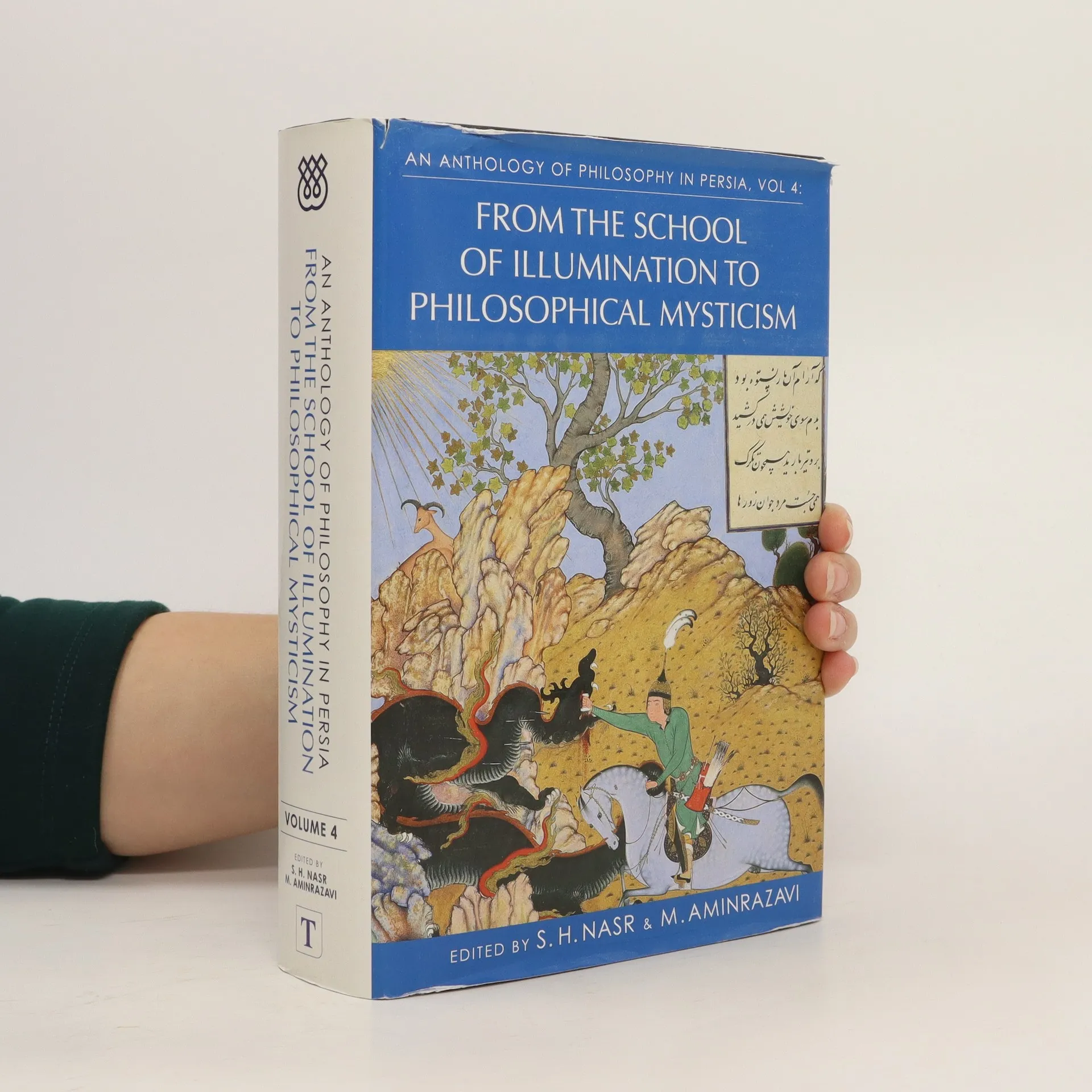


From the School of Illumination to Philosophical Mysticism
Parameters
More about the book
The fourth volume of the Anthology of Philosophy in Persia deals with one of the richest and yet least known periods of philosophical life in Persia, the centuries between the seventh/thirteenth century, that saw the eclipse of the school of Khorosan, and the tenth/sixteenth century that coincided with the rise of the Safavids. The main schools dealt with in this volume are the Peripatetic (mashsha'i) School, the School of Illumination (ishraq) of Suhrawardi, and various forms of philosophical Sufism, especially the school of Ibn 'Arabi, that had its origins in the works of Ghazzali and 'Ayn al-Qudat Hamadani. This period was also notable for the philosopher-scientists such as Nasir al-Din Tusi and Qutb al-Din Shirazi.
Book purchase
From the School of Illumination to Philosophical Mysticism, ProQuest, Mehdi Amin Razavi, Seyyed Hossein Nasr
- Language

- Released
- 2012
- Binding
- (Hardcover)
Payment methods
No one has rated yet.
- Title
- From the School of Illumination to Philosophical Mysticism
- Language
- English
- Authors
- ProQuest, Mehdi Amin Razavi, Seyyed Hossein Nasr
- Publisher
- I.B. Tauris
- Released
- 2012
- Format
- Hardcover
- ISBN10
- 0857721852
- ISBN13
- 9780857721853
- Series
- Categories
- Description
- The fourth volume of the Anthology of Philosophy in Persia deals with one of the richest and yet least known periods of philosophical life in Persia, the centuries between the seventh/thirteenth century, that saw the eclipse of the school of Khorosan, and the tenth/sixteenth century that coincided with the rise of the Safavids. The main schools dealt with in this volume are the Peripatetic (mashsha'i) School, the School of Illumination (ishraq) of Suhrawardi, and various forms of philosophical Sufism, especially the school of Ibn 'Arabi, that had its origins in the works of Ghazzali and 'Ayn al-Qudat Hamadani. This period was also notable for the philosopher-scientists such as Nasir al-Din Tusi and Qutb al-Din Shirazi.