


More about the book
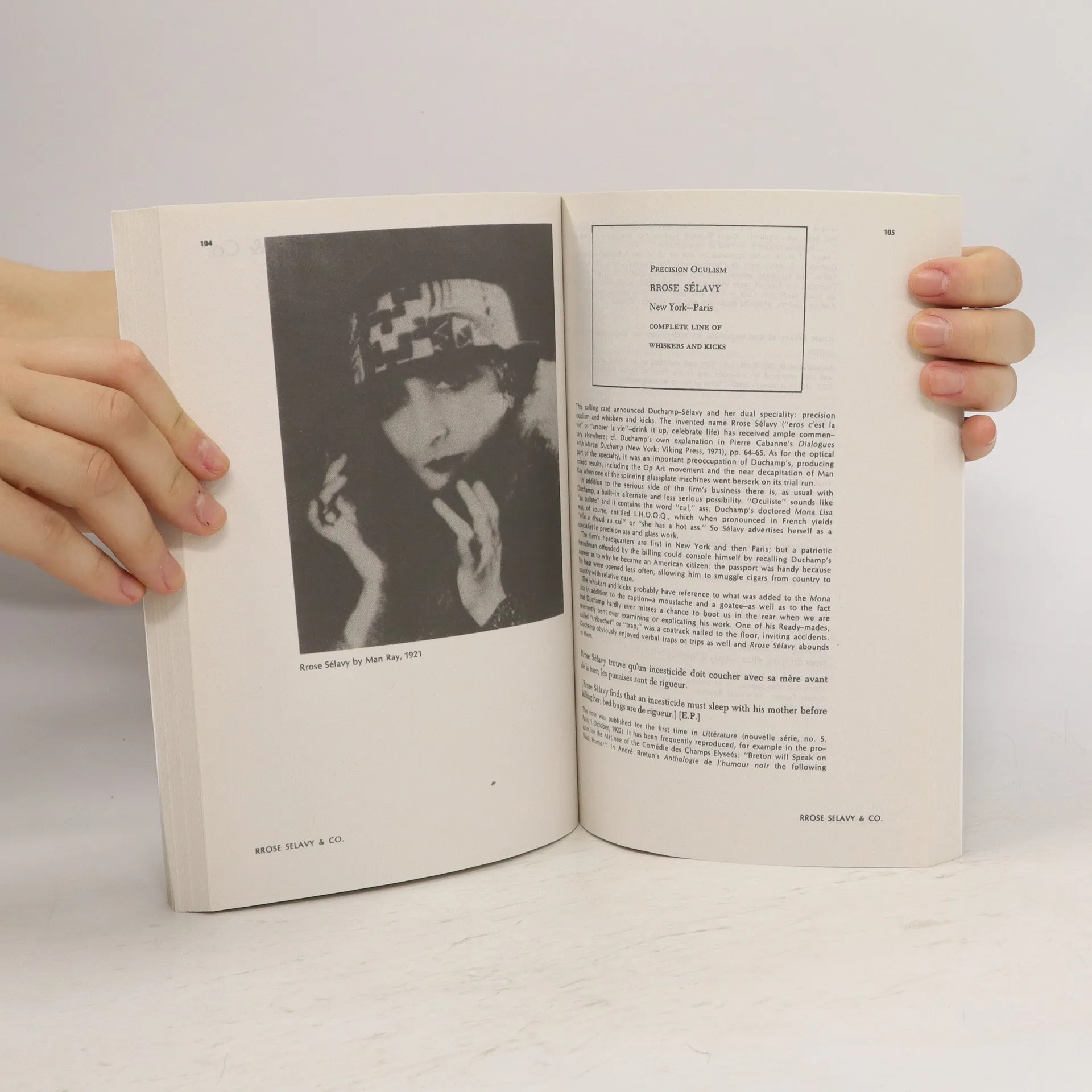
In the twenties, Surrealists proclaimed that words had stopped playing around and had begun to make love. Nowhere is this more apparent than in the writings of Marcel Duchamp, who fashioned some of the more joyous and ingenious couplings and uncouplings in modern art. This collection beings together two essential interviews and two statements about his art that underscore the serious side of Duchamp. But most of the book is made up of his experimental writings, which he called ”Texticles,” the long and extraordinary notes he wrote for The Bride Stripped Bare By Her Bachelors, Eben (also known as The Large Glass), and the outrageous puns and alter-ego he constructed for his female self, Rrose Sélavy (”Eros, c’est la vie” or arouser la vie”drink it up”; celebrate life”). Wacky, perverse, deliberately frustrating, these entertaining notes are basic for understanding one of the twentieth century’s most provocative artists, a figure whose influence on the contemporary scene has never been stronger.

Book purchase
The Writings Of Marcel Duchamp, Marcel Duchamp
- Language

- Released
- 1973
- Binding
- (Paperback)
Payment methods
We’re missing your review here.
- Title
- The Writings Of Marcel Duchamp
- Language
- English
- Authors
- Marcel Duchamp
- Publisher
- Da Capo Press, Incorporated
- Released
- 1973
- Format
- Paperback
- ISBN10
- 0306803410
- ISBN13
- 9780306803413
- Series
- Tags
- Artists, Modern Art, Surrealism, Theory of Art
- Rating
- 4.35 out of 5
- Description
- In the twenties, Surrealists proclaimed that words had stopped playing around and had begun to make love. Nowhere is this more apparent than in the writings of Marcel Duchamp, who fashioned some of the more joyous and ingenious couplings and uncouplings in modern art. This collection beings together two essential interviews and two statements about his art that underscore the serious side of Duchamp. But most of the book is made up of his experimental writings, which he called ”Texticles,” the long and extraordinary notes he wrote for The Bride Stripped Bare By Her Bachelors, Eben (also known as The Large Glass), and the outrageous puns and alter-ego he constructed for his female self, Rrose Sélavy (”Eros, c’est la vie” or arouser la vie”drink it up”; celebrate life”). Wacky, perverse, deliberately frustrating, these entertaining notes are basic for understanding one of the twentieth century’s most provocative artists, a figure whose influence on the contemporary scene has never been stronger.