

More about the book
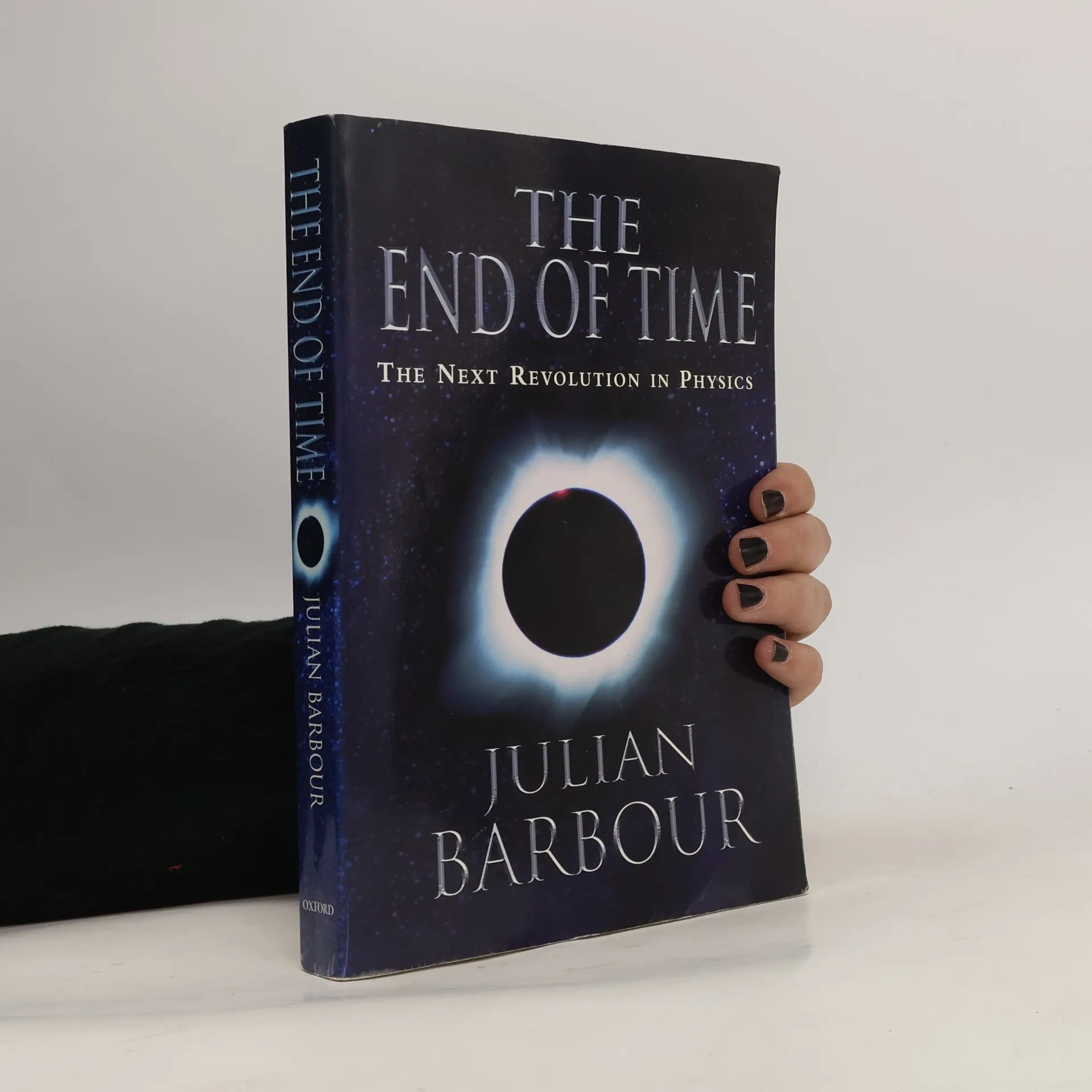
Richard Feynman once quipped that "Time is what happens when nothing else does," but Julian Barbour challenges this notion, asserting that if nothing changed, time would cease to exist. He argues that time is merely a perception of change, and in this provocative volume, he presents evidence for the nonexistence of time. Barbour explores what a timeless universe would entail while illustrating how we still experience the world as temporal. His arguments challenge the foundations of modern physics, particularly Einstein's space-time continuum, and suggest that reconciling classical and quantum physics may lead to the end of time as a fundamental concept. With remarkable clarity, Barbour draws on insights from ancient philosophers like Heraclitus and Parmenides, as well as scientific giants such as Galileo, Newton, and Einstein, alongside contemporary physicists like John Wheeler, Roger Penrose, and Stephen Hawking. He delves into the mysteries of the universe, presenting captivating ideas about multiple worlds, time travel, immortality, and the illusion of motion. This exploration turns our understanding of reality upside down, making it a vibrantly written and revolutionary examination of time's role in physics and our perception of existence.


Book purchase
The End of Time, Julian Barbour
- Language

- Released
- 2000
- Binding
- (Hardcover)
Payment methods
We’re missing your review here.
- Title
- The End of Time
- Subtitle
- The Next Revolution in Physics
- Language
- English
- Authors
- Julian Barbour
- Publisher
- Oxford University Press
- Released
- 2000
- Format
- Hardcover
- Pages
- 371
- ISBN10
- 0195117298
- ISBN13
- 9780195117295
- Series
- Tags
- Natural sciences, Science, Space
- Rating
- 3.5 out of 5
- Description
- Richard Feynman once quipped that "Time is what happens when nothing else does," but Julian Barbour challenges this notion, asserting that if nothing changed, time would cease to exist. He argues that time is merely a perception of change, and in this provocative volume, he presents evidence for the nonexistence of time. Barbour explores what a timeless universe would entail while illustrating how we still experience the world as temporal. His arguments challenge the foundations of modern physics, particularly Einstein's space-time continuum, and suggest that reconciling classical and quantum physics may lead to the end of time as a fundamental concept. With remarkable clarity, Barbour draws on insights from ancient philosophers like Heraclitus and Parmenides, as well as scientific giants such as Galileo, Newton, and Einstein, alongside contemporary physicists like John Wheeler, Roger Penrose, and Stephen Hawking. He delves into the mysteries of the universe, presenting captivating ideas about multiple worlds, time travel, immortality, and the illusion of motion. This exploration turns our understanding of reality upside down, making it a vibrantly written and revolutionary examination of time's role in physics and our perception of existence.