

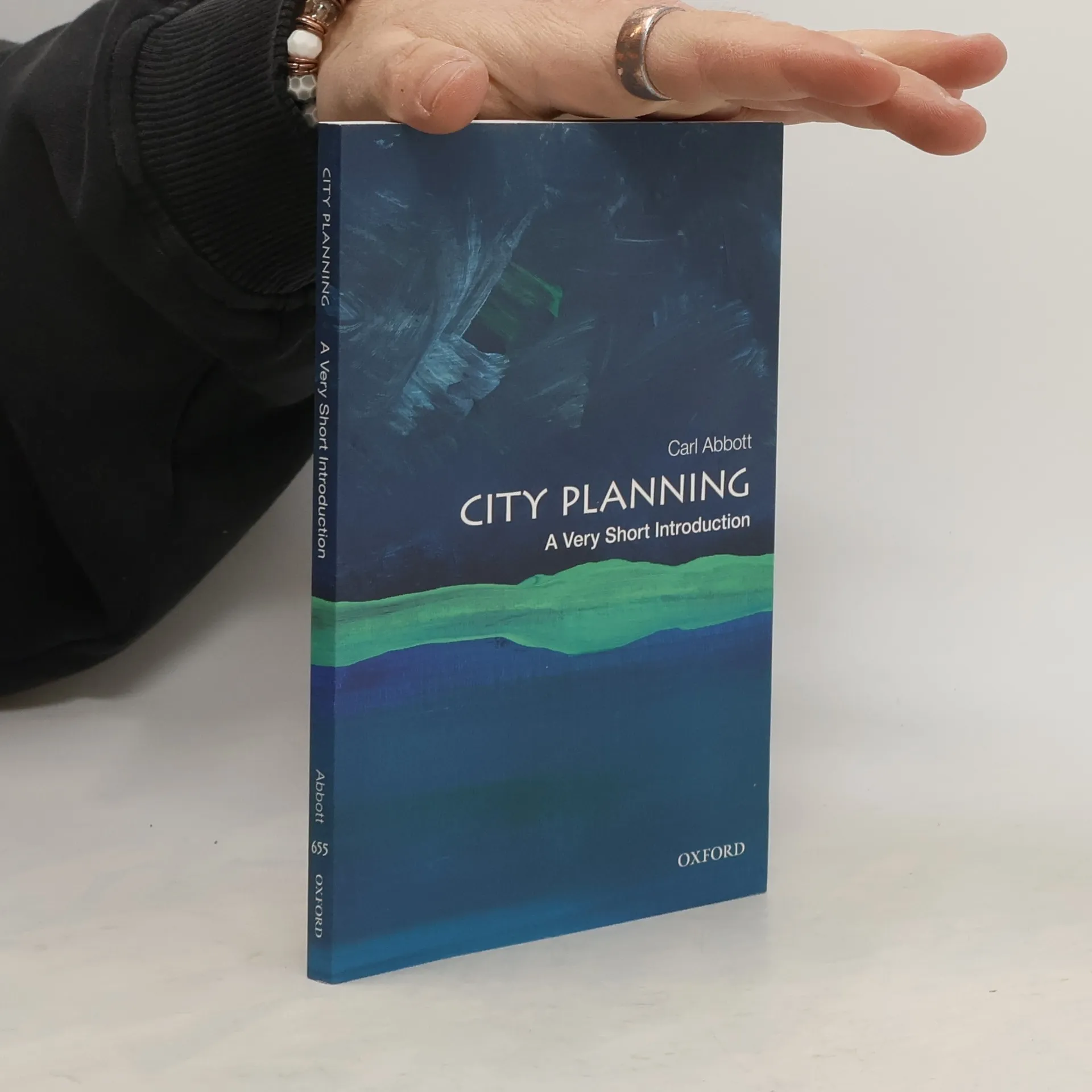


More about the book
"City Planning: A Very Short Introduction gives an international overview of progress in city planning over the last century. City planning explores the tension between the idea of cities as individually held land-parcels and as representations of community and identity. It has inevitable political and ethical dimensions. Over time, cities have grown and merged, leading to larger-scale thinking about planning, but it remains a regional discipline. Part of city planning involves making cities more resilient to natural disasters and civil conflict. Data, technological developments, commerce, and efficient functioning are important, but human connection is necessary for cities to survive"--
Book purchase
City Planning: A Very Short Introduction, Carl Abbott
- Language

- Released
- 2020
- Binding
- (Paperback)
Payment methods
We’re missing your review here.
- Title
- City Planning: A Very Short Introduction
- Language
- English
- Authors
- Carl Abbott
- Publisher
- Oxford University Press
- Released
- 2020
- Format
- Paperback
- Pages
- 160
- ISBN10
- 019094434X
- ISBN13
- 9780190944346
- Series
- Categories
- Tags
- Rating
- 3.35 out of 5
- Description
- "City Planning: A Very Short Introduction gives an international overview of progress in city planning over the last century. City planning explores the tension between the idea of cities as individually held land-parcels and as representations of community and identity. It has inevitable political and ethical dimensions. Over time, cities have grown and merged, leading to larger-scale thinking about planning, but it remains a regional discipline. Part of city planning involves making cities more resilient to natural disasters and civil conflict. Data, technological developments, commerce, and efficient functioning are important, but human connection is necessary for cities to survive"--