

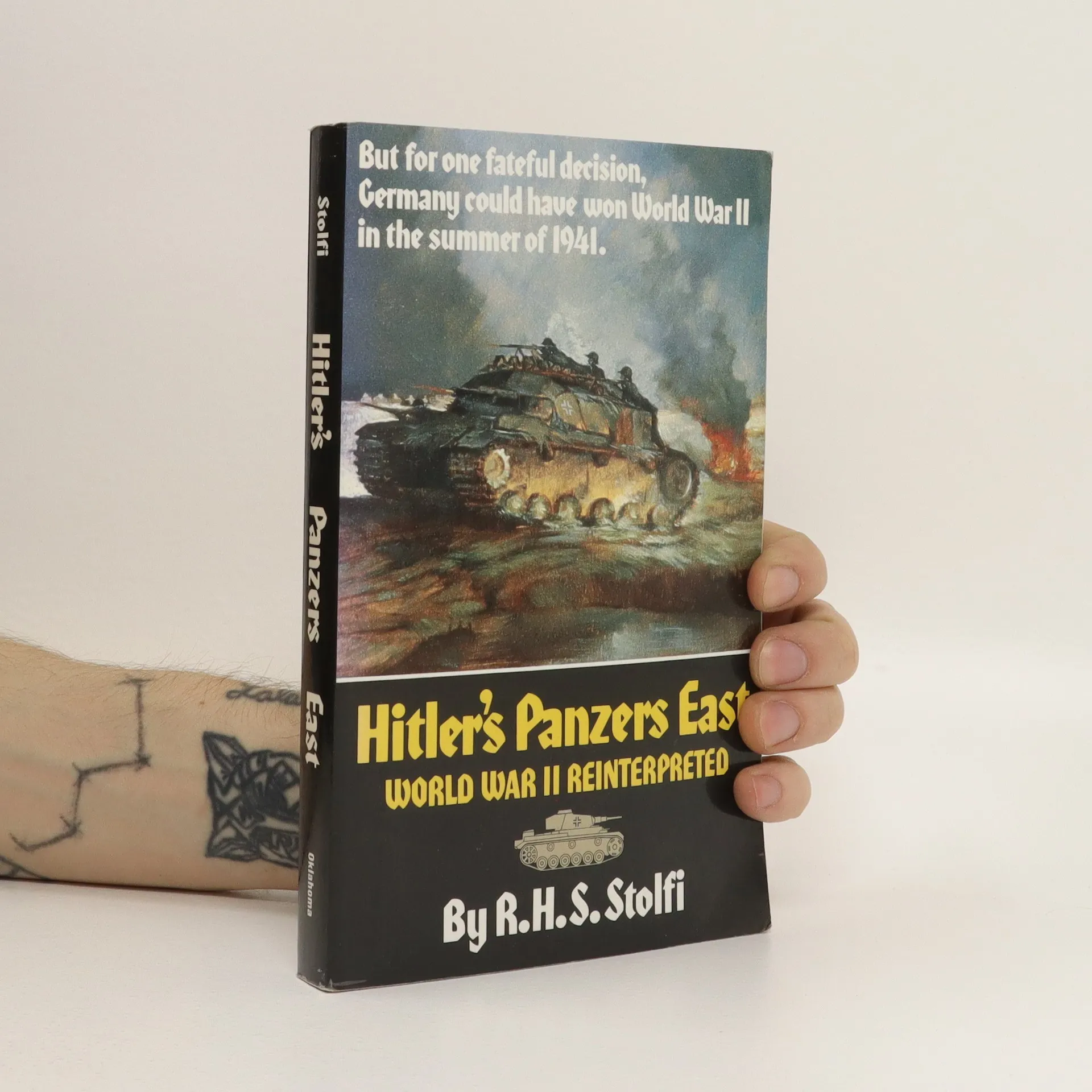




More about the book
How close did Germany come to winning World War II? R.H.S. Stolfi presents a dramatic reinterpretation of Hitler’s strategy during the conflict, challenging the prevailing view that he operated under a blitzkrieg mentality from 1939 to 1941. Instead, Stolfi argues that Hitler maintained a conservative approach, focused on extending siege lines around Germany. This perspective sheds light on his decisions, such as the unexpected outcomes at Dunkirk, his obsession with Leningrad, and the critical choice in summer 1941 to divert Army Group Center towards Ukraine instead of advancing on Moscow, despite having the opportunity to secure victory. The German Army, unaware of Hitler’s siege mindset, executed bold blitz campaigns that initially led to significant victories, culminating in the campaign against the Soviet Union. By August 1941, Army Group Center was poised to defeat the Soviet forces defending Moscow, which could have ensured a German victory in the war. However, Hitler's directive to prioritize resources in Ukraine resulted in a lost opportunity for a swift triumph. This radical reinterpretation prompts a reevaluation of World War II, emphasizing not the Allies' strategies for victory but rather the narrow margin by which Germany could have achieved a decisive win long before the United States entered the conflict.
Publication

Book purchase
Hitler's Panzers East, Russel H. S. Stolfi
- Language

- Released
- 1993
- Binding
- (Paperback)
Payment methods
We’re missing your review here.
- Title
- Hitler's Panzers East
- Subtitle
- World War II reinterpreted
- Language
- English
- Authors
- Russel H. S. Stolfi
- Publisher
- University of Oklahoma Press
- Released
- 1993
- Format
- Paperback
- Pages
- 272
- ISBN10
- 0806125810
- ISBN13
- 9780806125817
- Series
- Rating
- 3.6 out of 5
- Description
- How close did Germany come to winning World War II? R.H.S. Stolfi presents a dramatic reinterpretation of Hitler’s strategy during the conflict, challenging the prevailing view that he operated under a blitzkrieg mentality from 1939 to 1941. Instead, Stolfi argues that Hitler maintained a conservative approach, focused on extending siege lines around Germany. This perspective sheds light on his decisions, such as the unexpected outcomes at Dunkirk, his obsession with Leningrad, and the critical choice in summer 1941 to divert Army Group Center towards Ukraine instead of advancing on Moscow, despite having the opportunity to secure victory. The German Army, unaware of Hitler’s siege mindset, executed bold blitz campaigns that initially led to significant victories, culminating in the campaign against the Soviet Union. By August 1941, Army Group Center was poised to defeat the Soviet forces defending Moscow, which could have ensured a German victory in the war. However, Hitler's directive to prioritize resources in Ukraine resulted in a lost opportunity for a swift triumph. This radical reinterpretation prompts a reevaluation of World War II, emphasizing not the Allies' strategies for victory but rather the narrow margin by which Germany could have achieved a decisive win long before the United States entered the conflict.