

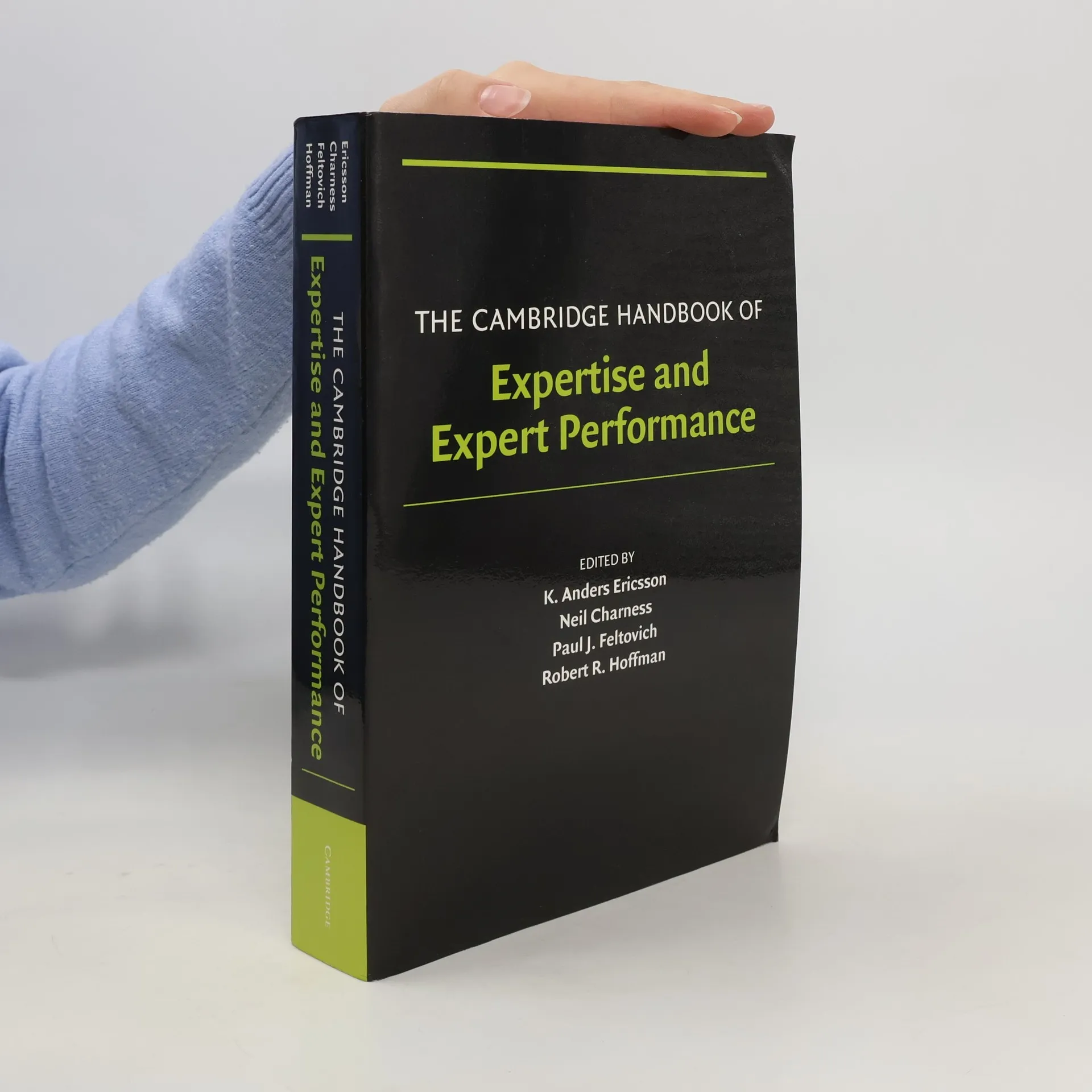


The Cambridge Handbook of Expertise and Expert Performance
Authors
Book rating
More about the book
This book was the first handbook where the world's foremost 'experts on expertise' reviewed our scientific knowledge on expertise and expert performance and how experts may differ from non-experts in terms of their development, training, reasoning, knowledge, social support, and innate talent. Methods are described for the study of experts' knowledge and their performance of representative tasks from their domain of expertise. The development of expertise is also studied by retrospective interviews and the daily lives of experts are studied with diaries. In 15 major domains of expertise, the leading researchers summarize our knowledge on the structure and acquisition of expert skill and knowledge and discuss future prospects. General issues that cut across most domains are reviewed in chapters on various aspects of expertise such as general and practical intelligence, differences in brain activity, self-regulated learning, deliberate practice, aging, knowledge management, and creativity.
Publication

Book purchase
The Cambridge Handbook of Expertise and Expert Performance, Anders Ericsson
- Language

- Released
- 2006
- Binding
- (Paperback)
Payment methods
We’re missing your review here.
- Title
- The Cambridge Handbook of Expertise and Expert Performance
- Language
- English
- Authors
- Anders Ericsson
- Publisher
- Cambridge University Press
- Released
- 2006
- Format
- Paperback
- Pages
- 918
- ISBN10
- 0521600812
- ISBN13
- 9780521600811
- Series
- Rating
- 4.3 out of 5
- Description
- This book was the first handbook where the world's foremost 'experts on expertise' reviewed our scientific knowledge on expertise and expert performance and how experts may differ from non-experts in terms of their development, training, reasoning, knowledge, social support, and innate talent. Methods are described for the study of experts' knowledge and their performance of representative tasks from their domain of expertise. The development of expertise is also studied by retrospective interviews and the daily lives of experts are studied with diaries. In 15 major domains of expertise, the leading researchers summarize our knowledge on the structure and acquisition of expert skill and knowledge and discuss future prospects. General issues that cut across most domains are reviewed in chapters on various aspects of expertise such as general and practical intelligence, differences in brain activity, self-regulated learning, deliberate practice, aging, knowledge management, and creativity.