


Experimental Theatre from Stanislavsky to Peter Brook
Authors
More about the book
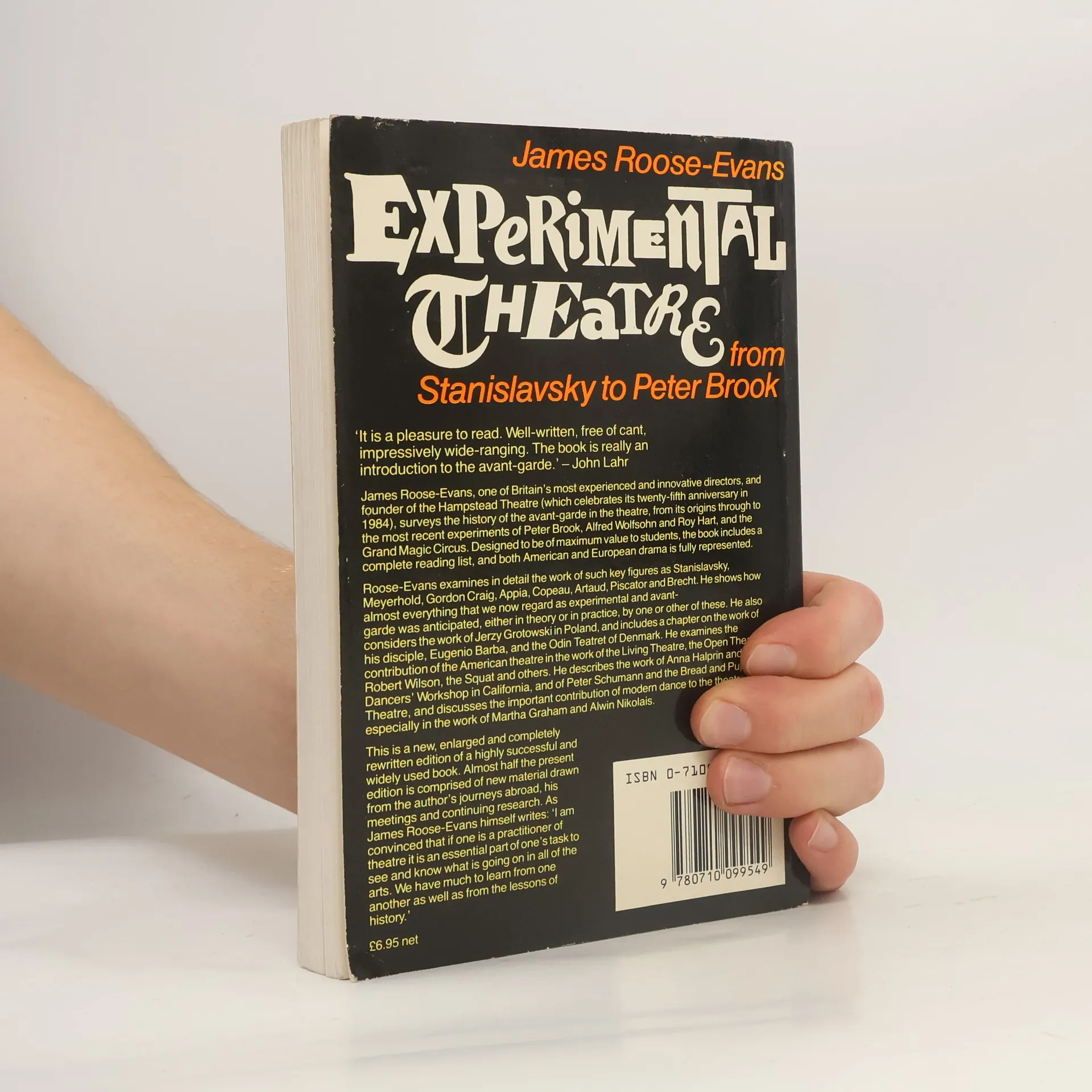
James Roose-Evans, one of Britain's most experienced and innovative directors, and founder of the Hampstead Theatre (which celebrated its twenty-fifth anniversary in 1984), surveys the history of the avant-garde in the theatre. He traces its origins through such key figures as Stanislavsky, Meyerhold, Craig, Appia, Copeau, Piscator, Brecht, Grotowski and up to the most recent experiments of Peter Brook's "Mahabharata," This is a second, enlarged edition of a highly successful and widely-used book. As James Roose-Evans himself writes: 'I am convinced that if one is a practitioner of theatre it is an essential part of one's task to see and know what is going on in all of the arts. We have much to learn from one another as well as from the lessons of history.'
Publication

Book purchase
Experimental Theatre from Stanislavsky to Peter Brook, James Roose-Evans
- Language

- Released
- 1984
- Binding
- (Paperback)
Payment methods
No one has rated yet.
- Title
- Experimental Theatre from Stanislavsky to Peter Brook
- Language
- English
- Authors
- James Roose-Evans
- Publisher
- Routledge & Kegan Paul
- Released
- 1984
- Format
- Paperback
- Pages
- 210
- ISBN10
- 0710099541
- ISBN13
- 9780710099549
- Series
- Categories
- Tags
- Theater
- Description
- James Roose-Evans, one of Britain's most experienced and innovative directors, and founder of the Hampstead Theatre (which celebrated its twenty-fifth anniversary in 1984), surveys the history of the avant-garde in the theatre. He traces its origins through such key figures as Stanislavsky, Meyerhold, Craig, Appia, Copeau, Piscator, Brecht, Grotowski and up to the most recent experiments of Peter Brook's "Mahabharata," This is a second, enlarged edition of a highly successful and widely-used book. As James Roose-Evans himself writes: 'I am convinced that if one is a practitioner of theatre it is an essential part of one's task to see and know what is going on in all of the arts. We have much to learn from one another as well as from the lessons of history.'