

Parameters
More about the book
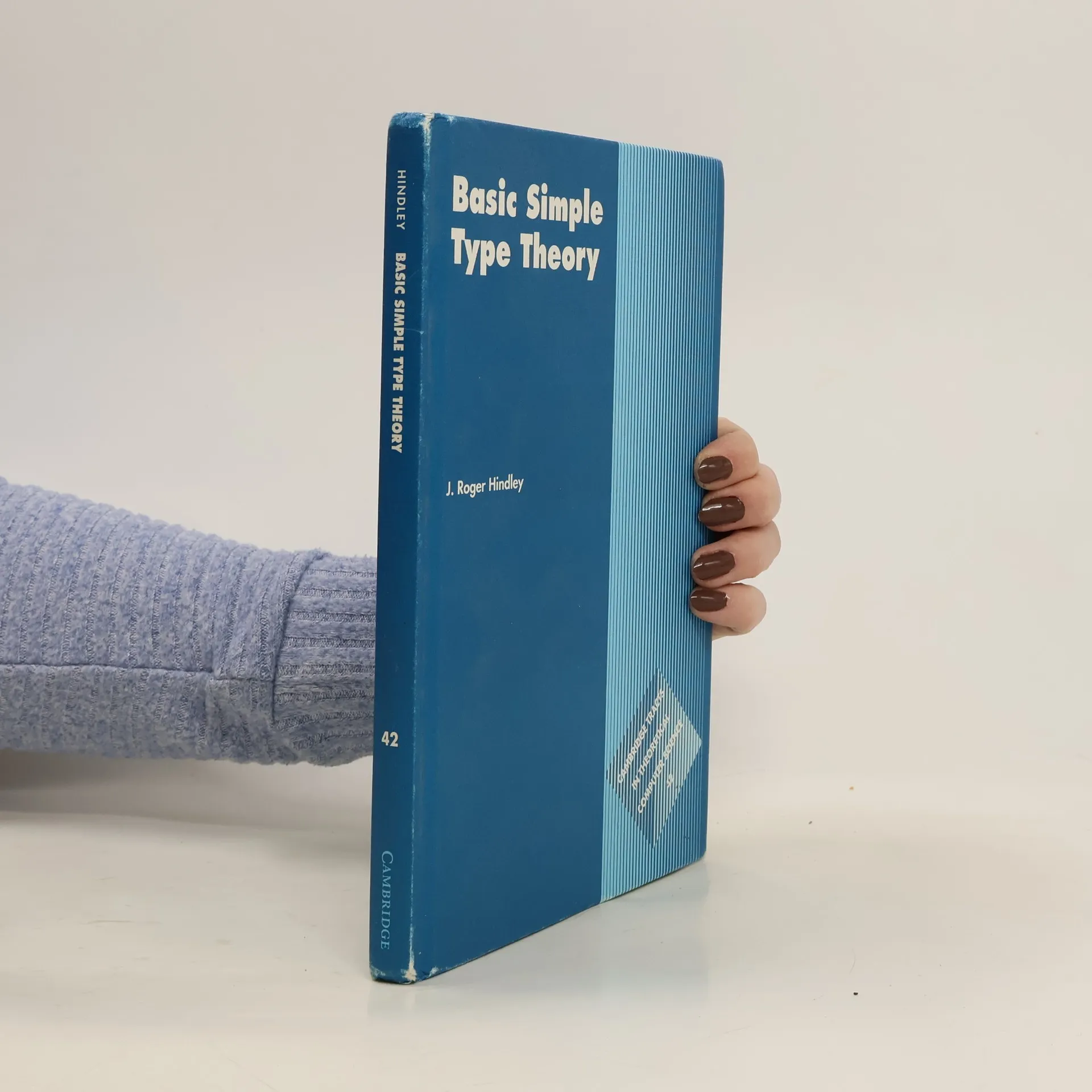
Type theory is one of the most important tools in the design of higher-level programming languages, such as ML. This book introduces and teaches its techniques by focusing on one particularly neat system and studying it in detail. By concentrating on the principles that make the theory work in practice, the author covers all the key ideas without getting involved in the complications of more advanced systems. This book takes a type-assignment approach to type theory, and the system considered is the simplest polymorphic one. The author covers all the basic ideas, including the system's relation to propositional logic, and gives a careful treatment of the type-checking algorithm that lies at the heart of every such system. Also featured are two other interesting algorithms that until now have been buried in inaccessible technical literature. The mathematical presentation is rigorous but clear, making it the first book at this level that can be used as an introduction to type theory for computer scientists.
Publication

Book purchase
Basic Simple Type Theory, J. Roger Hindley
- Language

- Released
- 1997
- Binding
- (Hardcover)
Payment methods
We’re missing your review here.
- Title
- Basic Simple Type Theory
- Language
- English
- Authors
- J. Roger Hindley
- Publisher
- Cambridge University Press
- Released
- 1997
- Format
- Hardcover
- ISBN10
- 0521465184
- ISBN13
- 9780521465182
- Categories
- Tags
- Logic
- Rating
- 3.8 out of 5
- Description
- Type theory is one of the most important tools in the design of higher-level programming languages, such as ML. This book introduces and teaches its techniques by focusing on one particularly neat system and studying it in detail. By concentrating on the principles that make the theory work in practice, the author covers all the key ideas without getting involved in the complications of more advanced systems. This book takes a type-assignment approach to type theory, and the system considered is the simplest polymorphic one. The author covers all the basic ideas, including the system's relation to propositional logic, and gives a careful treatment of the type-checking algorithm that lies at the heart of every such system. Also featured are two other interesting algorithms that until now have been buried in inaccessible technical literature. The mathematical presentation is rigorous but clear, making it the first book at this level that can be used as an introduction to type theory for computer scientists.