

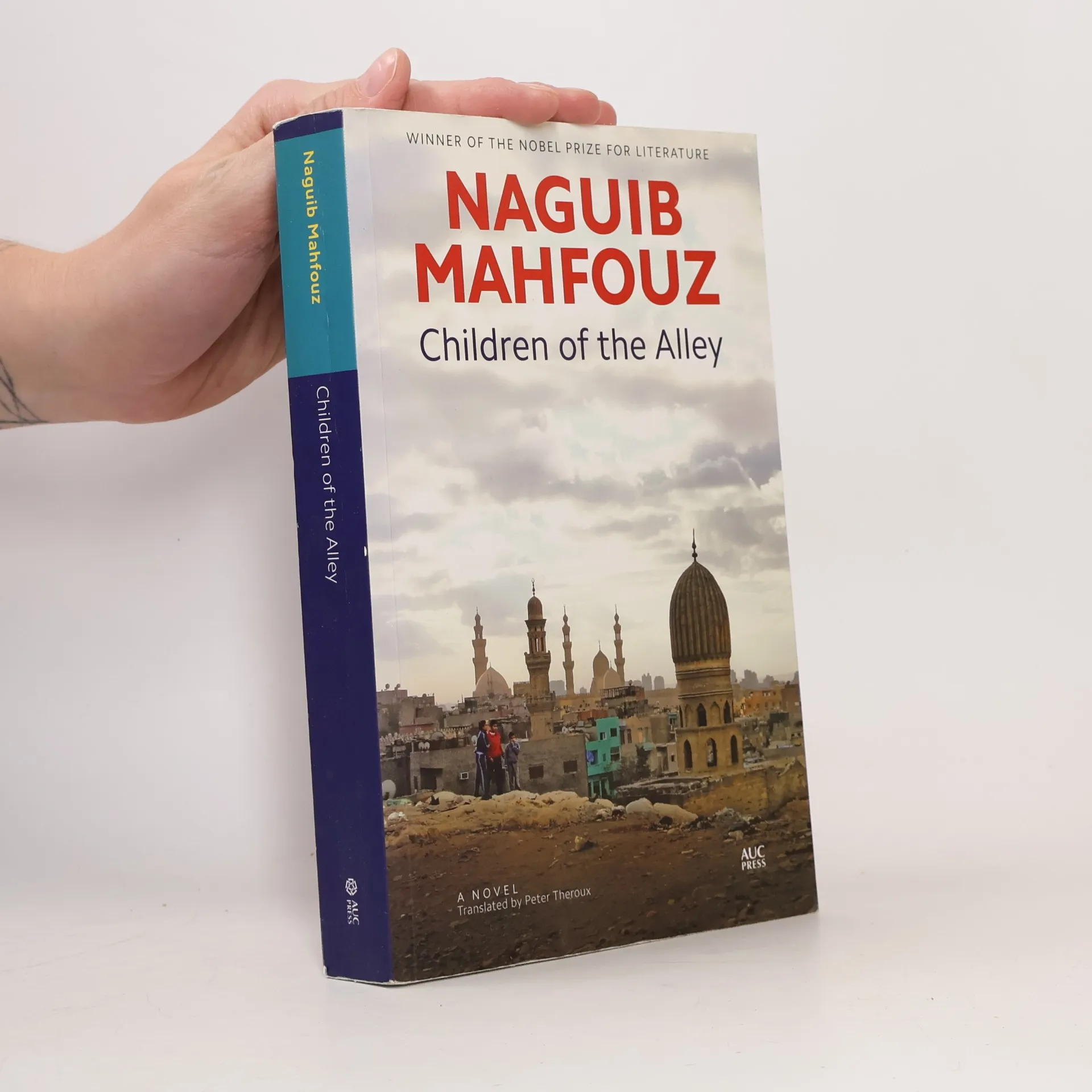
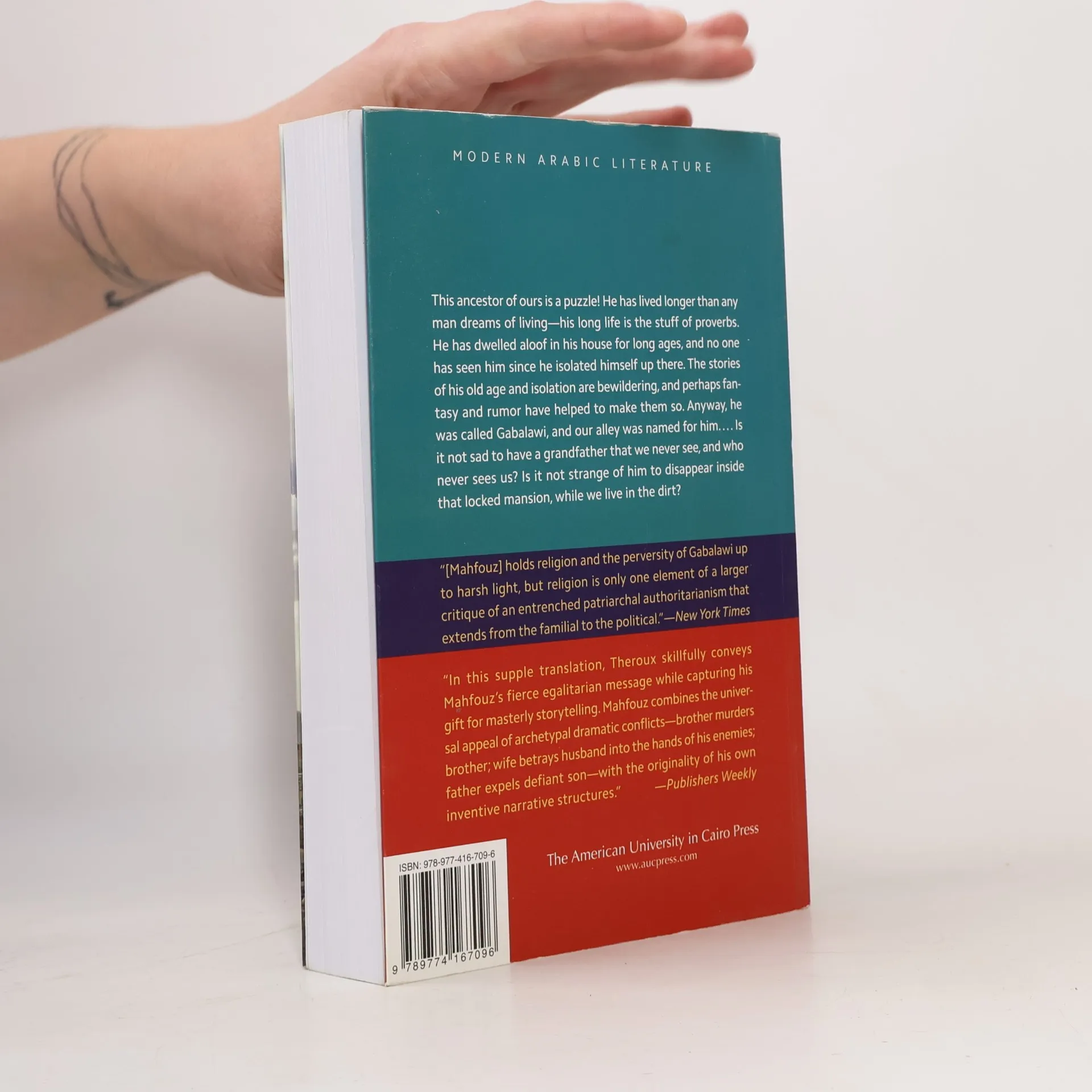
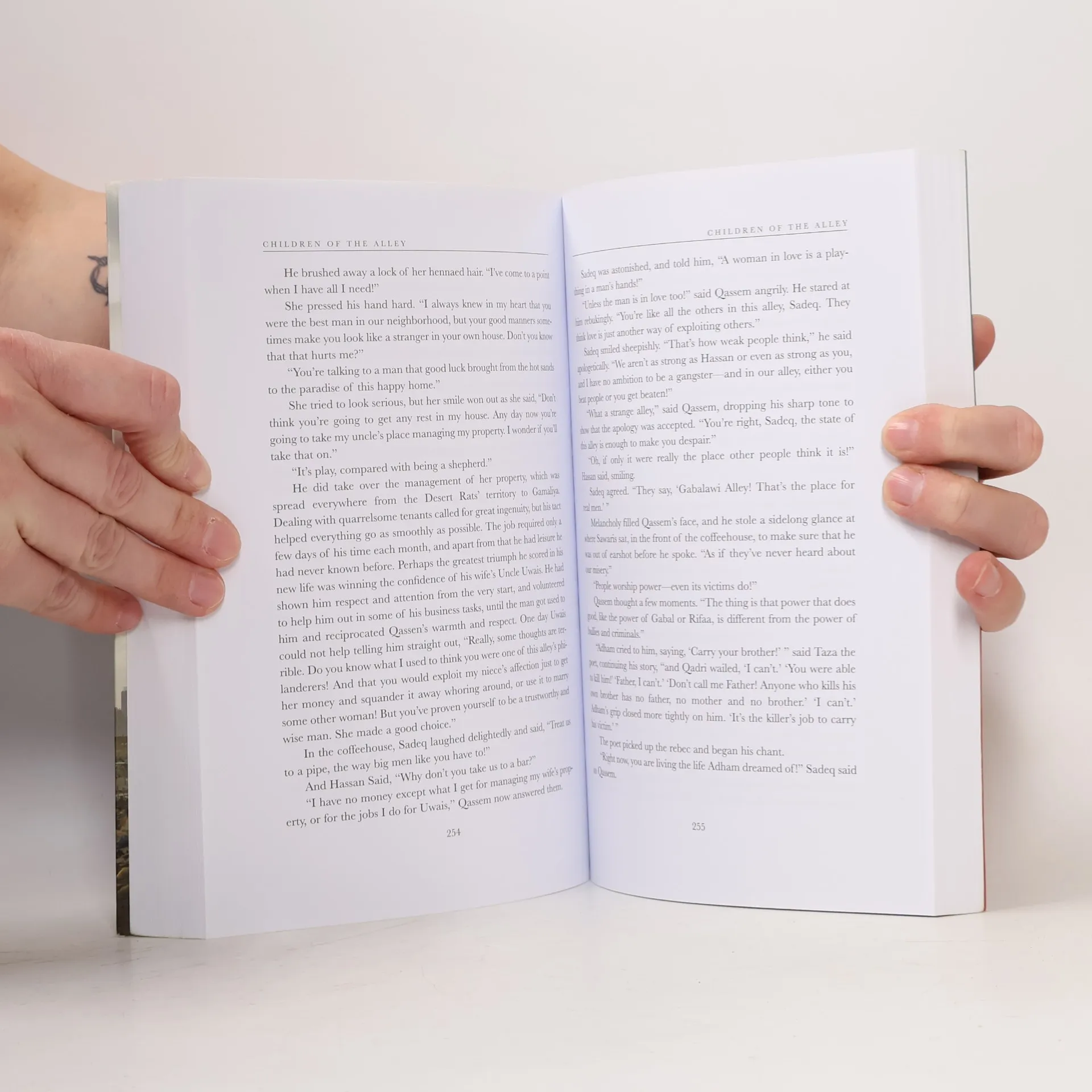
You'll get the exact copy in the photo
Parameters
More about the book
Set in a tumultuous Cairo neighborhood, this epic narrative explores the lives of generations struggling to uphold their ancestral rights. The alley serves as a backdrop for the rise and fall of various characters, including a feudal lord and a savior, who grapple with pride, legacy, and the quest for freedom. Their experiences mirror the spiritual history of humanity, showcasing the cyclical nature of struggle and redemption. Naguib Mahfouz, a Nobel laureate, weaves a rich tapestry of storytelling that reflects profound themes of human suffering and resilience.





Book purchase
Children of the Alley, Naguib Mahfuz, Peter Theroux
- Language

- Released
- 2015
- Binding
- (Paperback),
- Book condition
- Good
- Price
- €24.49
Payment methods
We’re missing your review here.
- Title
- Children of the Alley
- Language
- English
- Authors
- Naguib Mahfuz, Peter Theroux
- Publisher
- American University in Cairo Press
- Released
- 2015
- Format
- Paperback
- ISBN10
- 9774167090
- ISBN13
- 9789774167096
- Series
- Categories
- First published
- 1959
- Original title
- أولاد حارتنا
- Rating
- 4.1 out of 5
- Description
- Set in a tumultuous Cairo neighborhood, this epic narrative explores the lives of generations struggling to uphold their ancestral rights. The alley serves as a backdrop for the rise and fall of various characters, including a feudal lord and a savior, who grapple with pride, legacy, and the quest for freedom. Their experiences mirror the spiritual history of humanity, showcasing the cyclical nature of struggle and redemption. Naguib Mahfouz, a Nobel laureate, weaves a rich tapestry of storytelling that reflects profound themes of human suffering and resilience.