

Primitive Art
Authors
Parameters
- 378 pages
- 14 hours of reading
More about the book
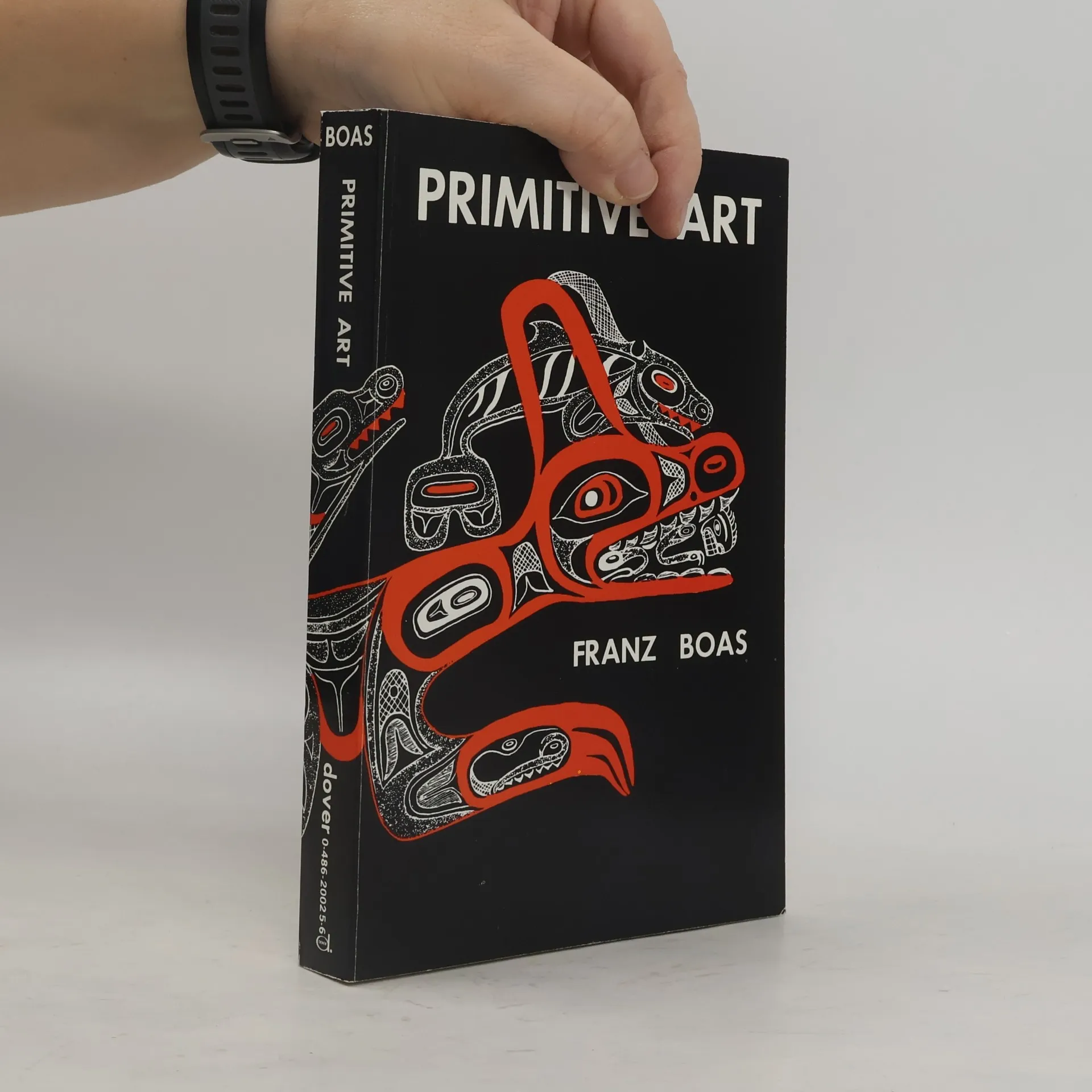
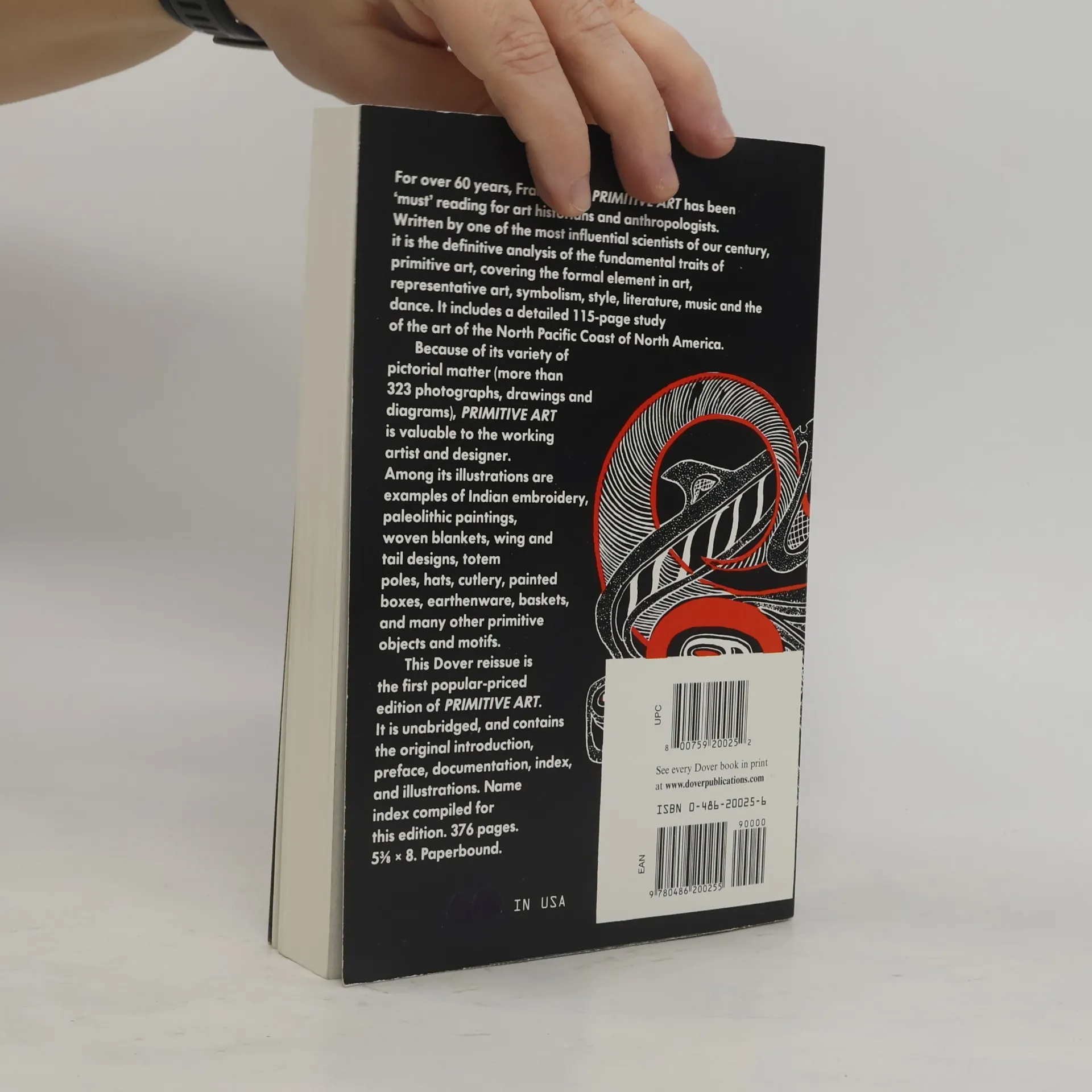
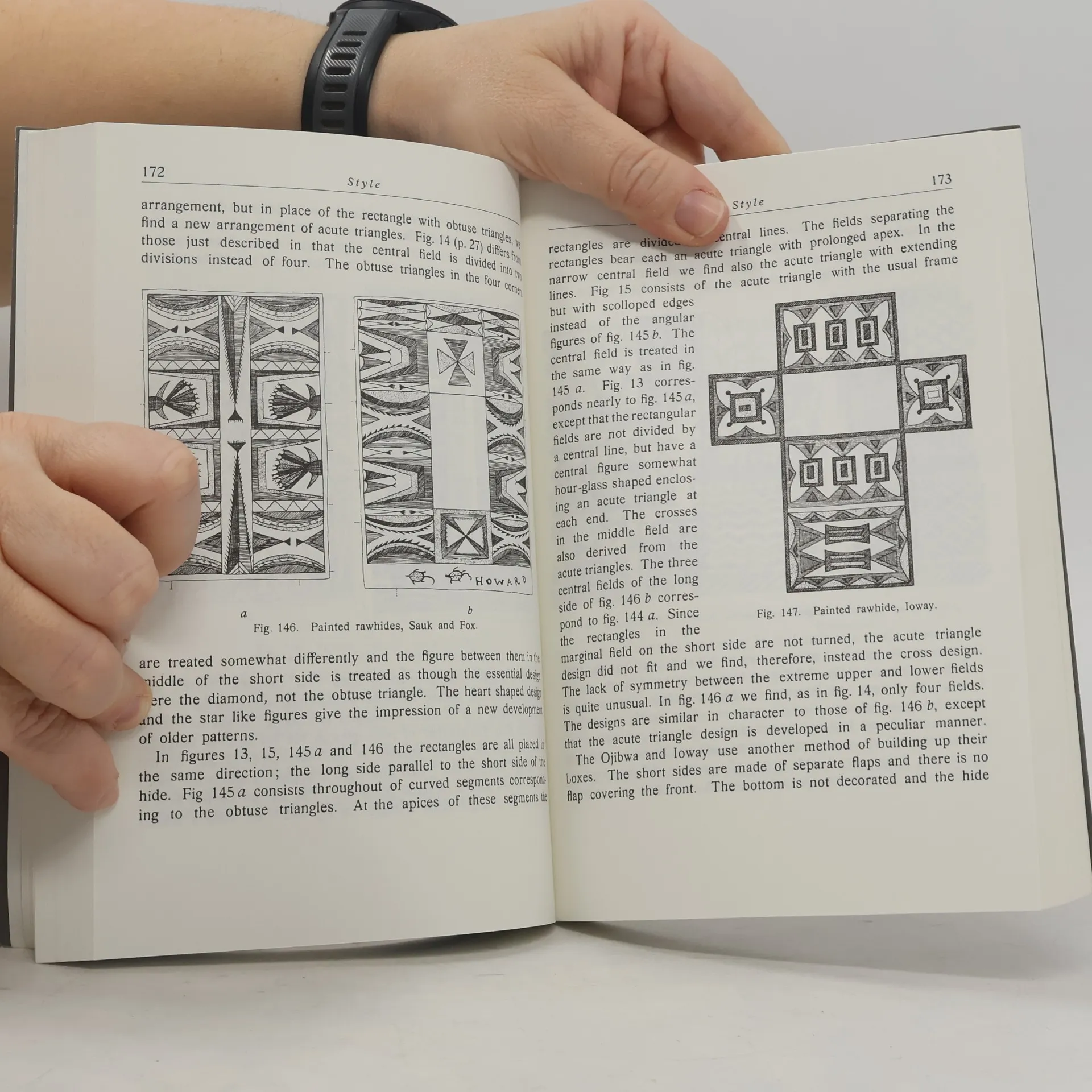
A pioneer of modern anthropology, Franz Boas introduced the concept of cultural relativism, arguing that all human groups have evolved equally but in different ways that resulted from historic conditions rather than genetic factors. This profoundly influential 1927 study analyzes in clear and simple language the fundamental traits of primitive art, examining the symbolism and style of objects and of literature, music, and dance. Boas draws primarily upon his extensive fieldwork among the Indians of the American Northwest Coast, in addition to referencing artifacts and customs from throughout the Americas, Africa, and the South Pacific. More than 323 photographs, drawings, and diagrams of totem poles, baskets, masks, and other decorated items illustrate this much-studied and ever-vital work.
Publication

Book purchase
Primitive Art, Franz Boas
- Language

- Released
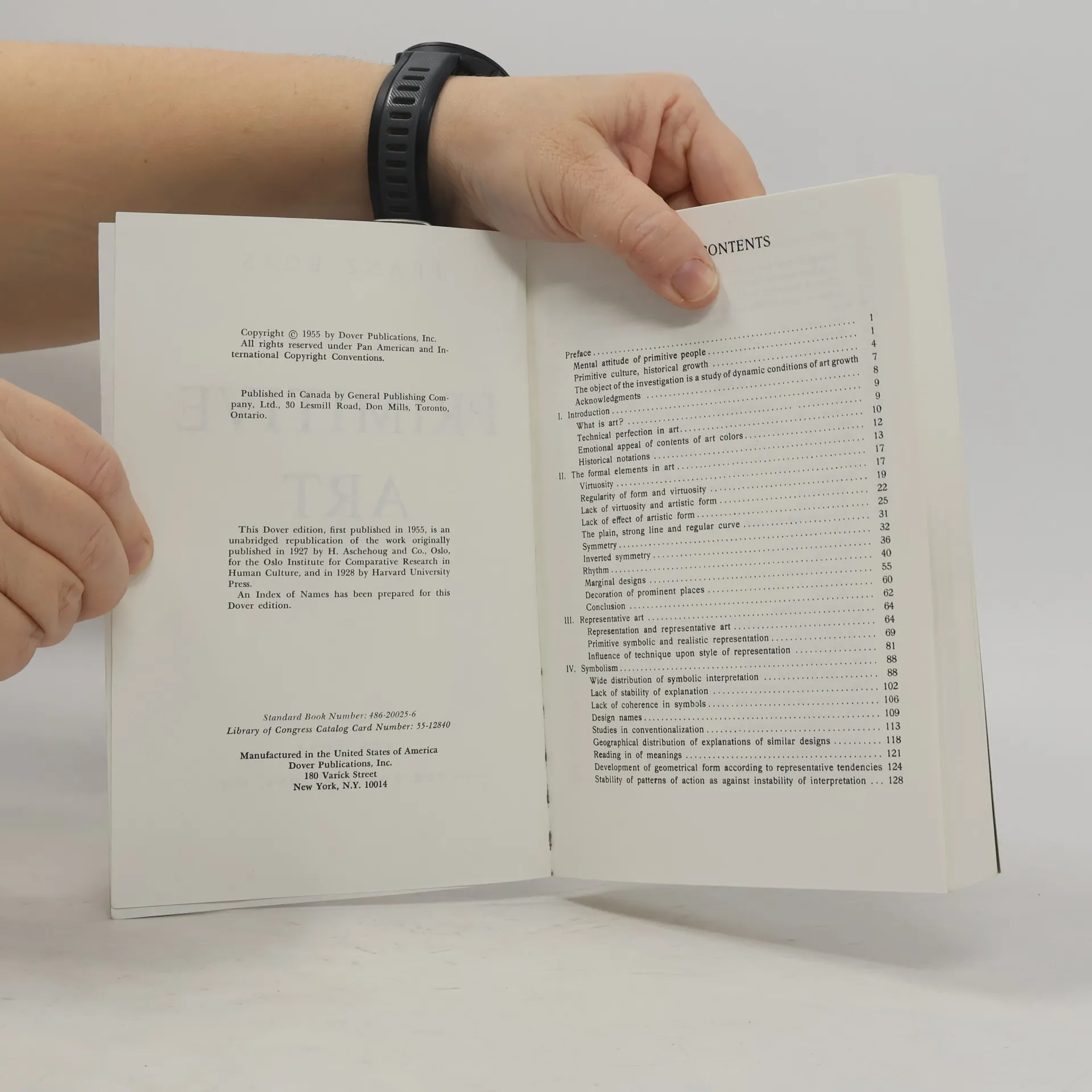
- 1955
- Binding
- (Paperback)
Payment methods
No one has rated yet.
- Title
- Primitive Art
- Language
- English
- Authors
- Franz Boas
- Publisher
- Dover Publications Inc.
- Released
- 1955
- Format
- Paperback
- Pages
- 378
- ISBN10
- 0486200256
- ISBN13
- 9780486200255
- Series
- Categories
- Description
- A pioneer of modern anthropology, Franz Boas introduced the concept of cultural relativism, arguing that all human groups have evolved equally but in different ways that resulted from historic conditions rather than genetic factors. This profoundly influential 1927 study analyzes in clear and simple language the fundamental traits of primitive art, examining the symbolism and style of objects and of literature, music, and dance. Boas draws primarily upon his extensive fieldwork among the Indians of the American Northwest Coast, in addition to referencing artifacts and customs from throughout the Americas, Africa, and the South Pacific. More than 323 photographs, drawings, and diagrams of totem poles, baskets, masks, and other decorated items illustrate this much-studied and ever-vital work.