



More about the book
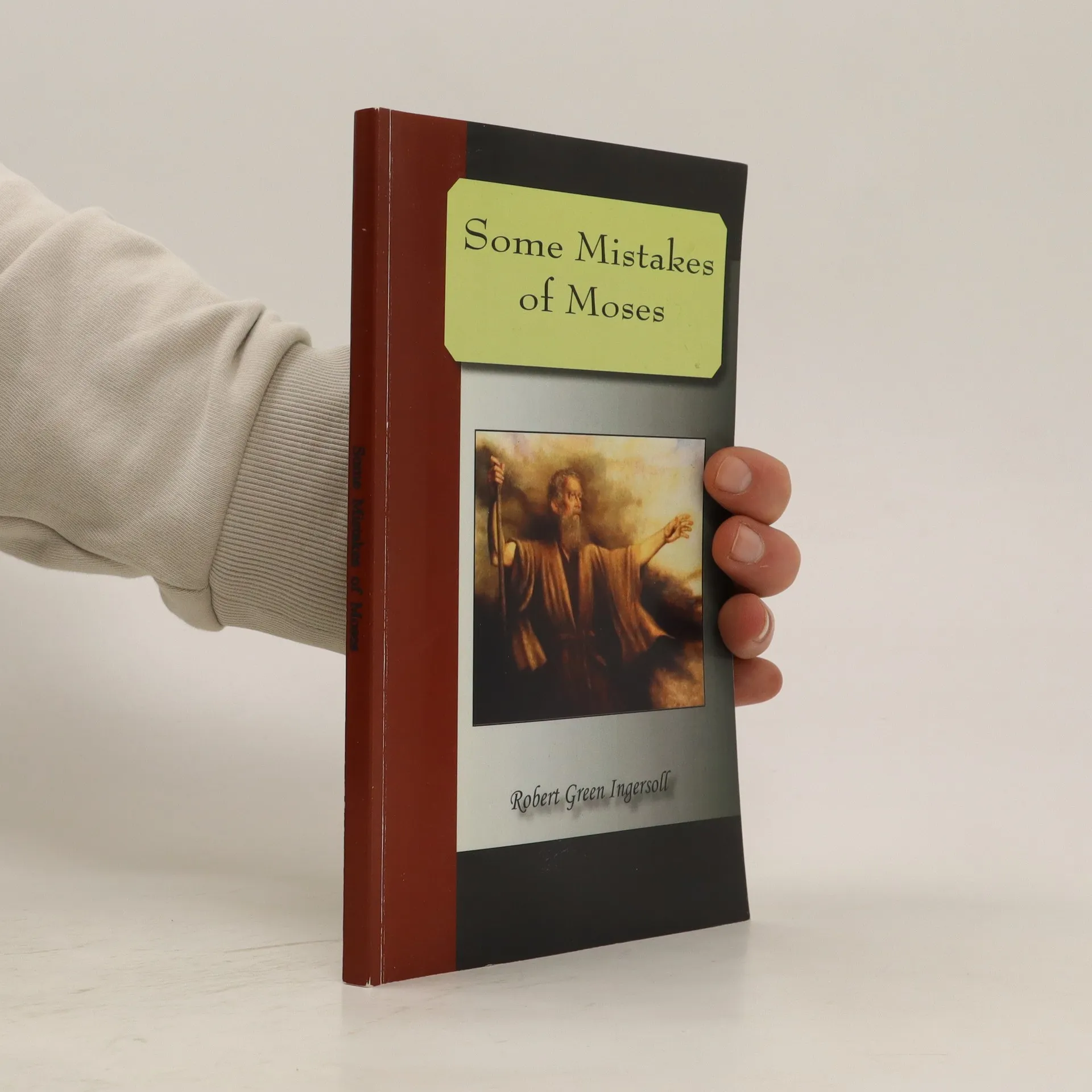
Robert G. Ingersoll (1833-99), the "Great Agnostic," was the greatest freethought orator in the history of the United States. After the Civil War, Ingersoll embarked upon a career as a lecturer, touring the United States to express his thoughts on religion, women's rights, and humanism. Some Mistakes of Moses is a critical examination of the Pentateuch (the first five books of the Bible). Ingersoll passionately believed that the alleged divine origins of the Bible were not sufficient reason for a suspension of critical judgment. His diatribe against Old Testament religion is a call for rationality, a quality sorely missing in times of political upheaval in the name of religion. Ingersoll feared that when the Bible was read as truth rather than as a collection of fables, mankind would destroy itself in its attempt to follow the teachings of Moses to the letter. He fervently believed that the most important belief one can have is belief in man. "Theology is a superstition - Humanity is a religion" - this was the credo of Robert G. Ingersoll.
Book purchase
Some Mistakes of Moses, Robert G. Ingersoll
- Language

- Released
- 2007
- Binding
- (Paperback)
Payment methods
We’re missing your review here.
- Title
- Some Mistakes of Moses
- Language
- English
- Authors
- Robert G. Ingersoll
- Publisher
- Nuvision Publications
- Released
- 2007
- Format
- Paperback
- Pages
- 136
- ISBN10
- 1595479325
- ISBN13
- 9781595479327
- Series
- Categories
- Rating
- 4.65 out of 5
- Description
- Robert G. Ingersoll (1833-99), the "Great Agnostic," was the greatest freethought orator in the history of the United States. After the Civil War, Ingersoll embarked upon a career as a lecturer, touring the United States to express his thoughts on religion, women's rights, and humanism. Some Mistakes of Moses is a critical examination of the Pentateuch (the first five books of the Bible). Ingersoll passionately believed that the alleged divine origins of the Bible were not sufficient reason for a suspension of critical judgment. His diatribe against Old Testament religion is a call for rationality, a quality sorely missing in times of political upheaval in the name of religion. Ingersoll feared that when the Bible was read as truth rather than as a collection of fables, mankind would destroy itself in its attempt to follow the teachings of Moses to the letter. He fervently believed that the most important belief one can have is belief in man. "Theology is a superstition - Humanity is a religion" - this was the credo of Robert G. Ingersoll.