

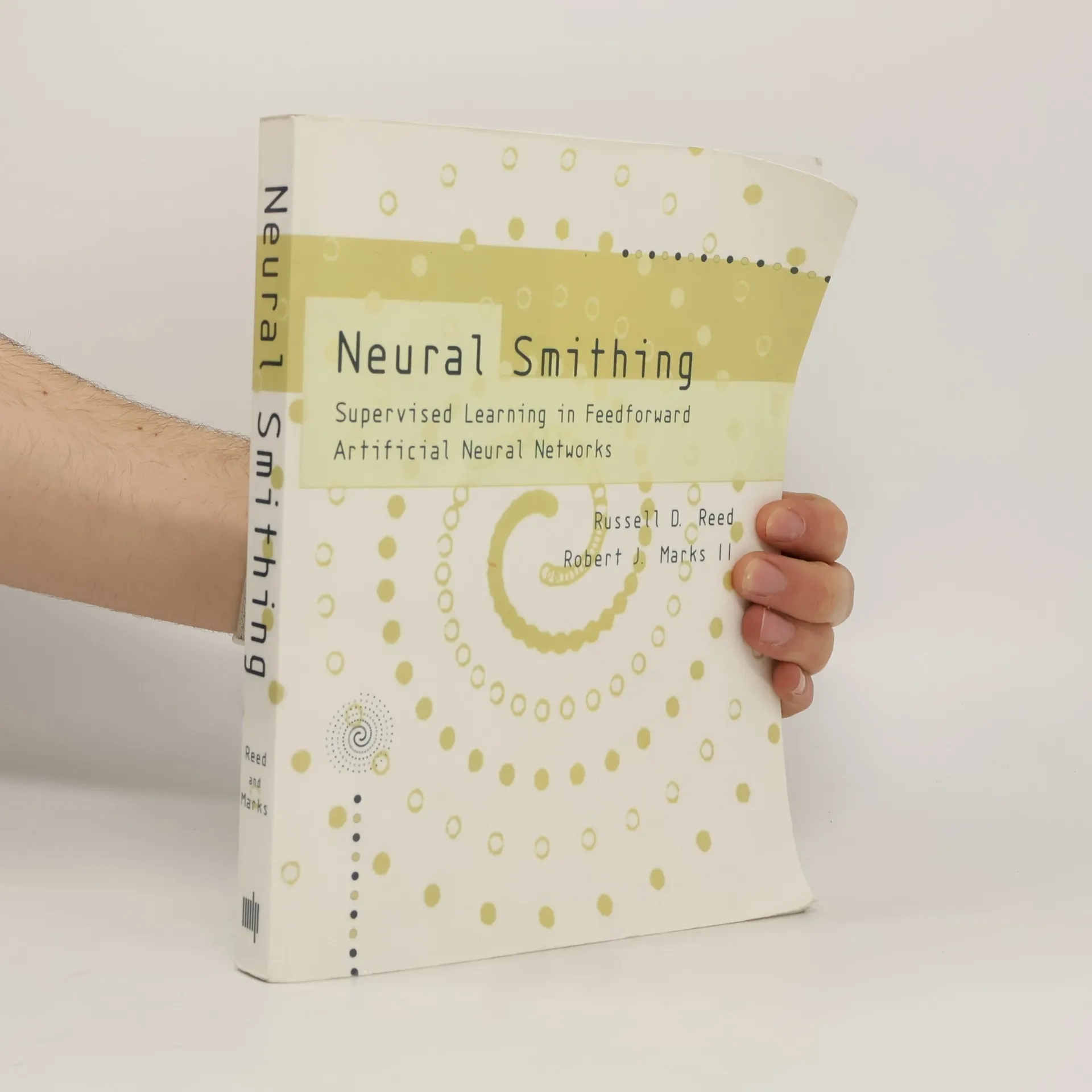


Neural Smithing
Supervised Learning in Feedforward Artificial Neural Networks
Book rating
More about the book
Artificial neural networks are nonlinear mapping systems whose structure is loosely based on principles observed in the nervous systems of humans and animals. The basic idea is that massive systems of simple units linked together in appropriate ways can generate many complex and interesting behaviors. This book focuses on the subset of feedforward artificial neural networks called multilayer perceptrons (MLP). These are the mostly widely used neural networks, with applications as diverse as finance (forecasting), manufacturing (process control), and science (speech and image recognition). This book presents an extensive and practical overview of almost every aspect of MLP methodology, progressing from an initial discussion of what MLPs are and how they might be used to an in-depth examination of technical factors affecting performance. The book can be used as a tool kit by readers interested in applying networks to specific problems, yet it also presents theory and references outlining the last ten years of MLP research.
Publication

Book purchase
Neural Smithing, Robert J. Marks, Russell D. Reed
- Language

- Released
- 1999
- Binding
- (Paperback)
Payment methods
We’re missing your review here.
- Title
- Neural Smithing
- Subtitle
- Supervised Learning in Feedforward Artificial Neural Networks
- Language
- English
- Authors
- Robert J. Marks, Russell D. Reed
- Publisher
- MIT Press
- Released
- 1999
- Format
- Paperback
- Pages
- 358
- ISBN10
- 0262527014
- ISBN13
- 9780262527019
- Series
- Rating
- 3.55 out of 5
- Description
- Artificial neural networks are nonlinear mapping systems whose structure is loosely based on principles observed in the nervous systems of humans and animals. The basic idea is that massive systems of simple units linked together in appropriate ways can generate many complex and interesting behaviors. This book focuses on the subset of feedforward artificial neural networks called multilayer perceptrons (MLP). These are the mostly widely used neural networks, with applications as diverse as finance (forecasting), manufacturing (process control), and science (speech and image recognition). This book presents an extensive and practical overview of almost every aspect of MLP methodology, progressing from an initial discussion of what MLPs are and how they might be used to an in-depth examination of technical factors affecting performance. The book can be used as a tool kit by readers interested in applying networks to specific problems, yet it also presents theory and references outlining the last ten years of MLP research.