

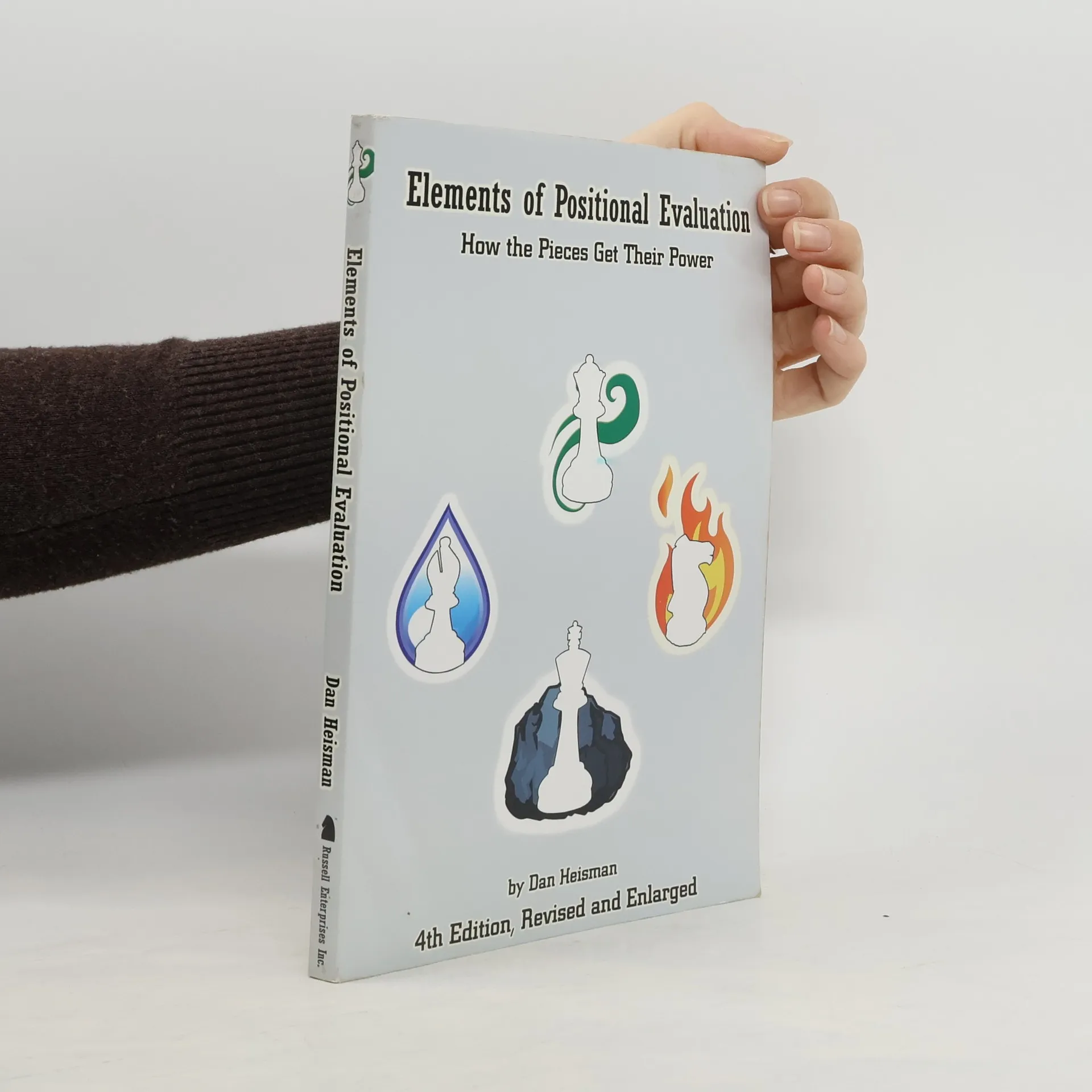
Elements of Positional Evaluation
How the Pieces Get Their Power - 4th Edition, Revised and Enlarged
Authors
Book rating
More about the book
Which side stands better? How much better? Why? Most chess players rely on loosely knit, unstructured methods to evaluate chess pieces and positions. They learn positional principles which often lead to inaccurate evaluations and faulty decisions about how to proceed. This groundbreaking book by best-selling chess author Dan Heisman addresses the evaluation and understanding of how static features affect the value of the pieces in a given position. Emphasis is placed on the static evaluation of each pieces value and its role in the overall position rather than the assessment of a specific position, but Heismans approach can also be applied to help evaluate entire positions by helping to answer the questions who stands better, by how much, and why?
Publication

Book purchase
Elements of Positional Evaluation, Dan Heisman
- Language

- Released
- 2010
- Binding
- (Paperback)
Payment methods
We’re missing your review here.
- Title
- Elements of Positional Evaluation
- Subtitle
- How the Pieces Get Their Power - 4th Edition, Revised and Enlarged
- Language
- English
- Authors
- Dan Heisman
- Publisher
- Russell Enterprises
- Released
- 2010
- Format
- Paperback
- Pages
- 216
- ISBN10
- 1888690585
- ISBN13
- 9781888690583
- Series
- Categories
- Rating
- 4.15 out of 5
- Description
- Which side stands better? How much better? Why? Most chess players rely on loosely knit, unstructured methods to evaluate chess pieces and positions. They learn positional principles which often lead to inaccurate evaluations and faulty decisions about how to proceed. This groundbreaking book by best-selling chess author Dan Heisman addresses the evaluation and understanding of how static features affect the value of the pieces in a given position. Emphasis is placed on the static evaluation of each pieces value and its role in the overall position rather than the assessment of a specific position, but Heismans approach can also be applied to help evaluate entire positions by helping to answer the questions who stands better, by how much, and why?