

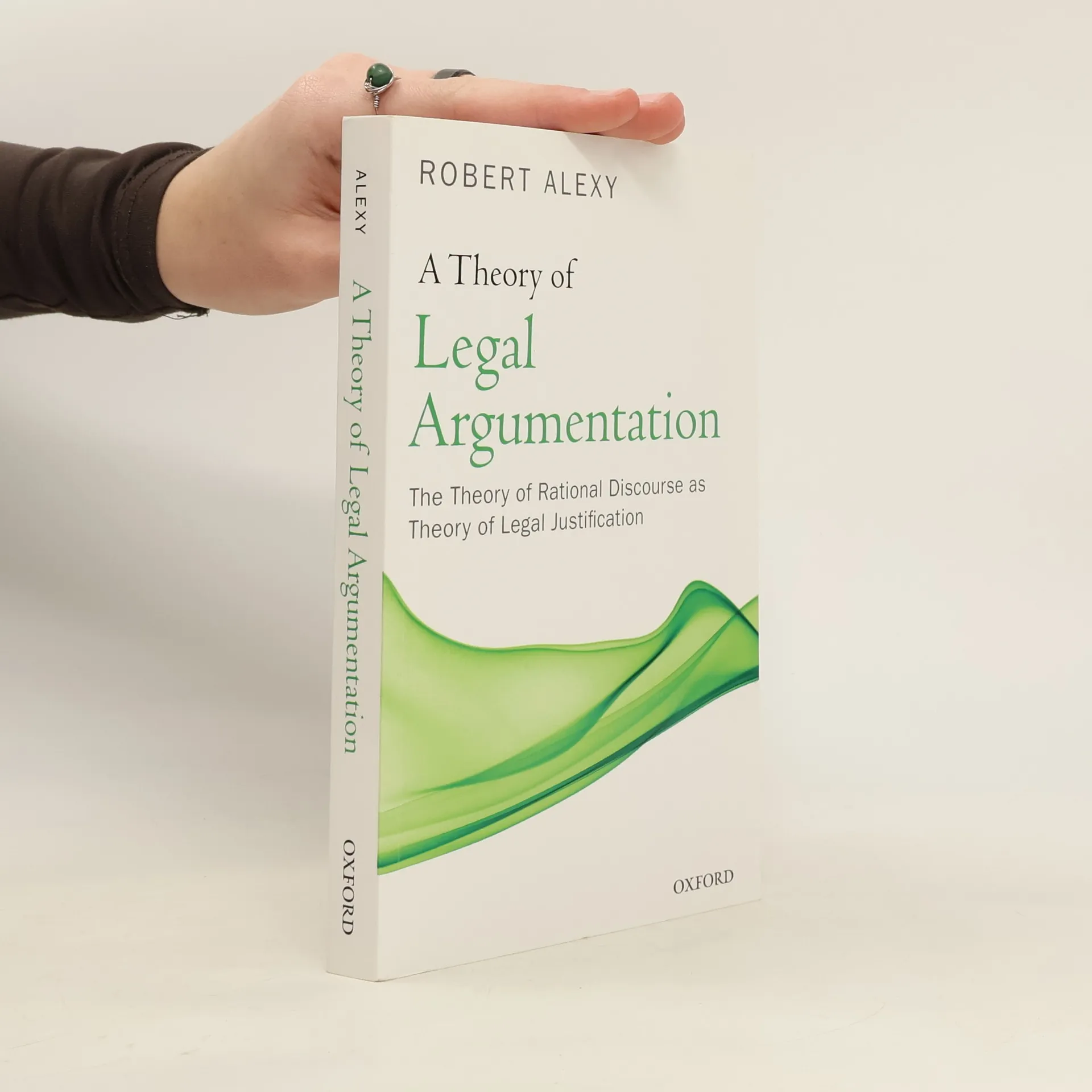

A theory of legal argumentation
the theory of rational discourse as theory of legal justification
Authors
Book rating
Parameters
- 323 pages
- 12 hours of reading
More about the book
What is to be understood by 'rational legal argument'? To what extent can legal reasoning be rational? Is the demand for rationality in legal affairs justified? And what are the criteria of rationality in legal reasoning? The answer to these questions is not only of interest to legal theorists and philosophers of law. They are pressing issues for practicing lawyers, and a matter of concern for every citizen active in the public arena. Not only the standing of academic law as a scientific discipline, but also the legitimacy of judicial decisions depends on the possibility of rational legal argumentation. A theory of legal reasoning which tries to answer these questions pre-supposes a theory of general practical reasoning. This theory is the subject matter of the first two parts of the book. The result is a theory of general practical discourse which rests on insights of both Anglo-Saxon and German philosophy. It forms the basis of the theory of rational legal discourse, which is developed in the third part of this book.
Book purchase
A theory of legal argumentation, Robert Alexy
- Language

- Released
- 2010
- Binding
- (Paperback)
Payment methods
We’re missing your review here.
- Title
- A theory of legal argumentation
- Subtitle
- the theory of rational discourse as theory of legal justification
- Language
- English
- Authors
- Robert Alexy
- Publisher
- Oxford University Press
- Released
- 2010
- Format
- Paperback
- Pages
- 323
- ISBN10
- 0199584222
- ISBN13
- 9780199584222
- Series
- Tags
- Legal Topics
- Original title
- Theorie der juristischen Argumentation
- Rating
- 4.4 out of 5
- Description
- What is to be understood by 'rational legal argument'? To what extent can legal reasoning be rational? Is the demand for rationality in legal affairs justified? And what are the criteria of rationality in legal reasoning? The answer to these questions is not only of interest to legal theorists and philosophers of law. They are pressing issues for practicing lawyers, and a matter of concern for every citizen active in the public arena. Not only the standing of academic law as a scientific discipline, but also the legitimacy of judicial decisions depends on the possibility of rational legal argumentation. A theory of legal reasoning which tries to answer these questions pre-supposes a theory of general practical reasoning. This theory is the subject matter of the first two parts of the book. The result is a theory of general practical discourse which rests on insights of both Anglo-Saxon and German philosophy. It forms the basis of the theory of rational legal discourse, which is developed in the third part of this book.