

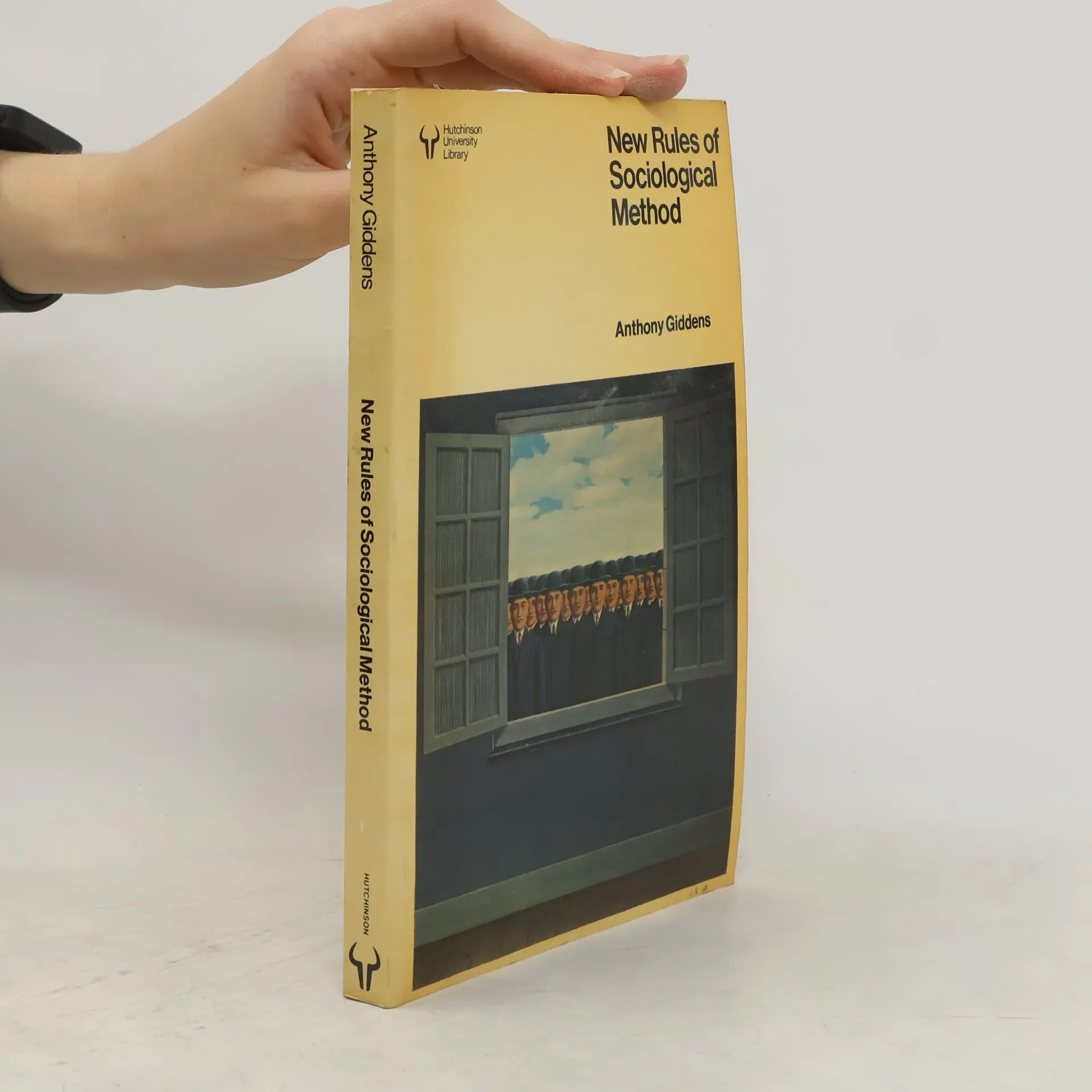
More about the book
Sociology is concerned not with a "given" universe of objects, but rather with a universe constructed or produced through the active actions of subjects. While people transform and humanize nature socially, they do not produce the natural world, which is shaped independently of their existence. The reason people create history while transforming the world, and thus live within history, is that the production and reproduction of society is not "biologically programmed," unlike lower-level animal communities. Although the theories they produce can have an effect on nature through technological applications, people cannot shape the characteristics of the natural world in the same way they shape the characteristics of the social world. Therefore, the production and reproduction of society must be understood not merely as a series of mechanical processes, but as a skilled execution by its members. However, emphasizing this does not imply that individuals are fully aware of what these skills are or how to use them, nor that social lifestyles can be seen as the intended outcomes of action in the most appropriate form.
Book purchase
New Rules of Sociological Method, Anthony Giddens
- Language

- Released
- 1976
- Binding
- (Paperback)
Payment methods
No one has rated yet.
- Title
- New Rules of Sociological Method
- Subtitle
- A Positive Critique of Interpretative Sociologies
- Language
- English
- Authors
- Anthony Giddens
- Publisher
- Hutchinson
- Released
- 1976
- Format
- Paperback
- Pages
- 192
- ISBN10
- 0091275210
- ISBN13
- 9780091275211
- Series
- Categories
- Tags
- Description
- Sociology is concerned not with a "given" universe of objects, but rather with a universe constructed or produced through the active actions of subjects. While people transform and humanize nature socially, they do not produce the natural world, which is shaped independently of their existence. The reason people create history while transforming the world, and thus live within history, is that the production and reproduction of society is not "biologically programmed," unlike lower-level animal communities. Although the theories they produce can have an effect on nature through technological applications, people cannot shape the characteristics of the natural world in the same way they shape the characteristics of the social world. Therefore, the production and reproduction of society must be understood not merely as a series of mechanical processes, but as a skilled execution by its members. However, emphasizing this does not imply that individuals are fully aware of what these skills are or how to use them, nor that social lifestyles can be seen as the intended outcomes of action in the most appropriate form.