

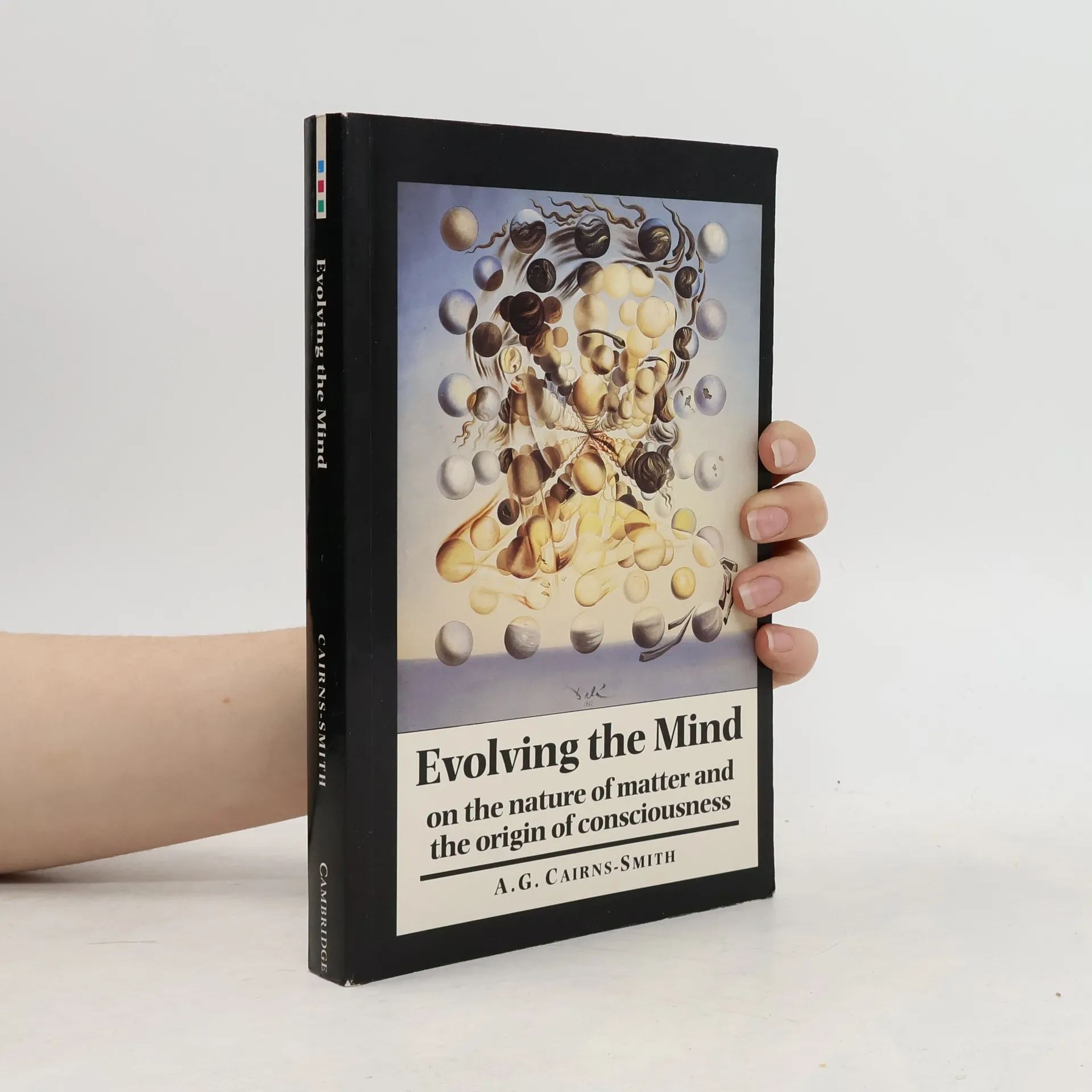

Evolving the Mind
On the Nature of Matter and the Origin of Consciousness
Authors
Book rating
More about the book
The next great revolution in science will undoubtedly be the emergence of a useful theory of consciousness--a theory based on our better understanding of molecules and brains and of the nature of science itself. Evolving the Mind broaches both of these themes, covering how ideas about the mind evolved in science and how the mind itself evolved in Nature. What Cairns-Smith does that is particularly compelling is to synthesize the contributions of a wide range of scientific disciplines (physics, molecular biology, brain science, and evolution) to bring science to the brink of a unified theory of consciousness. The author thoroughly explores this complex concept in a straightforward, conversational style. Few readers will be able to resist the exciting conclusion that we are closing in on a scientific theory of consciousness.
Publication

Book purchase
Evolving the Mind, A. G. Cairns-Smith
- Language

- Released
- 1998
- Binding
- (Paperback)
Payment methods
We’re missing your review here.
- Title
- Evolving the Mind
- Subtitle
- On the Nature of Matter and the Origin of Consciousness
- Language
- English
- Authors
- A. G. Cairns-Smith
- Publisher
- Cambridge University Press
- Released
- 1998
- Format
- Paperback
- Pages
- 340
- ISBN10
- 0521637554
- ISBN13
- 9780521637558
- Series
- Categories
- Rating
- 3 out of 5
- Description
- The next great revolution in science will undoubtedly be the emergence of a useful theory of consciousness--a theory based on our better understanding of molecules and brains and of the nature of science itself. Evolving the Mind broaches both of these themes, covering how ideas about the mind evolved in science and how the mind itself evolved in Nature. What Cairns-Smith does that is particularly compelling is to synthesize the contributions of a wide range of scientific disciplines (physics, molecular biology, brain science, and evolution) to bring science to the brink of a unified theory of consciousness. The author thoroughly explores this complex concept in a straightforward, conversational style. Few readers will be able to resist the exciting conclusion that we are closing in on a scientific theory of consciousness.