

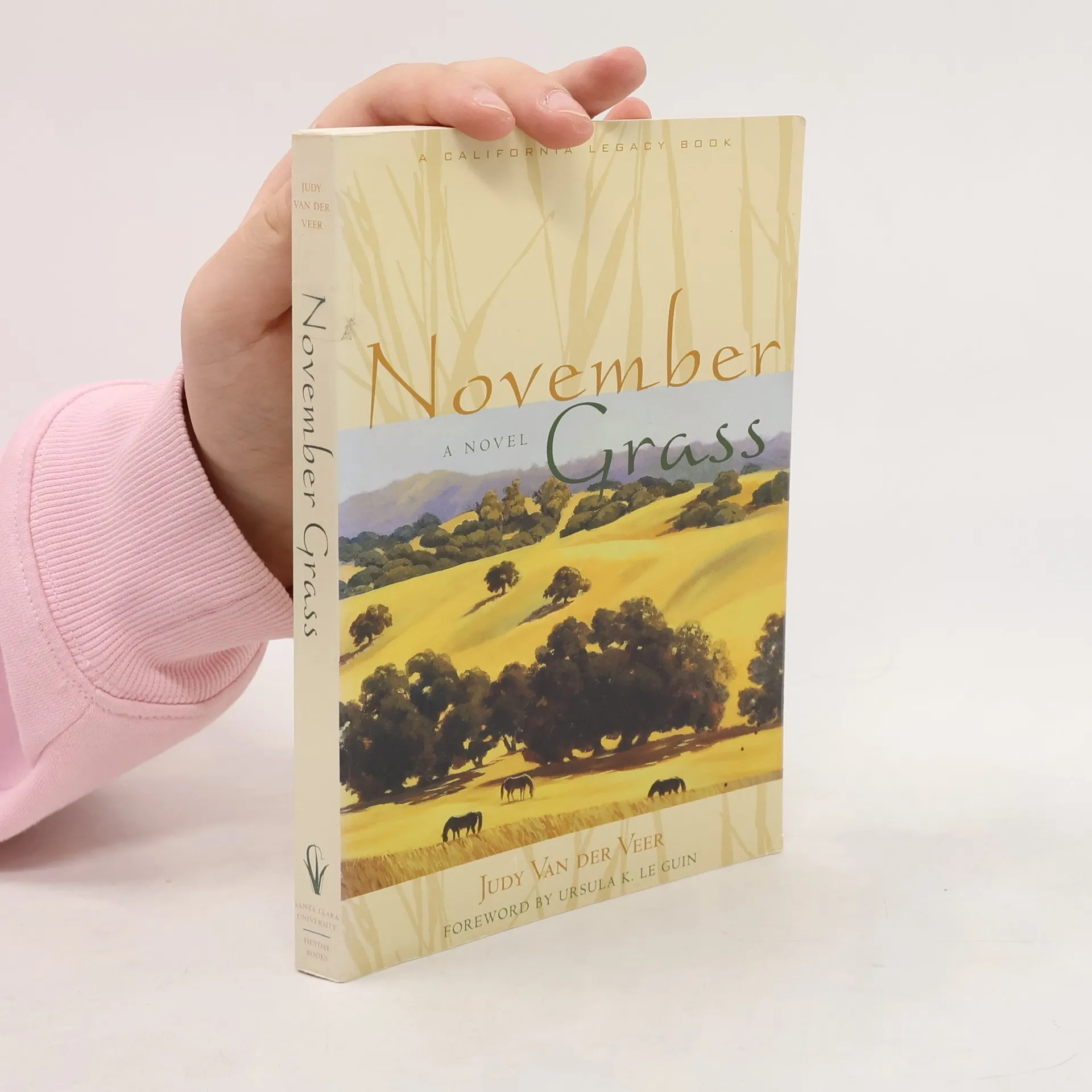


More about the book
In the light of the declining sun, amid the muffled sounds of grazing cattle, a Southern California cowgirl considers her life. The language of November Grass , concise yet evocative, transports readers to the coastal hills of San Diego County, where hawks and jays, calves and kittens, and an assortment of backcountry eccentrics bring clarity to questions of birth, death, and love. In the new introduction, Ursula K. Le Guin writes, ''Van der Veer gives us a rural landscape as deeply known and lived in as Willa Cather's Nebraska or Sara Jewett's Maine. The valley ranches of John Steinbeck's Red Pony and East of Eden are natural comparisons, but Van der Veer's picture is truer, I think, to the patient obscurity of the lives and deaths of those who live on and from this austere land... Pain, suffering, grief are intense in her story, but not more intense than tenderness and praise.''
Publication

Book purchase
November Grass, Ursula K. Le Guin, Judy van der Veer
- Language

- Released
- 2001
- Binding
- (Paperback)
Payment methods
We’re missing your review here.
- Title
- November Grass
- Language
- English
- Authors
- Ursula K. Le Guin, Judy van der Veer
- Publisher
- Heyday Books
- Released
- 2001
- Format
- Paperback
- Pages
- 193
- ISBN10
- 1890771392
- ISBN13
- 9781890771393
- Series
- Categories
- Tags
- World Literature, Nature, Psychological Topics, Love, Death, Pain
- Rating
- 3.95 out of 5
- Description
- In the light of the declining sun, amid the muffled sounds of grazing cattle, a Southern California cowgirl considers her life. The language of November Grass , concise yet evocative, transports readers to the coastal hills of San Diego County, where hawks and jays, calves and kittens, and an assortment of backcountry eccentrics bring clarity to questions of birth, death, and love. In the new introduction, Ursula K. Le Guin writes, ''Van der Veer gives us a rural landscape as deeply known and lived in as Willa Cather's Nebraska or Sara Jewett's Maine. The valley ranches of John Steinbeck's Red Pony and East of Eden are natural comparisons, but Van der Veer's picture is truer, I think, to the patient obscurity of the lives and deaths of those who live on and from this austere land... Pain, suffering, grief are intense in her story, but not more intense than tenderness and praise.''