

More about the book
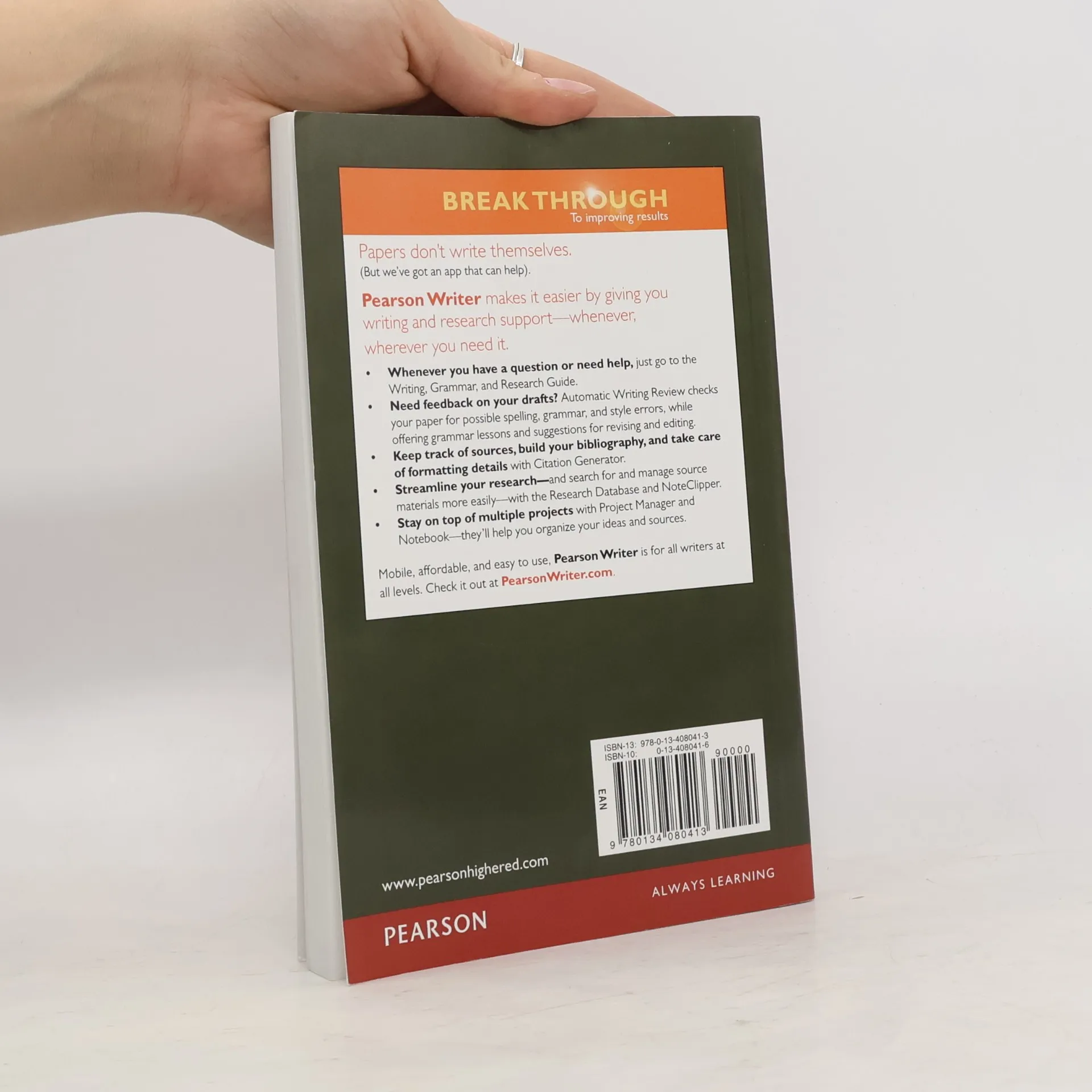
For courses in English and Writing, this text emphasizes the importance of style in writing for a global audience. It asserts that style involves making informed choices to serve readers effectively. While writers know what they wish to convey, it is ultimately the readers who determine if the message is communicated well. This flagship resource builds on that premise, incorporating updates on topics such as gender-neutral writing and global audience considerations. It addresses the needs of contemporary students while upholding the idea that writing with style is a civic and ethical virtue. Additionally, a revolutionary digital tool, Pearson Writer, is available for writers at all levels. Designed for mobile devices, it simplifies the writing process, allowing students to focus on idea development. Pearson Writer helps students stay organized, track tasks, and manage writing projects efficiently. Features include setting milestones, managing sources, visual note organization, and receiving automatic feedback on prose. The tool also offers a Writing, Grammar, and Research Guide, an Automatic Writing Review for grammar and style checks, and a Citation Generator for bibliography management. NoteClipper enhances source management, while Project Manager and Notebook assist with organizing multiple projects. This is a standalone product; for those interested in purchasing with Pearson Writer, consult your instructor for the correc


Book purchase
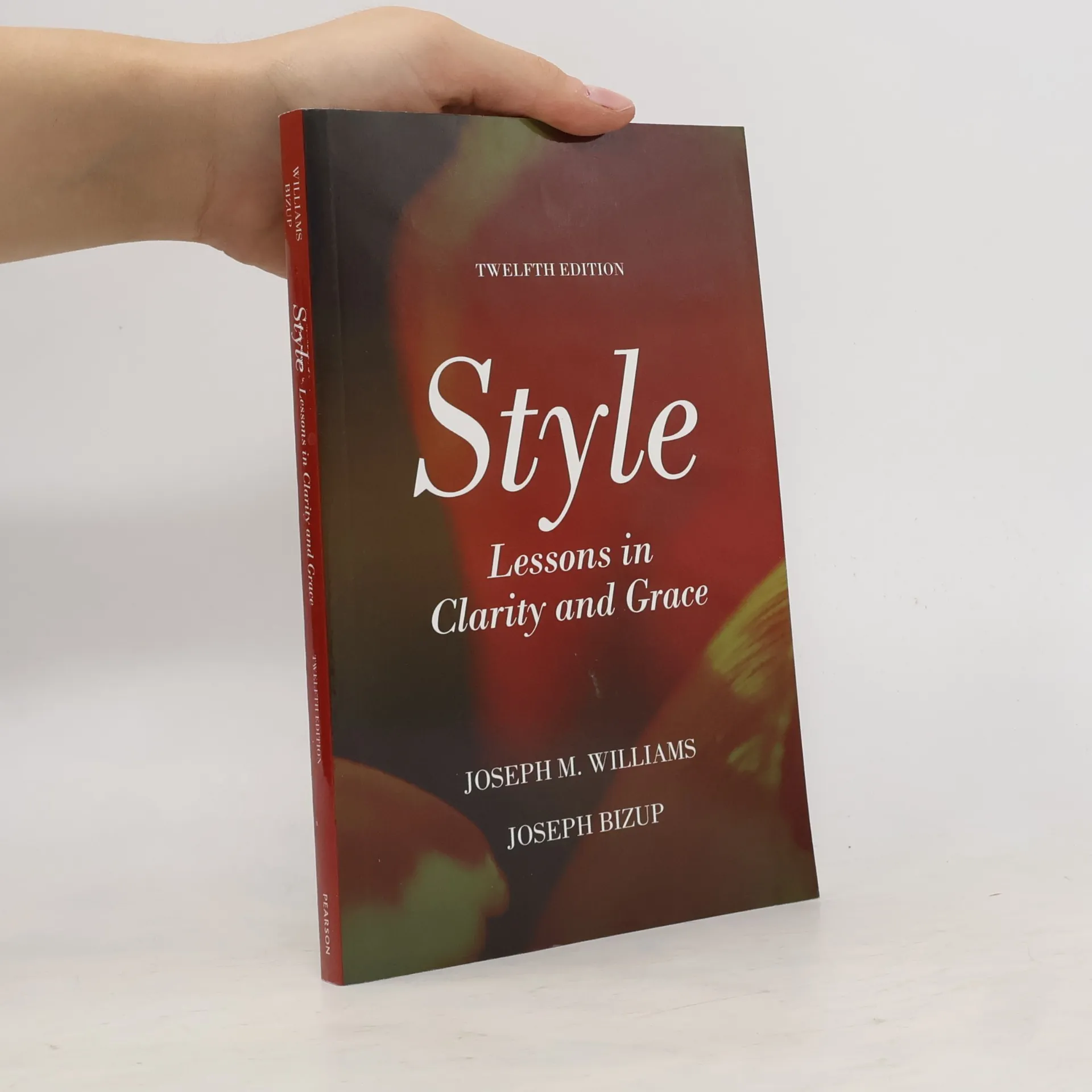
Style, Joseph M. Williams, Joseph Bizup
- Language

- Released
- 2017
- Binding
- (Paperback)
Payment methods
We’re missing your review here.
- Title
- Style
- Subtitle
- Lessons in Clarity and Grace - Twelfth Edition
- Language
- English
- Authors
- Joseph M. Williams, Joseph Bizup
- Publisher
- Pearson
- Released
- 2017
- Format
- Paperback
- Pages
- 256
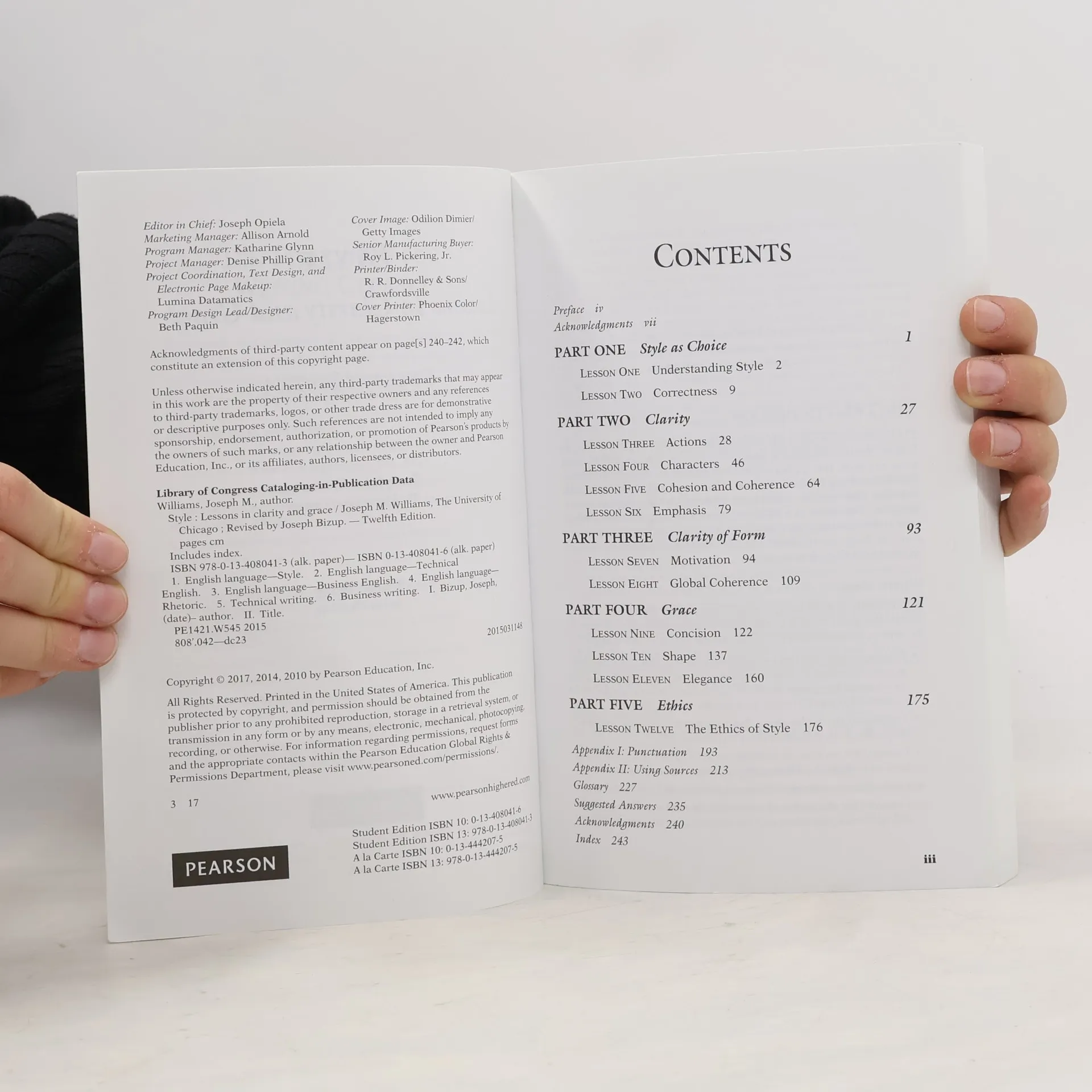
- ISBN10
- 0134080416
- ISBN13
- 9780134080413
- Series
- Categories
- Rating
- 4 out of 5
- Description
- For courses in English and Writing, this text emphasizes the importance of style in writing for a global audience. It asserts that style involves making informed choices to serve readers effectively. While writers know what they wish to convey, it is ultimately the readers who determine if the message is communicated well. This flagship resource builds on that premise, incorporating updates on topics such as gender-neutral writing and global audience considerations. It addresses the needs of contemporary students while upholding the idea that writing with style is a civic and ethical virtue. Additionally, a revolutionary digital tool, Pearson Writer, is available for writers at all levels. Designed for mobile devices, it simplifies the writing process, allowing students to focus on idea development. Pearson Writer helps students stay organized, track tasks, and manage writing projects efficiently. Features include setting milestones, managing sources, visual note organization, and receiving automatic feedback on prose. The tool also offers a Writing, Grammar, and Research Guide, an Automatic Writing Review for grammar and style checks, and a Citation Generator for bibliography management. NoteClipper enhances source management, while Project Manager and Notebook assist with organizing multiple projects. This is a standalone product; for those interested in purchasing with Pearson Writer, consult your instructor for the correc