

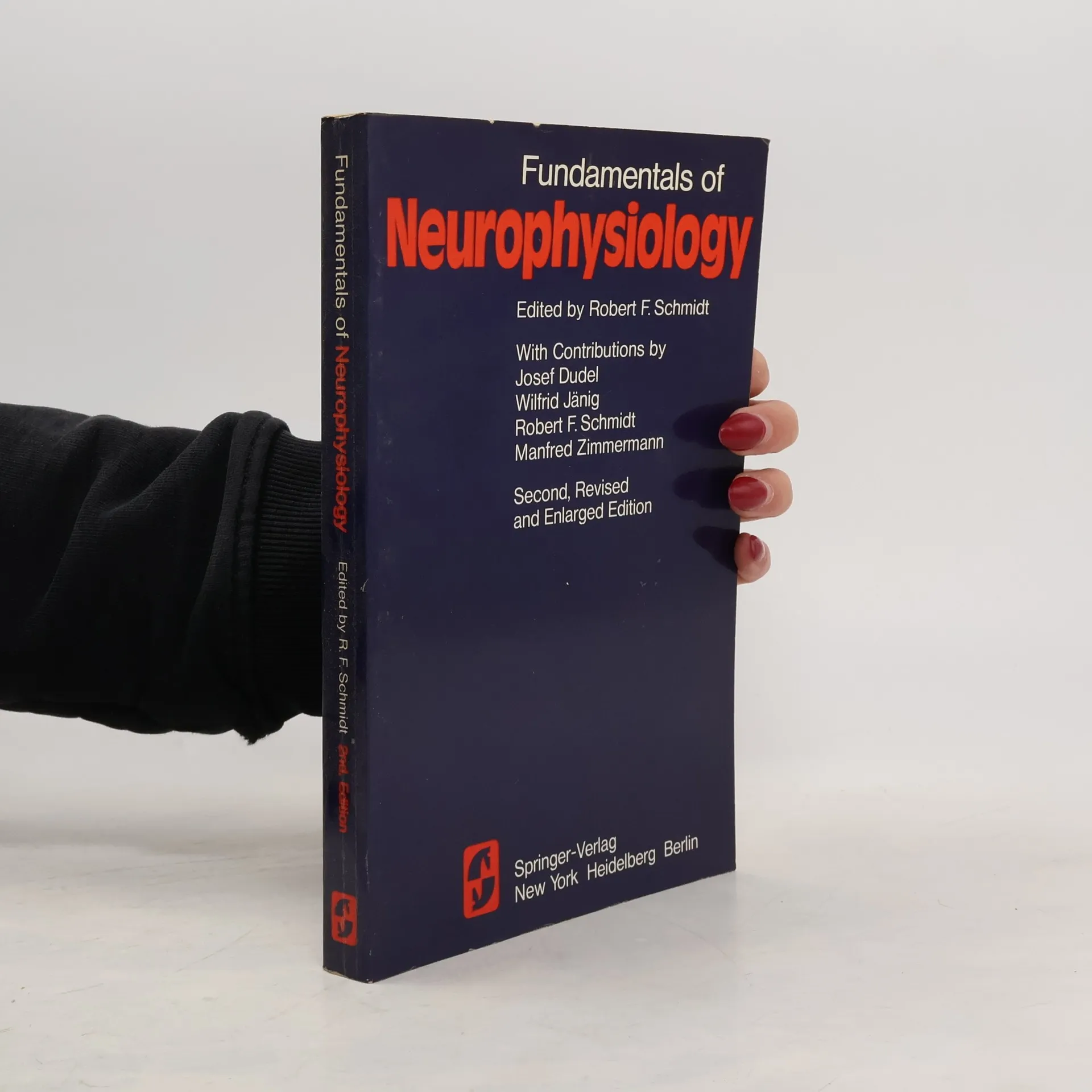
Fundamentals of Neurophysiology
Authors
More about the book
"Fundamentals of Neurophysiology" explores the foundations of the nervous system, including the structure of nerve cells, supporting and nourishing tissues, and the anatomy of the central nervous system. It addresses the excitation of nerves and muscles, discussing resting potential, sodium pumps, and action potentials. The kinetics of excitation and the propagation of action potentials are also examined. Synaptic transmission is explained through the neuromuscular junction and the quantum nature of chemical transmission, followed by an overview of central excitatory and inhibitory synapses. The physiology of small neuron connections and reflexes includes typical neuronal circuits as well as monosynaptic and polysynaptic motor reflexes. The section on muscles discusses muscle contraction, its dependence on fiber length and shortening velocity, as well as electromechanical coupling and the regulation of contraction. Motor systems encompass spinal motor control, the roles of muscle spindles and Golgi tendon organs, polysynaptic motor reflexes, the functional anatomy of supraspinal motor centers, and the reflexive control of body posture. Finally, the sensory system is addressed, explaining the fundamentals of sensory perception and processing within the nervous system.
Language

Book purchase
Fundamentals of Neurophysiology, Robert Franz Schmidt
- Language

- Released
- Binding
- (Paperback)
Payment methods
No one has rated yet.
- Title
- Fundamentals of Neurophysiology
- Language
- English
- Authors
- Robert Franz Schmidt
- Publisher
- Springer
- Format
- Paperback
- Pages
- 339
- ISBN10
- 0387081887
- ISBN13
- 9780387081885
- Series
- Categories
- Description
- "Fundamentals of Neurophysiology" explores the foundations of the nervous system, including the structure of nerve cells, supporting and nourishing tissues, and the anatomy of the central nervous system. It addresses the excitation of nerves and muscles, discussing resting potential, sodium pumps, and action potentials. The kinetics of excitation and the propagation of action potentials are also examined. Synaptic transmission is explained through the neuromuscular junction and the quantum nature of chemical transmission, followed by an overview of central excitatory and inhibitory synapses. The physiology of small neuron connections and reflexes includes typical neuronal circuits as well as monosynaptic and polysynaptic motor reflexes. The section on muscles discusses muscle contraction, its dependence on fiber length and shortening velocity, as well as electromechanical coupling and the regulation of contraction. Motor systems encompass spinal motor control, the roles of muscle spindles and Golgi tendon organs, polysynaptic motor reflexes, the functional anatomy of supraspinal motor centers, and the reflexive control of body posture. Finally, the sensory system is addressed, explaining the fundamentals of sensory perception and processing within the nervous system.