

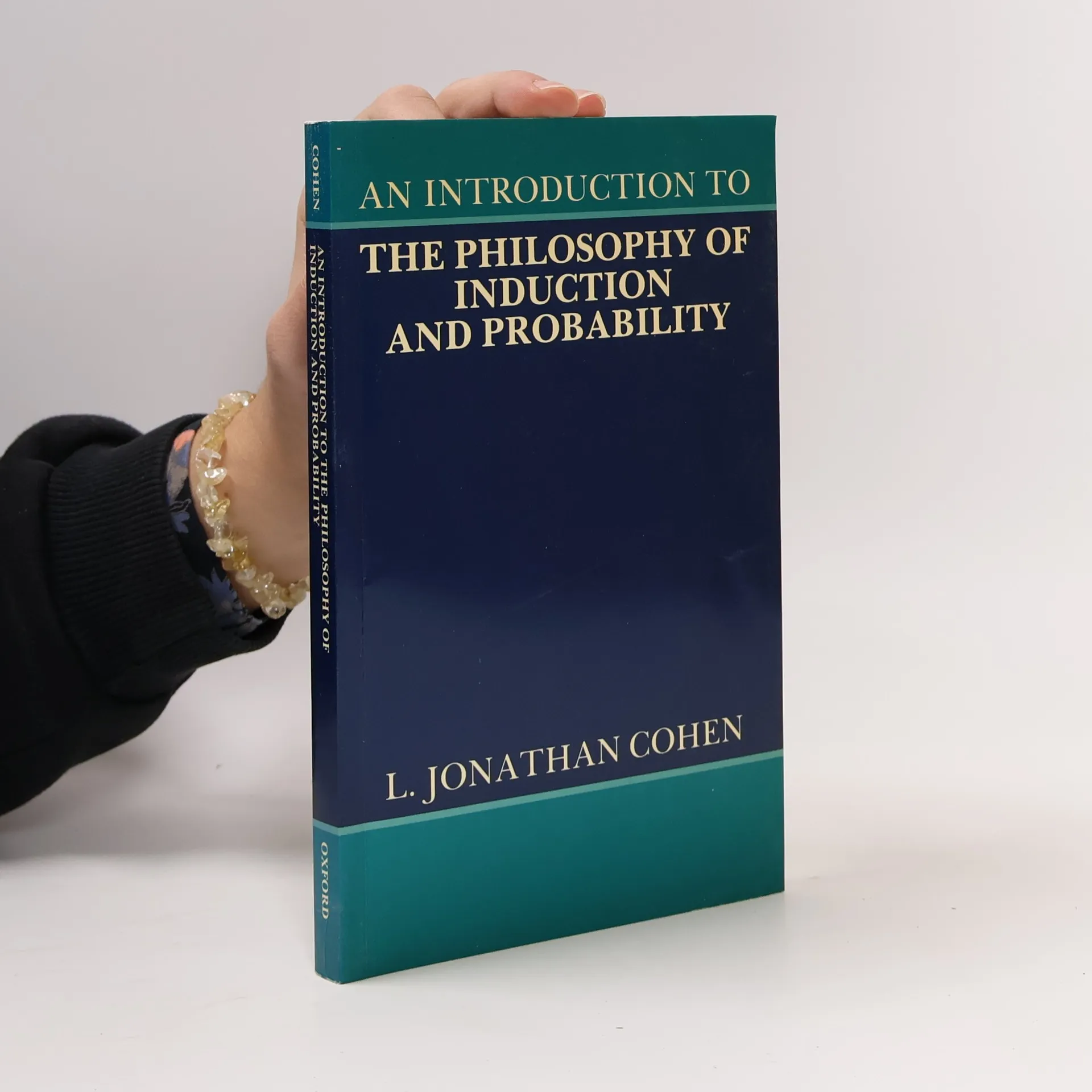


An Introduction to the Philosophy of Induction and Probability
Authors
Book rating
More about the book
Two new philosophical problems surrounding the gradation of certainty began to emerge in the 17th century and are still very much alive today. One is concerned with the evaluation of inductive reasoning, whether in science, jurisprudence, or elsewhere; the other with the interpretation of the mathematical calculus of change. This book, aimed at non-specialists, investigates both problems and the extent to which they are connected. Cohen demonstrates the diversity of logical structures that are available for judgements of probability, and explores the rationale for their appropriateness in different contexts of application. Thus his study deals with the complexity of the underlying philosophical issues without simply cataloging alternative conceptions or espousing a particular "favorite" theory.
Book purchase
An Introduction to the Philosophy of Induction and Probability, Laurence Jonathan Cohen
- Language

- Released
- 1989
- Binding
- (Paperback)
Payment methods
We’re missing your review here.
- Title
- An Introduction to the Philosophy of Induction and Probability
- Language
- English
- Authors
- Laurence Jonathan Cohen
- Publisher
- Oxford University Press
- Released
- 1989
- Format
- Paperback
- Pages
- 228
- ISBN10
- 0198750781
- ISBN13
- 9780198750789
- Series
- Categories
- Rating
- 5 out of 5
- Description
- Two new philosophical problems surrounding the gradation of certainty began to emerge in the 17th century and are still very much alive today. One is concerned with the evaluation of inductive reasoning, whether in science, jurisprudence, or elsewhere; the other with the interpretation of the mathematical calculus of change. This book, aimed at non-specialists, investigates both problems and the extent to which they are connected. Cohen demonstrates the diversity of logical structures that are available for judgements of probability, and explores the rationale for their appropriateness in different contexts of application. Thus his study deals with the complexity of the underlying philosophical issues without simply cataloging alternative conceptions or espousing a particular "favorite" theory.