

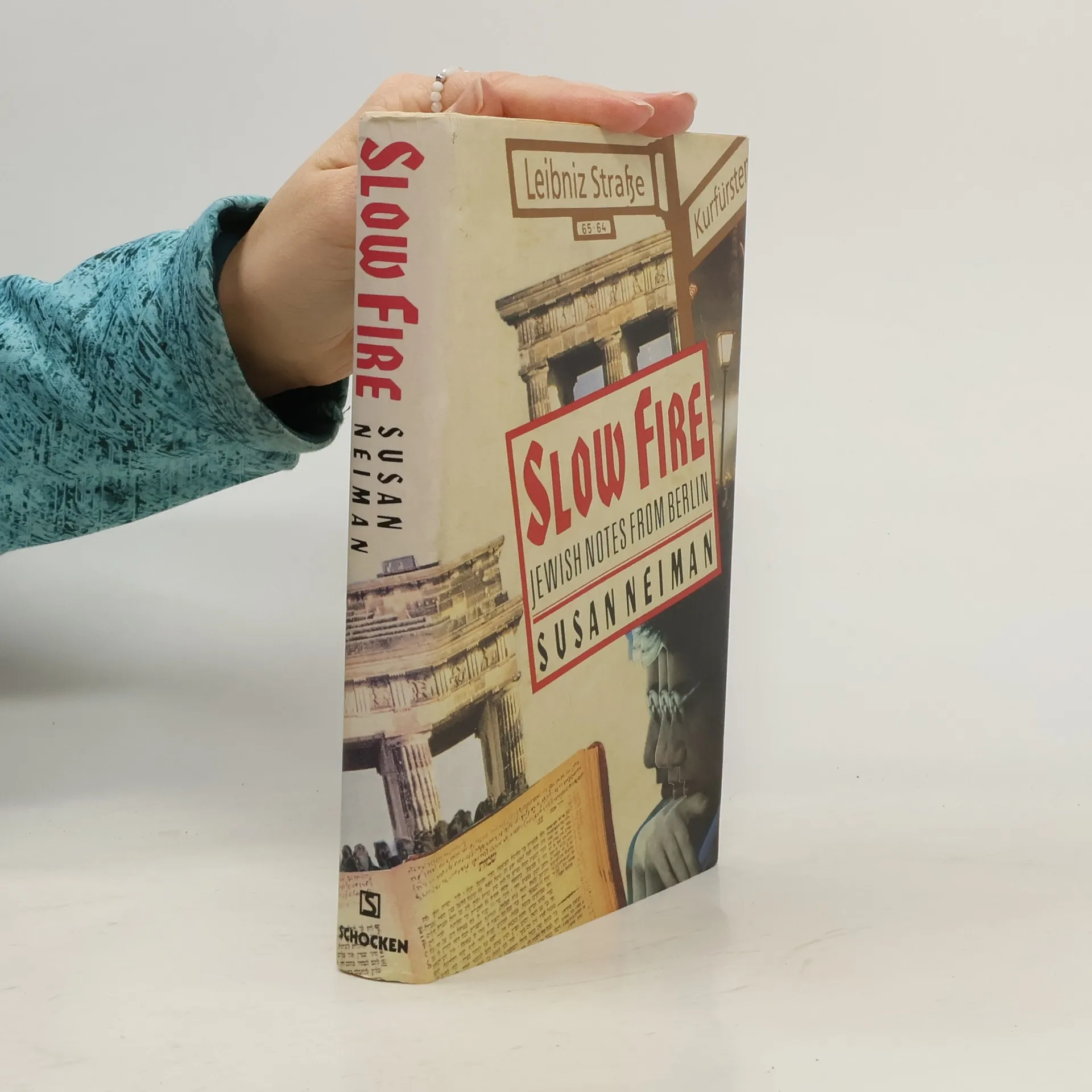
More about the book
"Every time I see you I think of Dachau, baby." This unexpected remark greeted Susan Neiman when she arrived in Berlin in 1982 to complete her philosophy dissertation. Over six years, she explored how history intrudes on personal lives, particularly through the concept of Vergangenheitsverarbeitung, which describes how Germans confront their Nazi past. As a Jewish woman, Neiman found herself haunted by the ghosts of history in every conversation. A lover struggled with his Nazi heritage, a weekend gathering became complicated over a bottle of wine from occupied France, and a rabbi highlighted the challenges of Jewish identity in a place where former Nazis might claim Jewish ancestry to alleviate their guilt. Despite these complexities, Neiman fell in love with Berlin's vibrant life, from the organ-grinders in the Hinterhofe to the lively Kneipen where poets and barmaids share late-night conversations. With a blend of irony and poignancy, she offers an intimate portrait of Berliners a generation after the war. This memoir captures a time and place with precision, reminiscent of Christopher Isherwood's work, and serves as an unforgettable tribute to a city that has indelibly marked its century.


Book purchase
Slow Fire, Susan Neiman
- Language

- Released
- 1992
- Binding
- (Hardcover)
Payment methods
We’re missing your review here.
- Title
- Slow Fire
- Language
- English
- Authors
- Susan Neiman
- Publisher
- Schocken Books
- Released
- 1992
- Format
- Hardcover
- Pages
- 306
- ISBN10
- 0805241124
- ISBN13
- 9780805241129
- Series
- Categories
- Tags
- Historical Themes, Religious Topics, USA, Germany, World War II, Europe, Berlin, History of Europe, Jews, Judaica, German History, Jewish Literature, Social History
- Rating
- 4.45 out of 5
- Description
- "Every time I see you I think of Dachau, baby." This unexpected remark greeted Susan Neiman when she arrived in Berlin in 1982 to complete her philosophy dissertation. Over six years, she explored how history intrudes on personal lives, particularly through the concept of Vergangenheitsverarbeitung, which describes how Germans confront their Nazi past. As a Jewish woman, Neiman found herself haunted by the ghosts of history in every conversation. A lover struggled with his Nazi heritage, a weekend gathering became complicated over a bottle of wine from occupied France, and a rabbi highlighted the challenges of Jewish identity in a place where former Nazis might claim Jewish ancestry to alleviate their guilt. Despite these complexities, Neiman fell in love with Berlin's vibrant life, from the organ-grinders in the Hinterhofe to the lively Kneipen where poets and barmaids share late-night conversations. With a blend of irony and poignancy, she offers an intimate portrait of Berliners a generation after the war. This memoir captures a time and place with precision, reminiscent of Christopher Isherwood's work, and serves as an unforgettable tribute to a city that has indelibly marked its century.