

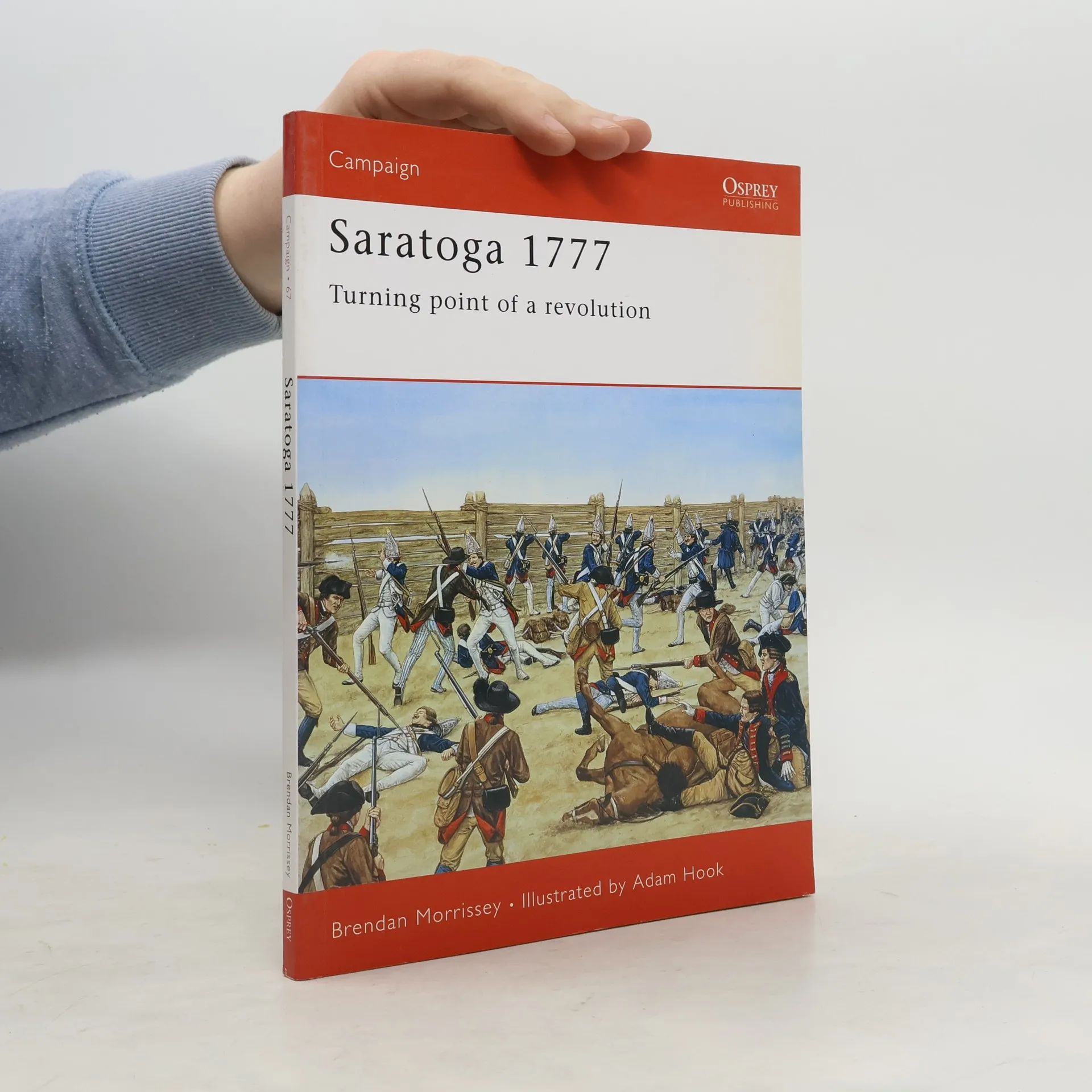


Campaign - 67: Saratoga 1777
Turning Point of a Revolution
Authors
Book rating
Parameters
- 100 pages
- 4 hours of reading
More about the book
Osprey's examination of the Saratoga campaign, which was a watershed, and is widely believed to have been the turning point of the American War of Independence (1775-1783). For the first time British regulars were beaten in open battle by equal numbers of Americans. The Continentals bore the brunt of the fighting, supported by 'hordes' of militia who proved adept at attacking detachments or lines of communication.The after-shock in America (on both sides) and Europe transformed a civil war into a global struggle against the two colonial superpowers of the day, France and Spain, and eventually lost George III his American colonies.
Book purchase
Campaign - 67: Saratoga 1777, Adam Hook, Brendan Morrissey
- Language

- Released
- 2000
- Binding
- (Paperback)
Payment methods
We’re missing your review here.
- Title
- Campaign - 67: Saratoga 1777
- Subtitle
- Turning Point of a Revolution
- Language
- English
- Authors
- Adam Hook, Brendan Morrissey
- Publisher
- Osprey Publishing
- Released
- 2000
- Format
- Paperback
- Pages
- 100
- ISBN10
- 1855328623
- ISBN13
- 9781855328624
- Series
- Categories
- Tags
- Historical Themes, USA, Military Fiction, 19th century, New York, American History, Revolution, Strategy, Battles, American Revolution, New England, British
- Rating
- 3.8 out of 5
- Description
- Osprey's examination of the Saratoga campaign, which was a watershed, and is widely believed to have been the turning point of the American War of Independence (1775-1783). For the first time British regulars were beaten in open battle by equal numbers of Americans. The Continentals bore the brunt of the fighting, supported by 'hordes' of militia who proved adept at attacking detachments or lines of communication.The after-shock in America (on both sides) and Europe transformed a civil war into a global struggle against the two colonial superpowers of the day, France and Spain, and eventually lost George III his American colonies.