

More about the book
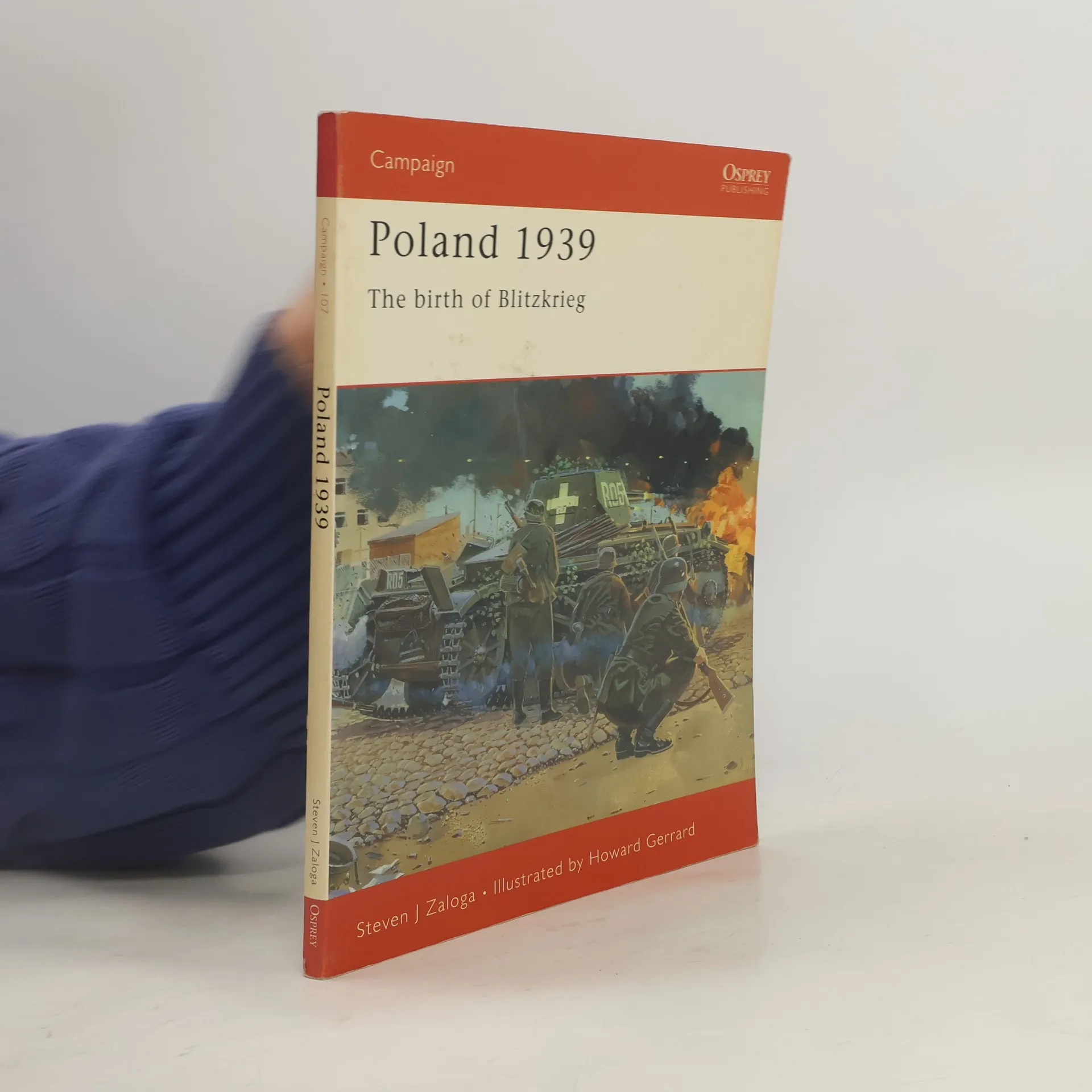
Osprey's examination of the German invasion of Poland, which began World War II (1939-1945) in Europe, pitting the newly modernized army of Europe's great industrial power against the much smaller Polish army and introducing the world to a new style of warfare – Blitzkrieg. Panzer divisions spearheaded the German assault with Stuka dive-bombers prowling ahead spreading terror and mayhem. This book demonstrates how the Polish army was not as backward as it is often portrayed and fielded a tank force larger than that of the contemporary US Army. Its stubborn defence did give the Germans some surprises and German casualties were relatively heavy for such a short campaign.
Book purchase
Campaign - 107: Poland 1939, Steven Zaloga, Howard Gerrard
- Language

- Released
- 2002
- Binding
- (Paperback)
Payment methods
We’re missing your review here.
- Title
- Campaign - 107: Poland 1939
- Subtitle
- The Birth of Blitzkrieg
- Language
- English
- Authors
- Steven Zaloga, Howard Gerrard
- Publisher
- Osprey Publishing
- Released
- 2002
- Format
- Paperback
- Pages
- 96
- ISBN10
- 1841764086
- ISBN13
- 9781841764085
- Series
- Categories
- Tags
- Historical Themes, Germany, Military Fiction, World War II, Technology, Europe, History of Europe, Nazism, Poland, Adolf Hitler, Strategy, Battles, Army, Warsaw, Gdańsk, Artillery, Infantry
- Rating
- 3.85 out of 5
- Description
- Osprey's examination of the German invasion of Poland, which began World War II (1939-1945) in Europe, pitting the newly modernized army of Europe's great industrial power against the much smaller Polish army and introducing the world to a new style of warfare – Blitzkrieg. Panzer divisions spearheaded the German assault with Stuka dive-bombers prowling ahead spreading terror and mayhem. This book demonstrates how the Polish army was not as backward as it is often portrayed and fielded a tank force larger than that of the contemporary US Army. Its stubborn defence did give the Germans some surprises and German casualties were relatively heavy for such a short campaign.