



Parameters
- 310 pages
- 11 hours of reading
More about the book
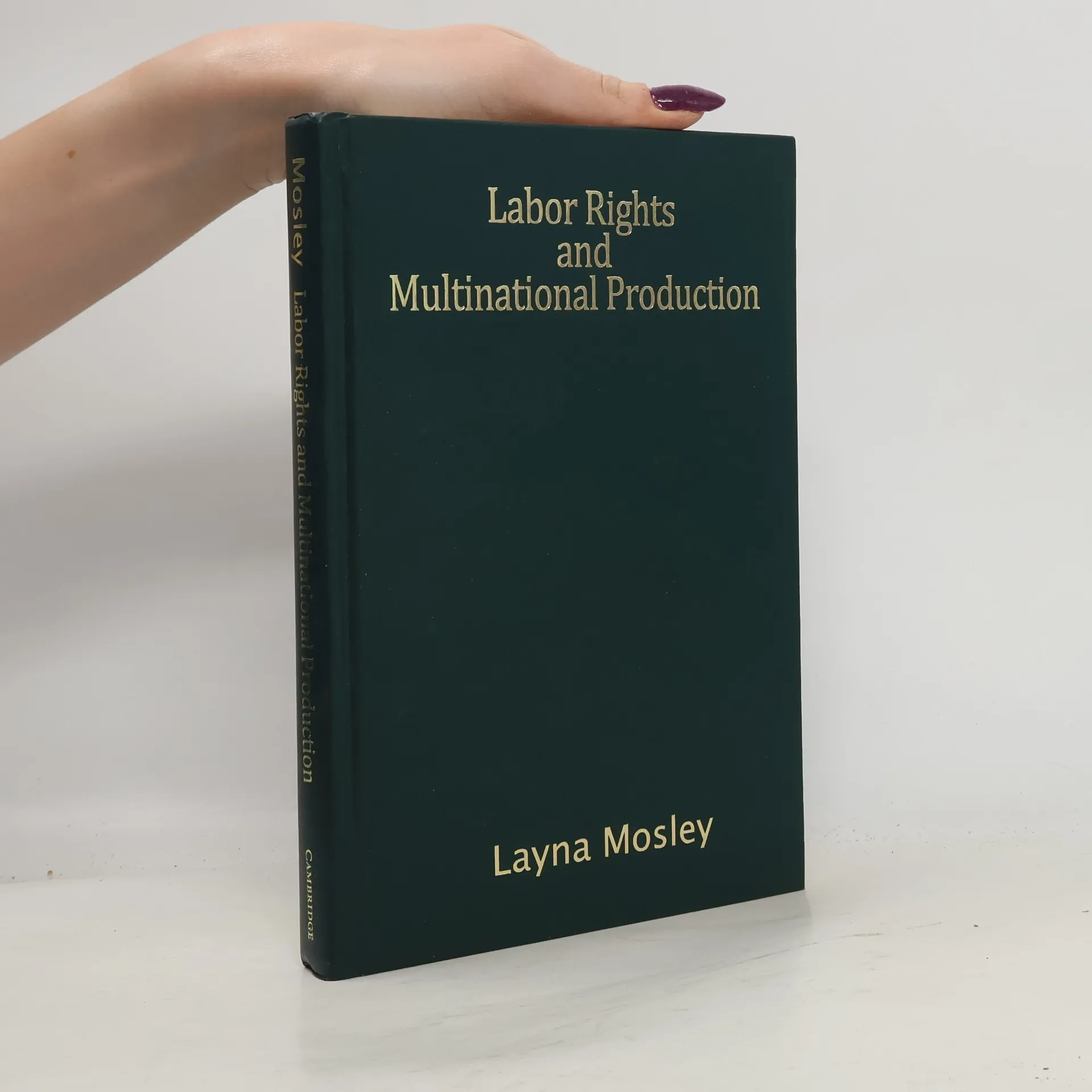
Labor Rights and Multinational Production investigates the relationship between workers' rights and multinational production. Mosley argues that some types of multinational production, embodied in directly owned foreign investment, positively affect labor rights. But other types of international production, particularly subcontracting, can engender competitive races to the bottom in labor rights. To test these claims, Mosley presents newly generated measures of collective labor rights, covering a wide range of low- and middle-income nations for the 1985-2002 period. This book suggests that the consequences of economic openness for developing countries are highly dependent on foreign firms' modes of entry and, more generally, on the precise way in which each developing country engages the global economy. The book contributes to academic literature in comparative and international political economy, and to public policy debates regarding the effects of globalization.
Book purchase
Cambridge Studies in Comparative Politics: Labor Rights and Multinational Production, Layna Mosley
- Language

- Released
- 2010
- Binding
- (Hardcover)
Payment methods
No one has rated yet.
- Title
- Cambridge Studies in Comparative Politics: Labor Rights and Multinational Production
- Language
- English
- Authors
- Layna Mosley
- Publisher
- Cambridge University Press
- Released
- 2010
- Format
- Hardcover
- Pages
- 310
- ISBN10
- 0521872812
- ISBN13
- 9780521872812
- Categories
- Tags
- Business, Legal Topics, Politics, Political Theories, Globalization, Developing Countries, Unions
- Description
- Labor Rights and Multinational Production investigates the relationship between workers' rights and multinational production. Mosley argues that some types of multinational production, embodied in directly owned foreign investment, positively affect labor rights. But other types of international production, particularly subcontracting, can engender competitive races to the bottom in labor rights. To test these claims, Mosley presents newly generated measures of collective labor rights, covering a wide range of low- and middle-income nations for the 1985-2002 period. This book suggests that the consequences of economic openness for developing countries are highly dependent on foreign firms' modes of entry and, more generally, on the precise way in which each developing country engages the global economy. The book contributes to academic literature in comparative and international political economy, and to public policy debates regarding the effects of globalization.