

More about the book
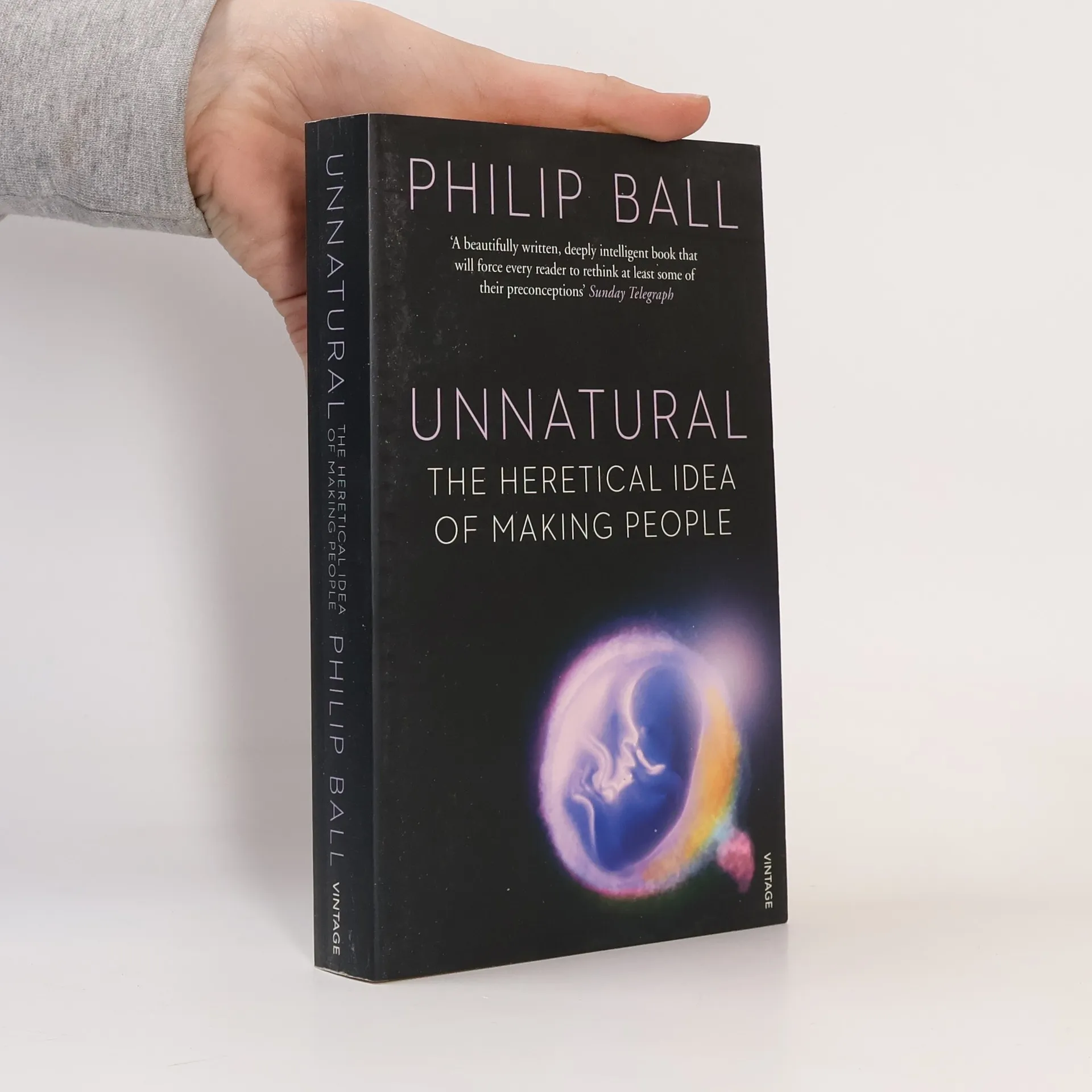
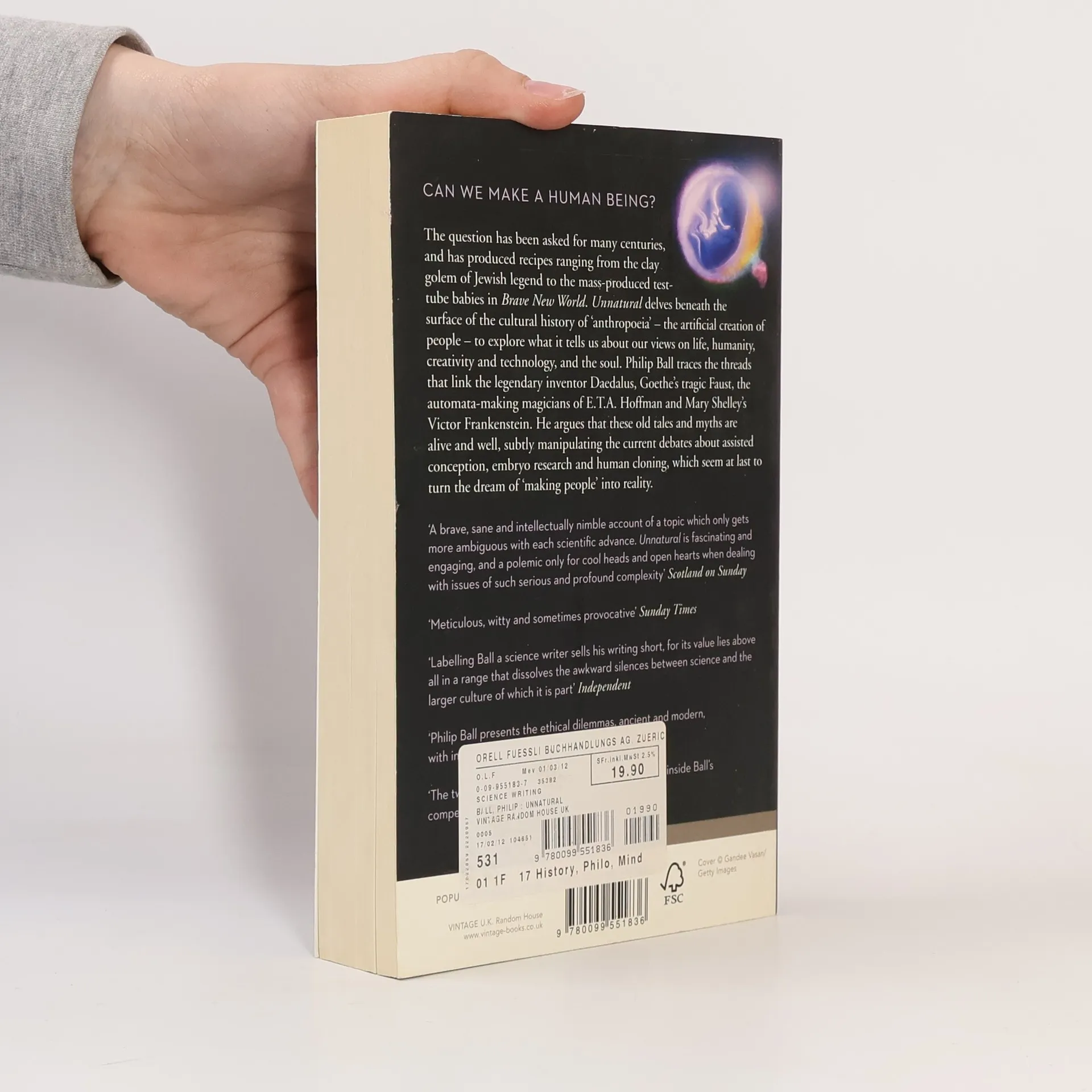
Can we make a human being? The question has been asked for many centuries, and has produced recipes ranging from the clay golem of Jewish legend to the mass-produced test-tube babies in Brave New World. Unnatural delves beneath the surface of the cultural history of 'anthropoeia' - the artificial creation of people - to explore what it tells us about our views on life, humanity, creativity and technology, and the soul. Philip Ball traces the threads that link the legendary inventor Daedalus, Goethe's tragic "Faust", the automata-making magicians of "E.T.A. Hoffman" and Mary Shelley's "Victor Frankenstein". He argues that these old tales and myths are alive and well, subtly manipulating the current debates about assisted conception, embryo research and human cloning, which have at last made the idea of 'making people' into flesh and blood reality
Book purchase
Unnatural, Philip Ball
- Language

- Released
- 2012
- Binding
- (Paperback)
Payment methods
We’re missing your review here.
- Title
- Unnatural
- Subtitle
- The Heretical Idea of Making People
- Language
- English
- Authors
- Philip Ball
- Publisher
- Vintage
- Released
- 2012
- Format
- Paperback
- Pages
- 384
- ISBN10
- 0099551837
- ISBN13
- 9780099551836
- Series
- Categories
- Tags
- Historical Themes, Natural sciences, Science, Medicine, Technology, Mythology, Linguistics, History of Europe, Writing, Evolution, Neuroscience, History of Science, Innovation, Cosmology, Human Nature, History of Natural Sciences, Philosophical Anthropology
- Rating
- 3.9 out of 5
- Description
- Can we make a human being? The question has been asked for many centuries, and has produced recipes ranging from the clay golem of Jewish legend to the mass-produced test-tube babies in Brave New World. Unnatural delves beneath the surface of the cultural history of 'anthropoeia' - the artificial creation of people - to explore what it tells us about our views on life, humanity, creativity and technology, and the soul. Philip Ball traces the threads that link the legendary inventor Daedalus, Goethe's tragic "Faust", the automata-making magicians of "E.T.A. Hoffman" and Mary Shelley's "Victor Frankenstein". He argues that these old tales and myths are alive and well, subtly manipulating the current debates about assisted conception, embryo research and human cloning, which have at last made the idea of 'making people' into flesh and blood reality